Yes, but the extent of structural damage depends on where the pipe is leaking, how much water or wastewater is escaping and how long the surrounding materials remain wet. A minor leak may cause staining or localised damp, while a persistent leak can deteriorate flooring, plaster, masonry, timber and fixings.
Waste and soil pipes usually sit behind bathroom walls, beneath floors or within boxed-in sections. This means a leak can remain hidden while moisture spreads beyond the original fault. Water may travel along joists, under flooring or through wall cavities before becoming visible, so the position of a stain is not always the position of the damaged pipe.
Potential effects on a building include:
- Timber deterioration: consistently damp joists, floorboards or supporting battens can soften, rot or lose strength.
- Damage to floors: subfloors may swell, deform or become unstable, particularly where water is trapped beneath vinyl, laminate or other coverings.
- Plaster and wall damage: saturated plasterboard can weaken, crumble or separate from its backing, while masonry may develop staining and salt deposits.
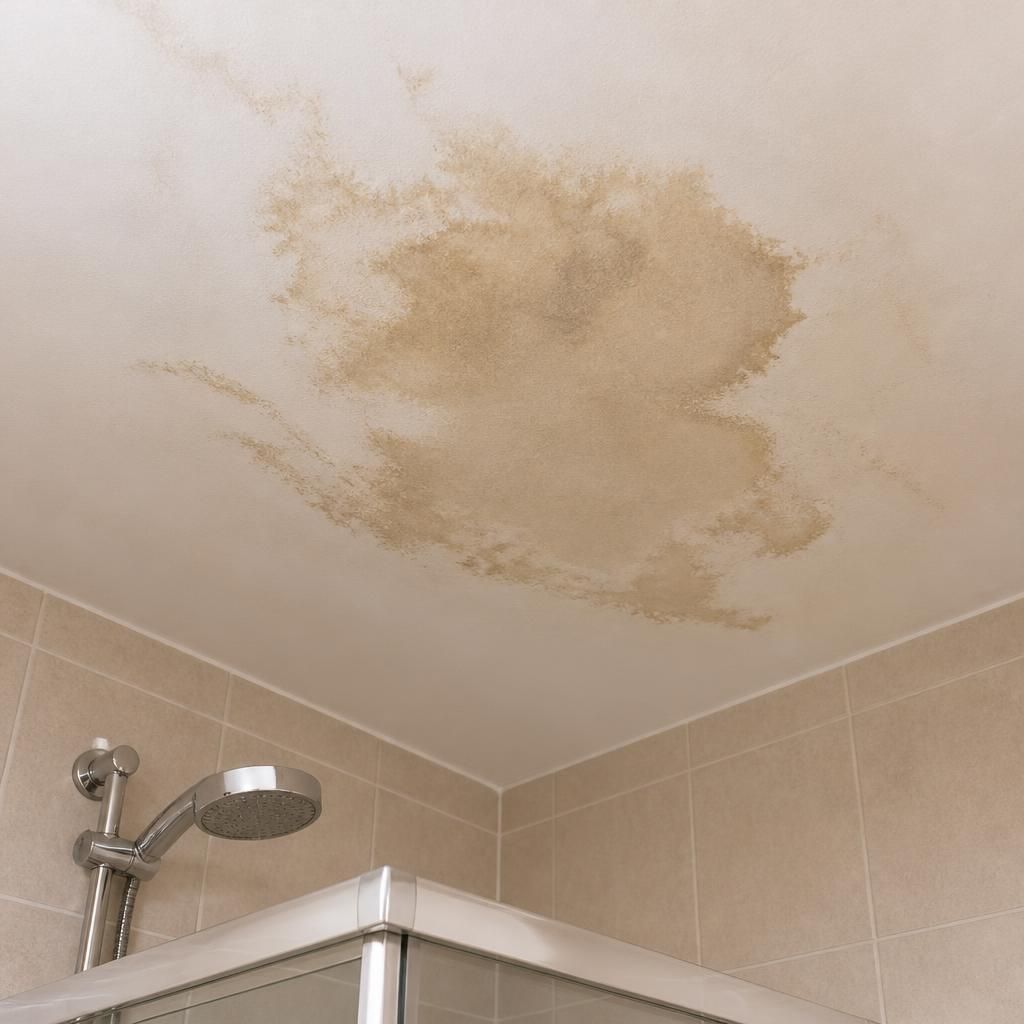
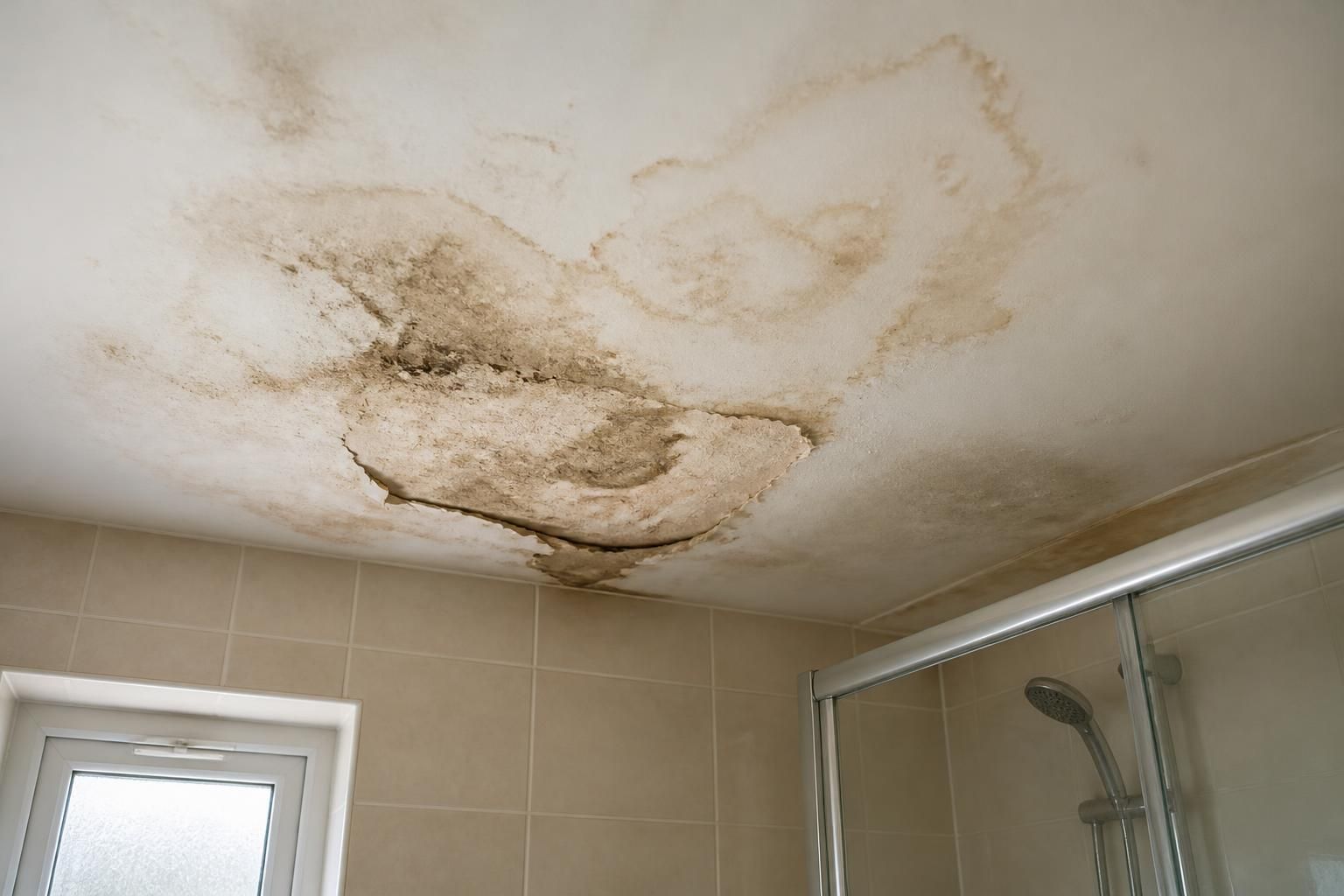
- Ceiling damage: a leak from an upper-floor bathroom can mark, soften or distort the ceiling below.
- Fixing and finish damage: prolonged moisture can corrode metal fixings, lift flooring adhesives and damage skirting, cupboards or fitted furniture.
A leaking soil pipe also carries wastewater, so the problem is not limited to moisture. Escaping contents can create unpleasant odours and contaminate surrounding surfaces. Damp conditions may also encourage mould growth, although mould alone does not prove that a waste or soil pipe is the source.
Signs that a leak may be affecting the building include:
- staining that returns after the area has been cleaned or redecorated;
- soft, springy or uneven flooring near a toilet, basin, bath or shower;
- peeling paint, bubbling plaster or damaged grout;
- a musty or sewage-like smell from boxed-in pipework or floor voids;
- mould or damp patches on the other side of a bathroom wall or on the ceiling below;
- visible gaps, movement or distortion around a toilet or other connected fitting.
These signs should be investigated rather than covered with sealant or fresh decoration. Cosmetic repairs can hide the evidence while the leak continues. A plumbing inspection should identify whether the problem is coming from a failed joint, cracked pipe, damaged pan connector, defective trap or another nearby source. Where pipework is concealed, access may be needed to inspect the affected section and assess the condition of the surrounding materials.
The appropriate repair depends on the cause and the condition of the pipe. A sound pipe with a failed connection may only need the joint or seal replaced. A cracked or badly deteriorated section may require cutting out and replacing, followed by checks that the pipe is correctly supported and has suitable falls. If timber, flooring, plaster or other building materials have been affected, those materials may need to dry fully and be assessed separately before they are repaired or replaced.
If you suspect a leak, avoid using the connected toilet, basin, bath or shower until the source has been checked, particularly where wastewater is appearing through a ceiling or floor. Keep people away from contaminated areas, protect belongings from further water damage and do not remove structural flooring or boxing without understanding what services are behind it. In a rented property, the tenant should also notify the landlord or managing agent and record visible damage.
Early investigation can limit the area that needs opening and help distinguish surface damage from deterioration to hidden structural materials. Ideal Plumbing Services can assess waste and soil pipe leaks and advise on the repair required for residential properties in Birmingham and the wider West Midlands.