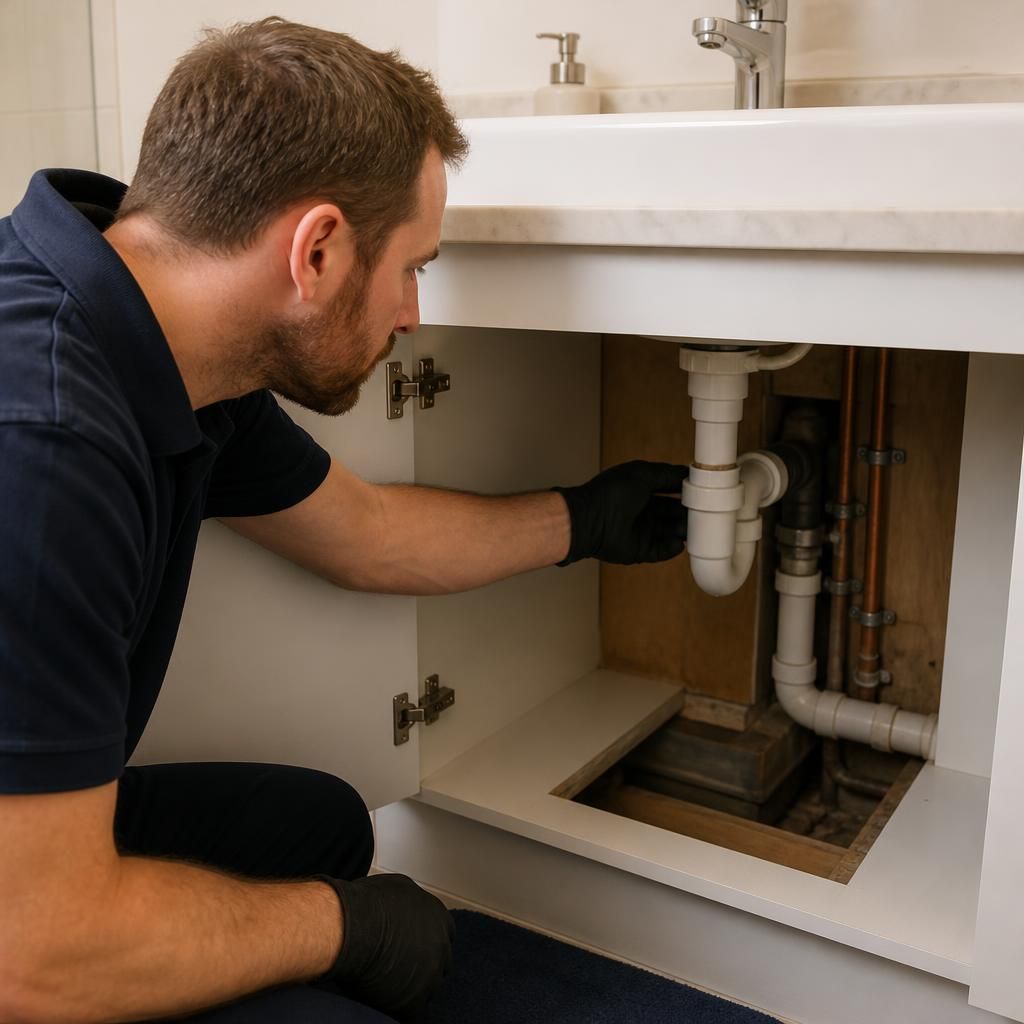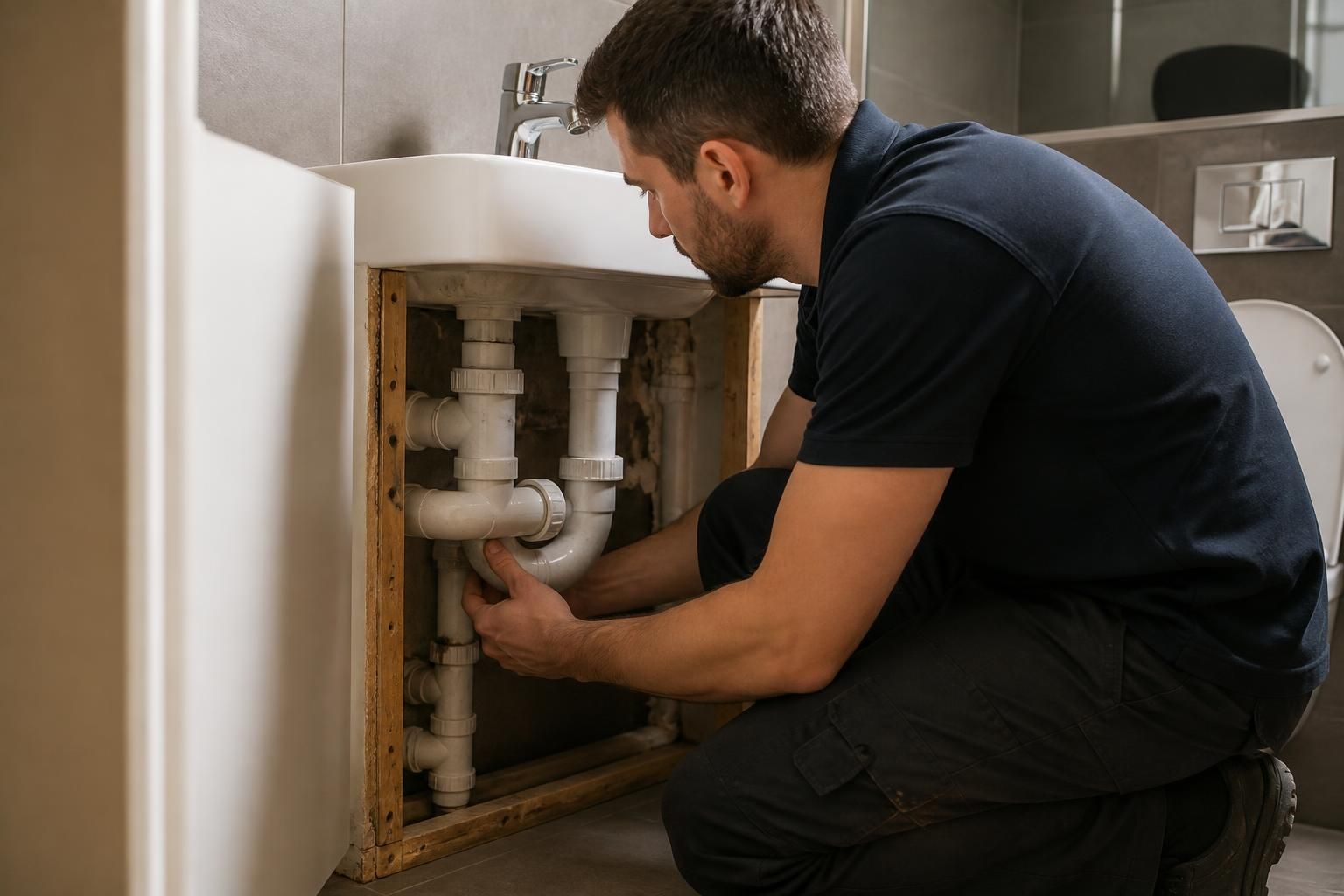
Waste and soil pipe repairs can often be completed with limited disruption, particularly when the damaged section is accessible through an existing access panel, boxing or removable floor covering. The main difference between a minor repair and a more disruptive job is whether the pipe can be reached, isolated and tested without removing fixed bathroom fittings or opening finished surfaces.
Waste pipes carry used water from appliances and sanitaryware such as sinks, baths and showers. Soil pipes carry toilet waste and connect to the drainage system. Both may run behind walls, beneath floors, inside service boxing or through external walls. A leak from an exposed joint may only require a local replacement or resealing, whereas a damaged pipe concealed behind a tiled wall or beneath a floor may require controlled access to the surrounding area.
What determines the level of disruption?
- Pipe position: Pipes in a cupboard, service void or removable boxing are generally easier to reach than those beneath a tiled floor or behind a plasterboard wall.
- Type of damage: A failed seal, loose joint or small split may be dealt with locally. Crushed, corroded or poorly supported pipework may need a longer section replaced.
- Pipe connections: Soil pipes connected to a toilet or concealed waste pipes connected to a bath or shower can make access more involved, particularly where fittings are tightly fixed or sealed.
- Previous alterations: Older repairs, adhesive flooring, extensive tiling or inaccessible boxing can affect how cleanly the pipe can be reached.
- Condition of surrounding materials: If water has soaked into plasterboard, flooring or timber, some of these materials may need drying, removal or replacement after the plumbing work.
How a plumber normally limits the work
The repair should begin with tracing the leak and confirming whether the moisture is coming from the waste or soil pipe rather than from a supply pipe, trap, toilet connection or sealant joint. This avoids removing fittings unnecessarily. Once the fault has been identified, the plumber can choose the smallest practical access point and protect nearby sanitaryware, flooring and surfaces before starting.
Where possible, access may be made through an existing panel or by removing a section of boxing rather than dismantling the whole bathroom. If a wall or floor must be opened, the cut-out should be kept as small as the repair and testing requirements allow. A repair that involves a concealed pipe should still leave enough room to fit the replacement section securely and inspect the joints afterwards; making the opening too small can create a future maintenance problem.
Removing a toilet, basin, bath panel or other fitting is sometimes necessary, but it is not automatic. It depends on whether the fitting blocks the pipe or prevents the joints from being handled safely. Fixed fittings should not be forced or moved without considering their seals, connections and support. A competent plumber will explain which item needs to be moved and why, rather than treating full bathroom removal as the default approach.
What happens after the pipe is repaired?
- The replacement or repaired section is secured with suitable joints and supports.
- The affected waste or soil connection is tested for leaks while the pipe is in view.
- Water is run through connected fixtures, and toilet connections are checked under normal use conditions.
- Any access panels, boxing or removed fittings are refitted where they remain suitable for reuse.
- The work area is cleared of plumbing debris, with any separate decorating or building work identified if it falls outside the pipe repair itself.
Plumbing repairs do not necessarily include tiling, plastering, painting or replacing damaged flooring. These tasks may be needed where finishes had to be opened or where an untreated leak has caused deterioration. Establishing this before work starts helps avoid confusion about what will be reinstated and whether a specialist decorator or builder is needed for the final finish.
If the bathroom is in a rented property, the tenant should report the leak promptly and avoid concealing damp areas or carrying out unauthorised alterations. The landlord or managing agent can then agree access and reinstatement arrangements with the plumber. For homes in Birmingham and the wider West Midlands, Ideal Plumbing Services can assess the pipe route, explain the likely access requirements and carry out the repair with the aim of keeping disruption proportionate to the fault.