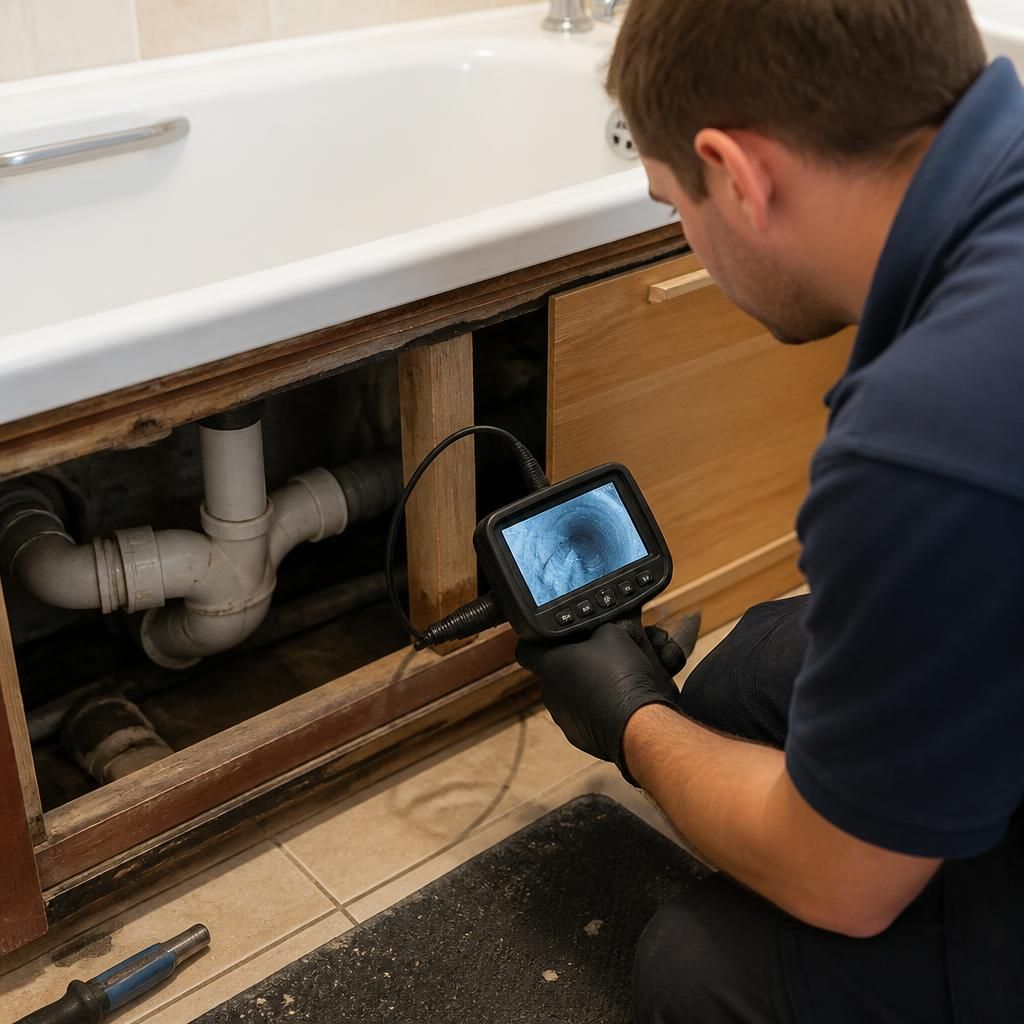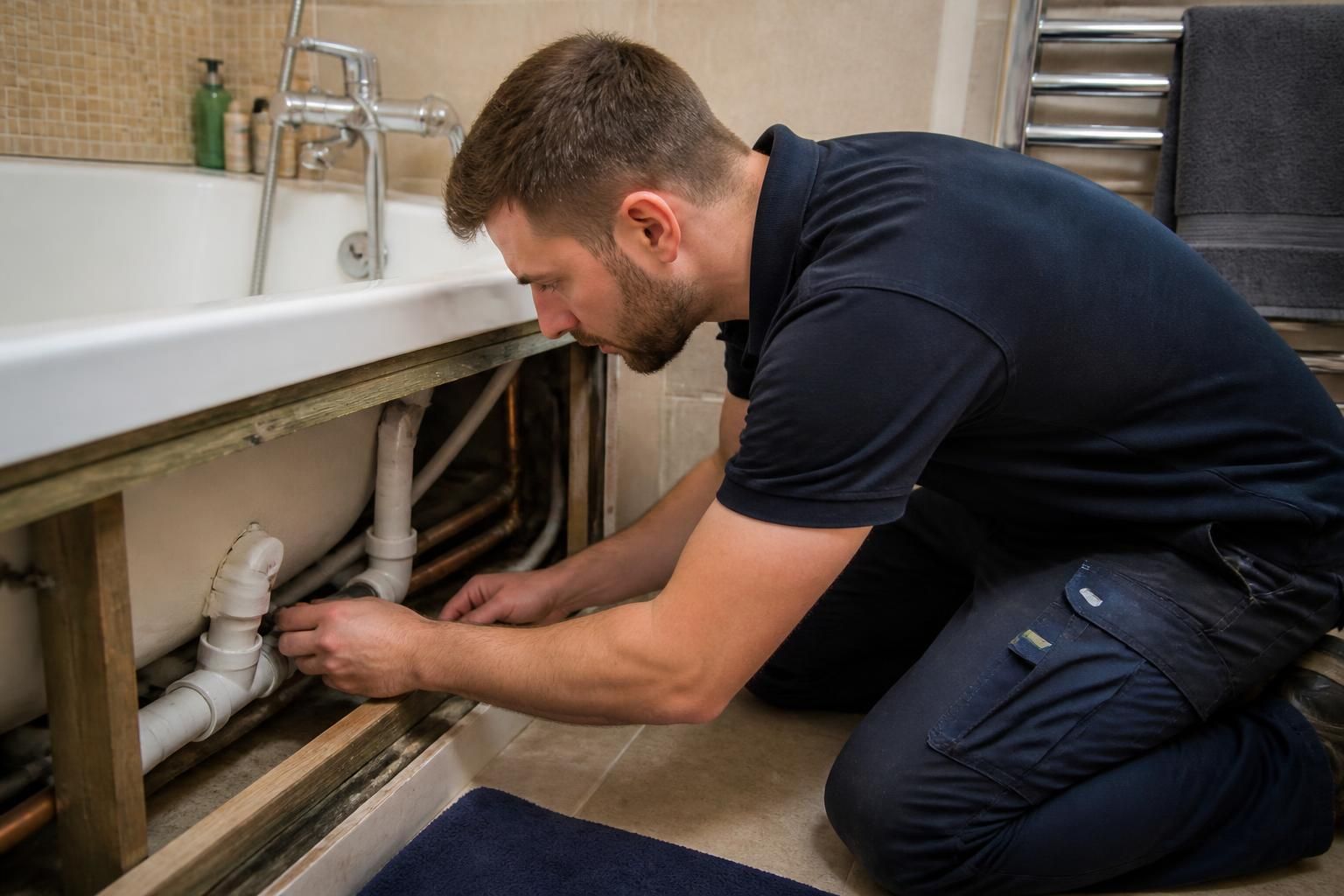
The deciding factor is the location and condition of the damaged pipe, together with the space available to work safely. A plumber may be able to repair an exposed joint, trap, connector or short length of pipe through an access hatch, beneath a sink, behind a removable panel or from the room below. This can preserve the toilet, basin, bath or shower in place and limit the work to the pipework itself.
Waste pipes carry used water away from appliances and sanitaryware, while soil pipes carry waste from toilets. Both systems contain joints and connections that can deteriorate through movement, poor installation, impact, corrosion or failed seals. A localised defect is generally more suitable for a repair without disturbing fittings than a long, damaged or badly positioned section.
During an assessment, the plumber will usually identify the source of moisture before deciding how to reach it. Water can travel along the outside of a pipe, floor or boxing, so the visible drip may not be directly below the failed joint. The inspection may include:
- checking joints, traps, seals and pipe connections for movement or staining;
- following damp marks, odours or ceiling damage back to the likely source;
- examining access panels, removable bath panels, boxing and service voids;
- testing the waste or soil pipe while the relevant appliance is used; and
- considering whether the pipe is shared with another property or connected to a larger stack.
Where the fault is at an accessible joint, the repair might involve replacing a seal, tightening or renewing a connector, or cutting out a short defective section and fitting a new piece with suitable couplings. The surrounding pipe must be properly supported and aligned; simply sealing the outside of a leaking connection is unlikely to provide a durable repair if the joint is moving or the pipe has split.
Some repairs can be carried out through a small access opening rather than by taking out the complete fitting. For example, a removable panel may provide enough room to reach a bath waste, or an existing service hatch may expose a basin or shower connection. Any opening should be made only after checking for hidden water, electrical and structural services, and it should be capable of being closed securely once the work is finished.
Bathroom fittings are more likely to require partial or complete removal when the failed pipe is directly behind them, beneath a fixed shower tray, under a tiled floor or inside sealed boxing with no usable access. Removal may also be needed if the pipe has sagged, fractured over a long section, or cannot be properly supported and connected from the available opening. Trying to work through an opening that is too small can damage fittings, leave a poorly aligned joint or conceal a continuing leak.
Limited removal does not always mean that the whole bathroom must be dismantled. A plumber may be able to remove a panel, lift a small number of tiles, disconnect one appliance or open a defined section of boxing. The access method should be discussed before work begins, including whether removed tiles, panels or sanitaryware can be reinstated and whether separate decorating or tiling work may be required.
For a repair in a flat or rented property, the route of the pipe also matters. A soil stack, shared waste or pipe passing through a floor or wall may involve areas outside the bathroom and may need coordination with the landlord, managing agent or another property owner before it is altered. A private internal connection is usually more straightforward to access, but the same need for a watertight, supported connection applies.
After the repair, the pipe should be tested under normal discharge conditions. This helps confirm that the joint is watertight and that water drains correctly without backing up or placing strain on the repaired section. If damp materials have been present, the surrounding floor, wall or ceiling should also be allowed to dry and checked for secondary damage before the access area is permanently closed.
An experienced plumber can explain the least disruptive practical route after locating the defect. The key question is not simply whether a fitting can remain in place, but whether the repair can be reached, completed and tested without compromising the pipework or leaving hidden damage untreated.