Safe emergency blocked drain clearance means removing the obstruction without worsening damage to the drain, exposing people to avoidable contamination or allowing wastewater to spread. The appropriate technique depends on the obstruction, the pipe material, the access available and the condition of the drainage system.
The work normally begins with risk control. Where wastewater is present, the affected area should be kept clear and unnecessary use of sinks, toilets, washing machines and other connected appliances should stop. A professional will use suitable protective equipment and take care around contaminated water, slippery surfaces and nearby electrical fittings. If drain-cleaning chemicals have already been used, this must be disclosed before any tools are inserted, as residues can injure the person carrying out the work.
Access is then selected carefully. An inspection point, rodding eye or chamber may provide a safer route than working through an internal fixture. Drain covers should not be lifted without the correct tools and precautions, particularly if the chamber is flooded, unstable or located in a traffic or pedestrian area. Forcing a cover or pushing equipment through an unsuitable opening can damage fittings and create a further hazard.
The obstruction is dealt with using the least aggressive practical technique:
- Plunging may release a localised soft blockage where there is a suitable seal and enough water to create pressure.
- Manual augers or drain snakes can break up or retrieve some compacted material, but they must be used with care to avoid scratching or becoming lodged in the pipe.
- Drain rods can reach longer sections through an appropriate access point. They should be turned in the correct direction and joined securely, since a separated rod can be difficult to recover and may cause another obstruction.
- Controlled water jetting can remove grease, silt and other deposits from suitable pipework. The pressure, nozzle and direction must be matched to the drain, because excessive force can damage weak, cracked or poorly connected sections.
Household chemical unblockers are not a reliable substitute for diagnosis. They may fail to remove a substantial obstruction, damage some materials, or leave caustic liquid in the pipe while the blockage remains. Mixing different products can also produce dangerous fumes or reactions, so further chemicals should not be added once a product has been used.
A blockage may be a symptom of a wider drainage fault rather than an isolated plug. Tree-root ingress, a collapsed section, displaced joints, scale, poor falls or a damaged chamber can restrict flow repeatedly. In these cases, clearing the immediate obstruction may restore use temporarily, but the underlying defect needs separate attention. If the obstruction cannot be passed safely, forcing equipment further into the system risks turning a manageable blockage into a pipe repair.
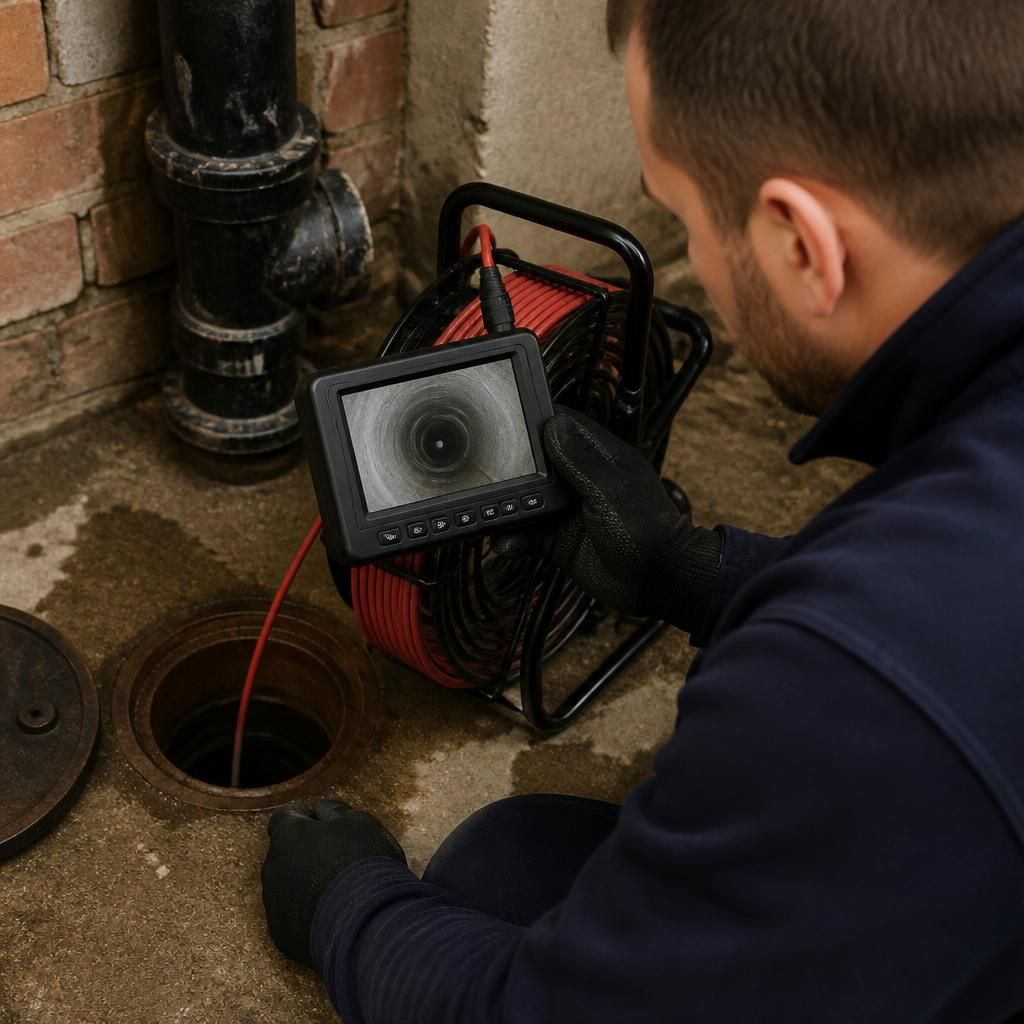
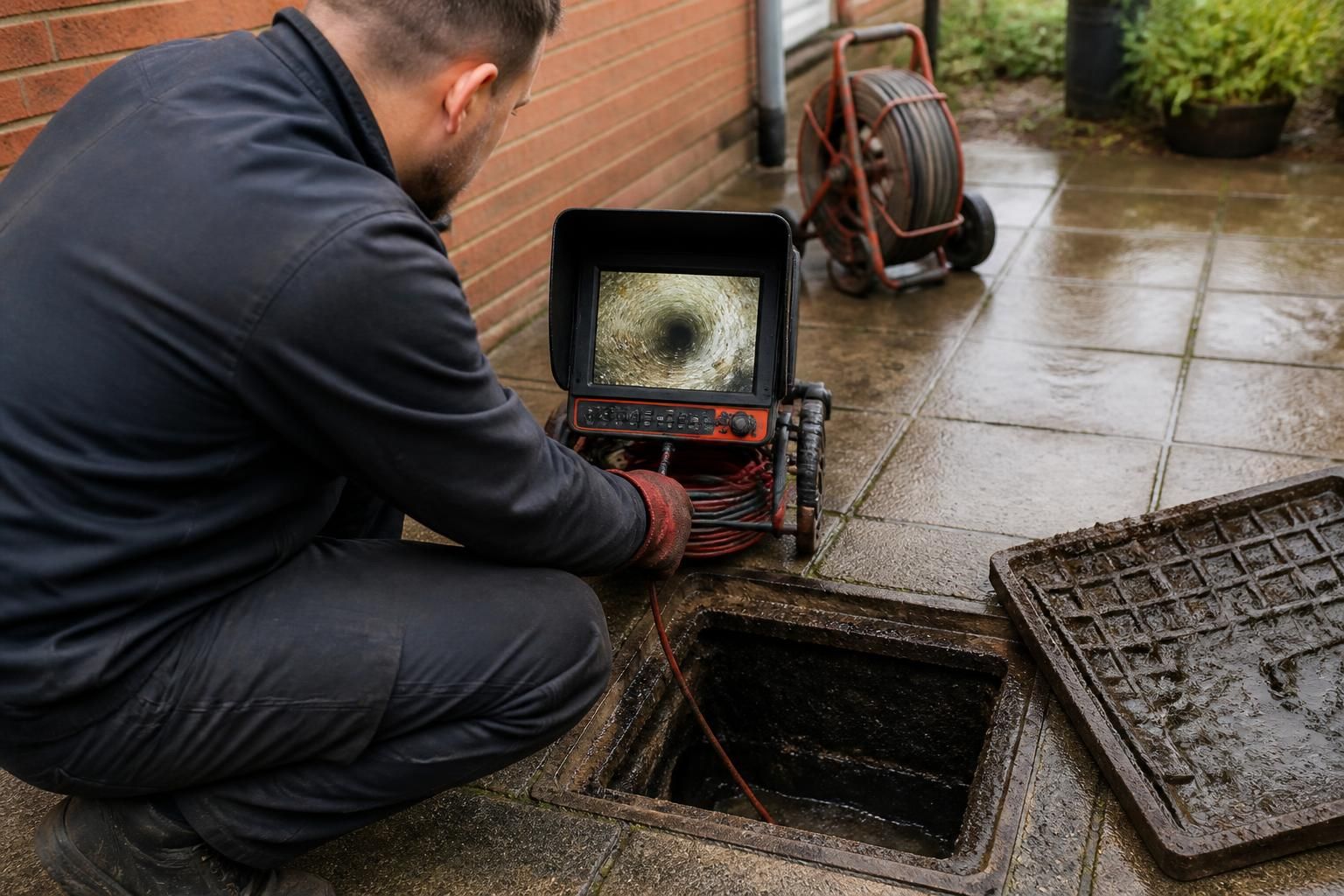
Where the cause is uncertain or the drain has blocked repeatedly, a camera inspection can help identify the location and condition of the pipe without unnecessary excavation. It can distinguish removable deposits from structural damage and help determine whether cleaning, repair or replacement is appropriate.
After clearance, the system should be checked progressively rather than flooded with a large volume of water immediately. Controlled flow testing can reveal whether water is moving away normally and whether any joints or chambers are leaking. The access point should be closed securely, affected surfaces cleaned and, where wastewater has escaped, disinfected using appropriate products. Any limitations, damage or recommended follow-up work should be explained so that the property owner or occupier understands what has been resolved and what remains.
Before assistance is carried out, useful information includes where the blockage is occurring, whether several fixtures are affected, whether wastewater has backed up and whether any drain cleaner has been applied. Stopping water use and keeping people away from contaminated areas reduces the risk of overflow while the obstruction is being investigated.