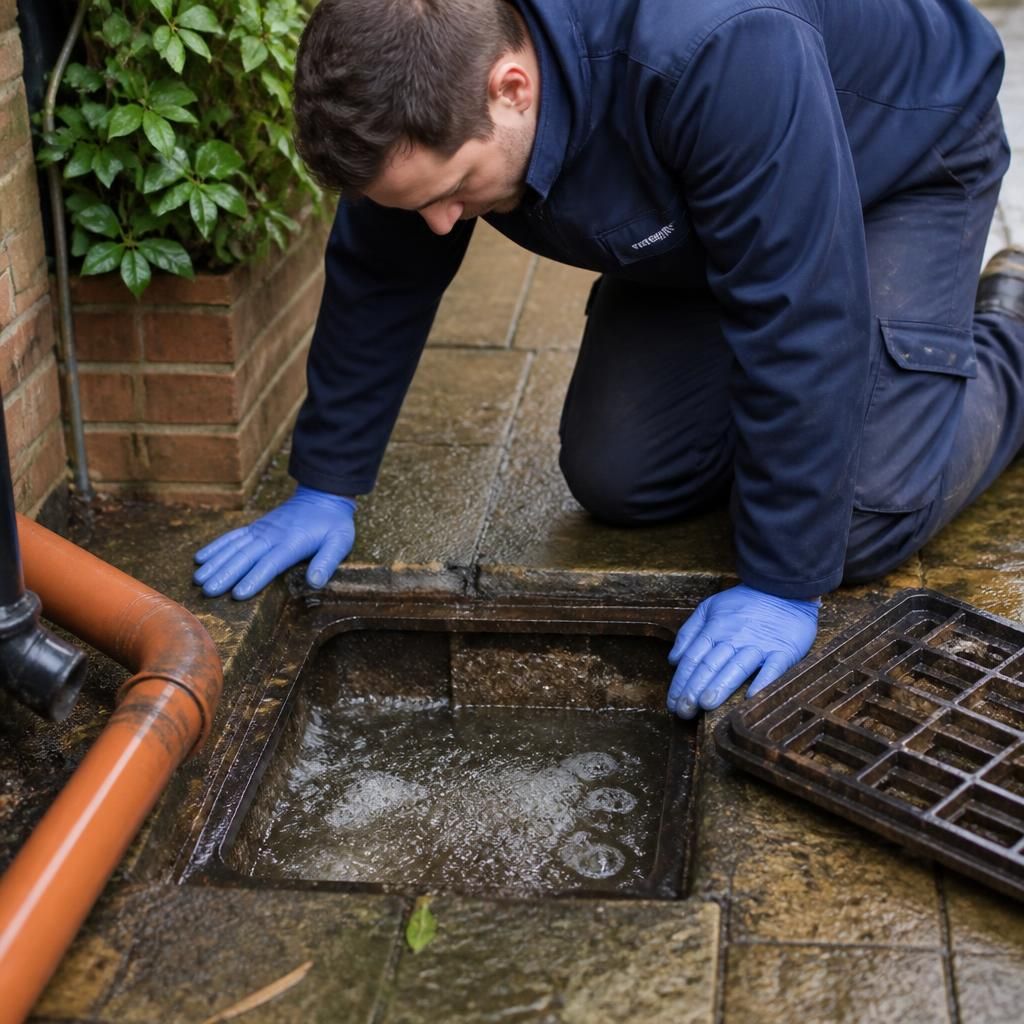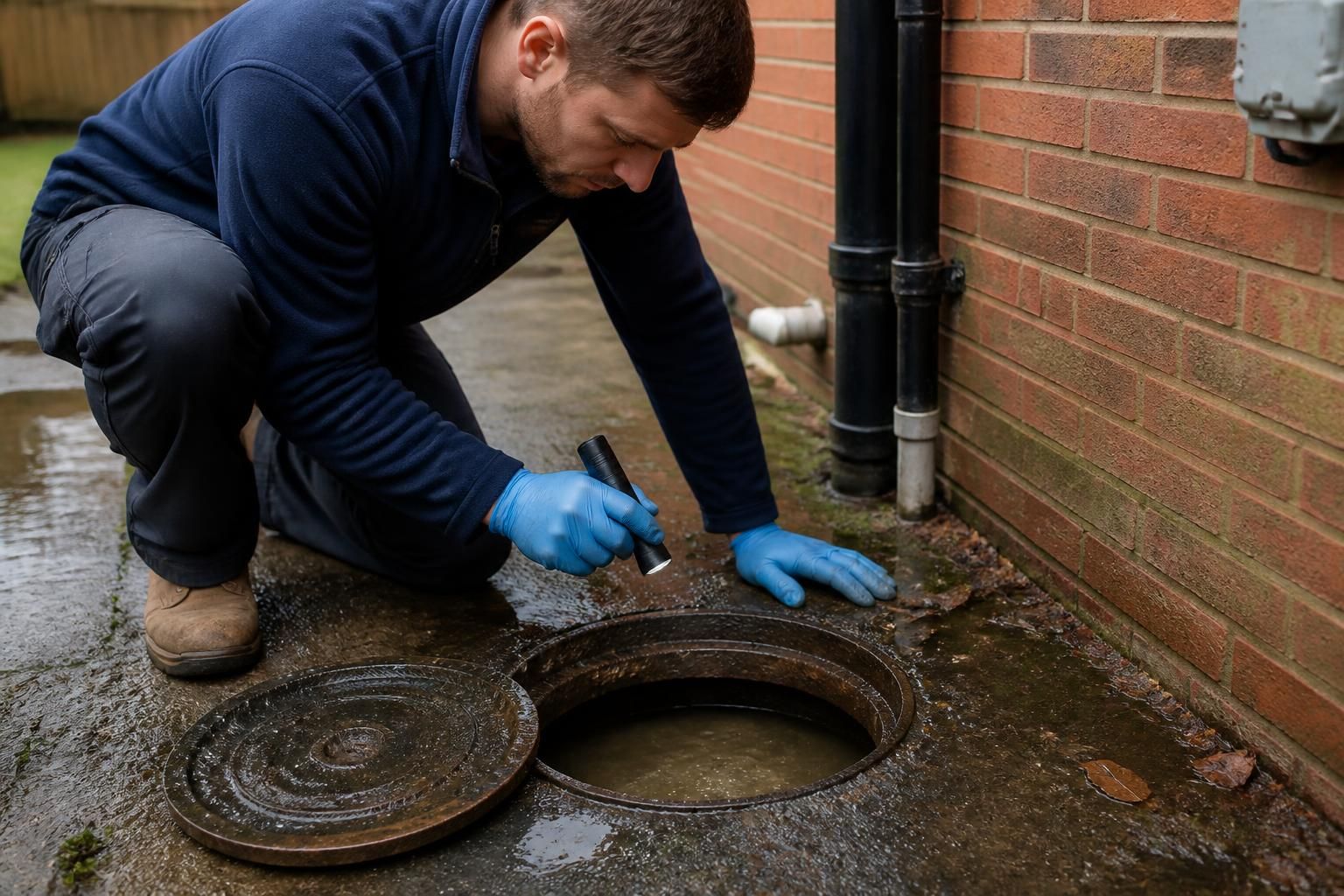
Emergency drain unblocking is warranted when a blockage creates a hygiene risk, threatens property, prevents essential facilities from being used or suggests that wastewater is under pressure within the drainage system. The most important indicators are contaminated water, rapidly worsening symptoms and signs that the obstruction affects more than one part of the system.
- Toilet water rises or fails to clear: A toilet that fills unusually high after flushing, drains very slowly or leaves waste behind may indicate a substantial obstruction. Avoid flushing again, as further water could spill onto the floor.
- Wastewater appears dirty or contaminated: Brown, grey or black water, greasy deposits or visible waste around a toilet, shower, gully or drain should be treated as a sanitation concern. Keep children and pets away and avoid direct contact with the water.
- A blockage returns repeatedly: If the same drain becomes obstructed again after plunging or basic cleaning, the cause may be deeper in the pipe. Recurring symptoms can indicate accumulated debris, a damaged section or an obstruction that has not been fully removed.
- Water is escaping around pipework or fittings: Damp patches, staining, soft flooring or water collecting beneath a sink or near a toilet can show that restricted flow is forcing water out through a joint. This needs attention before moisture damages surrounding materials.
- An external drain is visibly damaged or unsafe: A displaced cover, ground that is becoming saturated near a drain or wastewater collecting around an inspection chamber can present both a contamination and a safety risk. Do not lift a heavy cover or enter a drain to investigate it.
- Essential facilities are unusable: A blocked toilet or kitchen drain becomes more urgent where there is no safe alternative for basic household use. Continued use can increase the volume of wastewater behind the obstruction.
Not every slow-draining sink requires emergency attendance. A single fixture that empties gradually, without contamination, overflow or other warning signs, may be suitable for routine investigation. The situation is more serious when symptoms worsen quickly, return after temporary treatment or are accompanied by water damage.
Before help arrives, stop using the affected fixtures and any appliance that discharges into the same drainage line. Do not pour chemical drain cleaner into a blocked system, particularly if wastewater is already present; it can remain in the pipe, cause burns and create additional hazards during examination. Keep the area ventilated where possible, but do not lean over an open drain or attempt to dismantle pipework containing contaminated water.
Record which fixtures are affected, when the problem began and whether any recent work, heavy rain or unusual discharge preceded it. This information can help a plumber assess whether the obstruction is likely to be local or within a shared section of the drainage system. Ideal Plumbing Services provides emergency drain unblocking for residential customers in Birmingham and the wider West Midlands, with the work assessed according to the immediate risk and the likely cause.