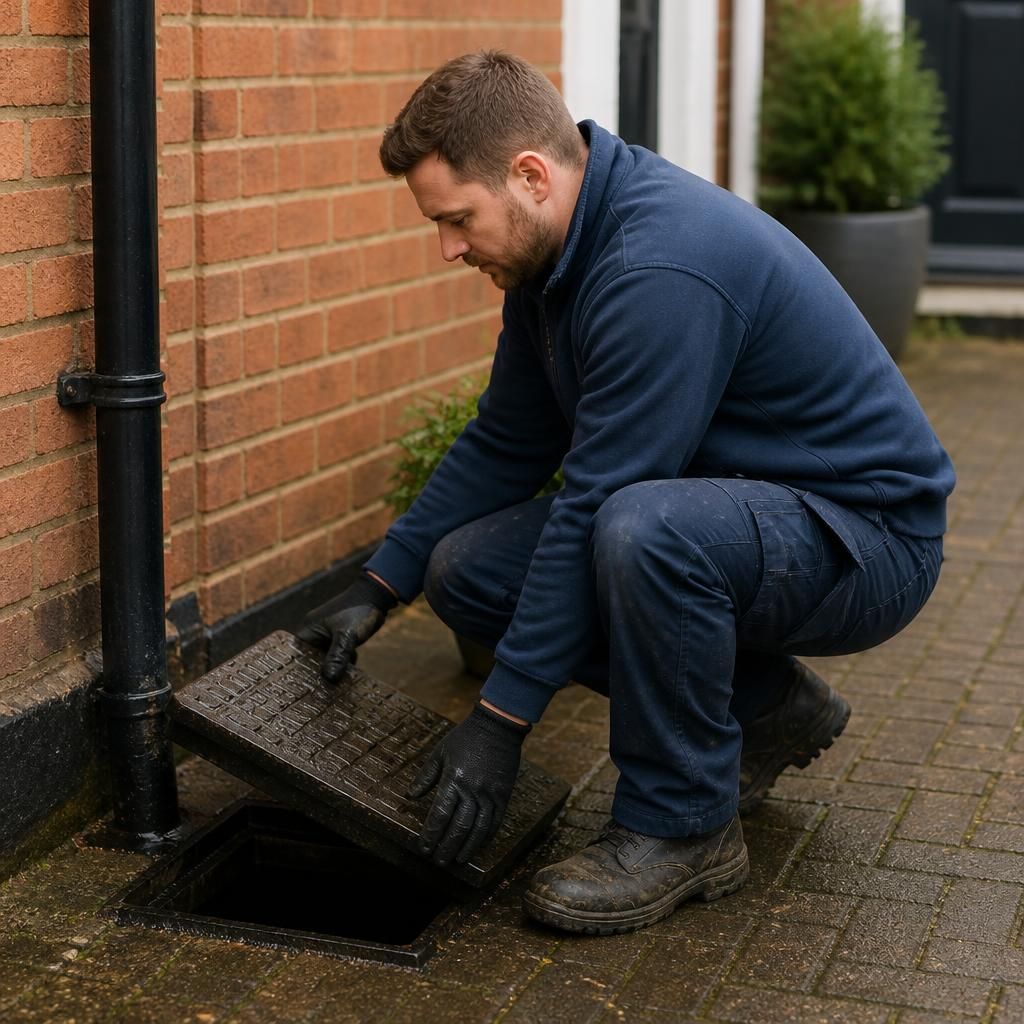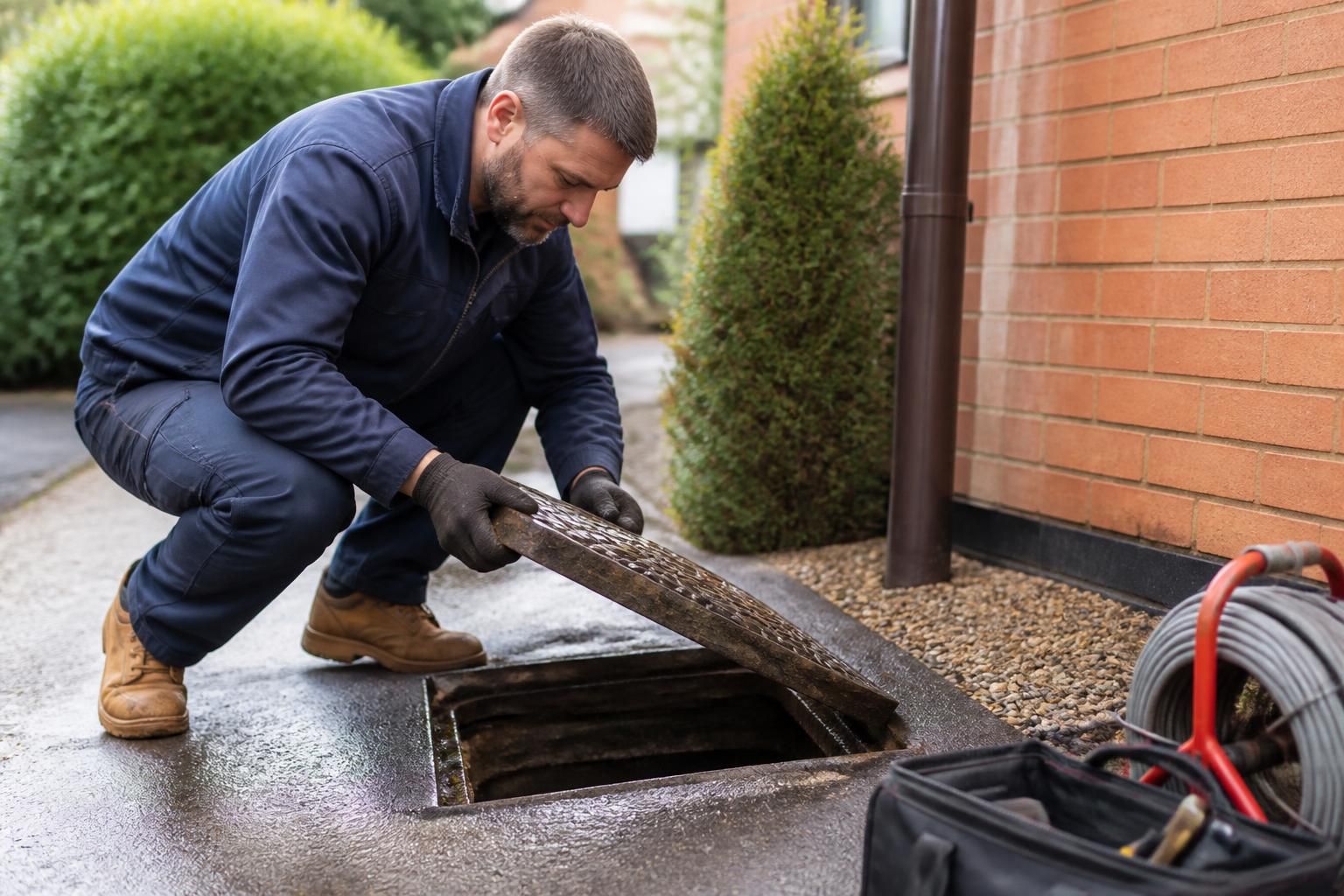
Access during a drain unblocking inspection is managed in stages so the plumber can examine the drainage system without opening up more of the property than necessary. The process usually combines information from the occupant, visible drainage features and, where appropriate, inspection equipment to determine where access is required.
Before starting, the plumber may ask about the symptoms, including where water backs up, whether several fixtures are affected and whether the problem is intermittent. This helps establish the likely route of the pipework and can reduce unnecessary investigation in unrelated parts of the property.
Access may be needed to areas such as:
- External inspection chambers, manholes or gullies;
- Rodding eyes connected to underground pipework;
- Indoor waste pipes beneath sinks, baths or utility areas;
- Toilets, where the affected branch of the drainage system cannot be reached elsewhere; and
- Shared or communal drainage points in flats and managed properties.
The required route is considered before equipment is used. For example, a drainage camera may need a sufficiently wide and direct entry point, while a basic visual inspection may only require access to a chamber or exposed fitting. If a cover is buried, seized or unsafe to lift, the plumber should explain the limitation rather than force it and risk damage.
For rented homes, access is normally arranged with the tenant and the landlord or managing agent as appropriate. In flats or properties with shared drains, the relevant responsible person may also need to authorise entry to communal areas. This is particularly important where an inspection could involve a courtyard, service cupboard, driveway or another area not controlled by the occupant.
Safety also affects how access is handled. Covers must be lifted using suitable tools, and the surrounding area should be kept clear of children, pets and vehicles. A plumber may decline to enter a confined space or disturb contaminated water because these conditions require specialist controls. Instead, they can assess whether the drainage route can be examined from a safer opening.
Where access through an internal room is necessary, sensible preparation can help: clear items from around the relevant fixture, protect nearby flooring and identify stop taps or isolation points if water needs to be controlled. Furniture, boxing-in or fixed finishes should not be removed without agreement. If opening a panel, lifting a fitting or carrying out more invasive work becomes necessary, this should be discussed separately from the initial inspection.
After the inspection, the access points used should be checked and left secure. Covers and fittings need to be correctly seated, and any temporary protection should be removed once the area is safe. The findings can then be explained in relation to the blockage, including whether further work requires continued access, excavation or entry to another part of the drainage system.