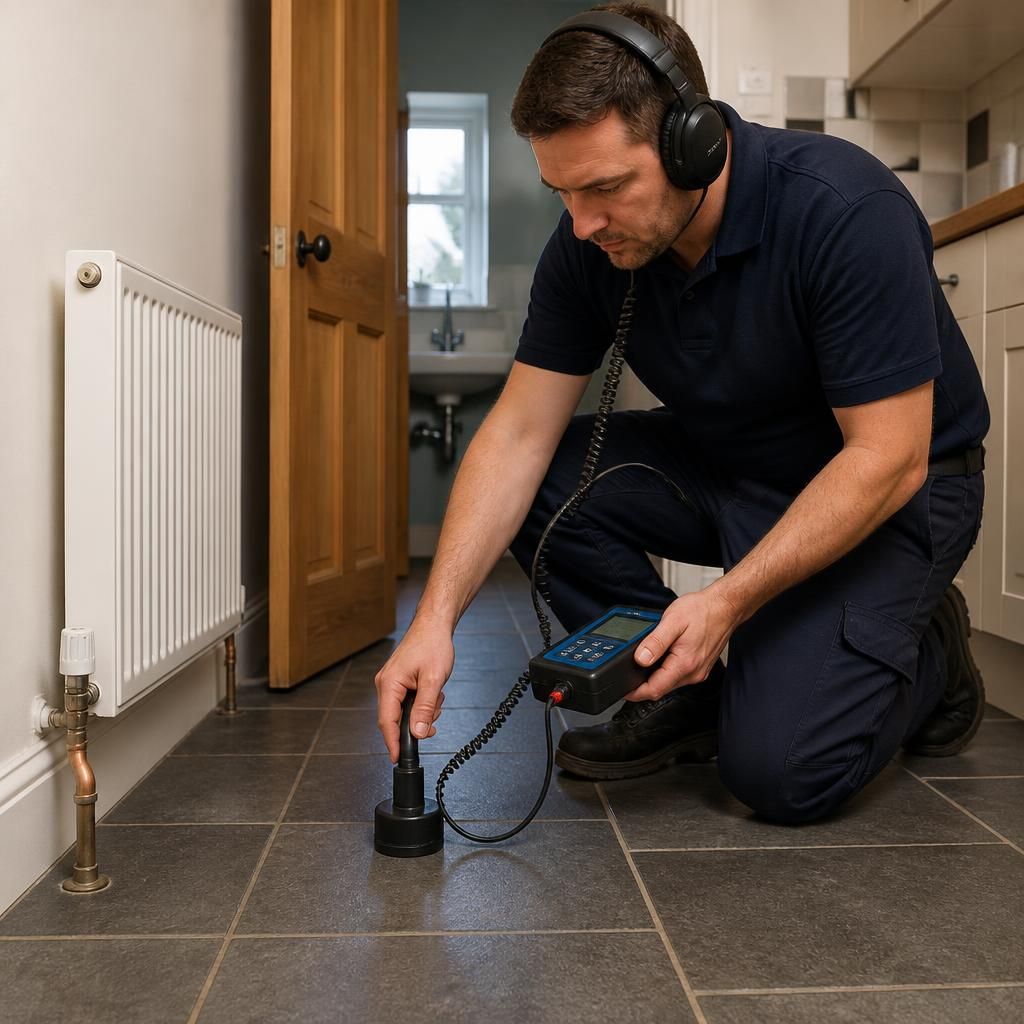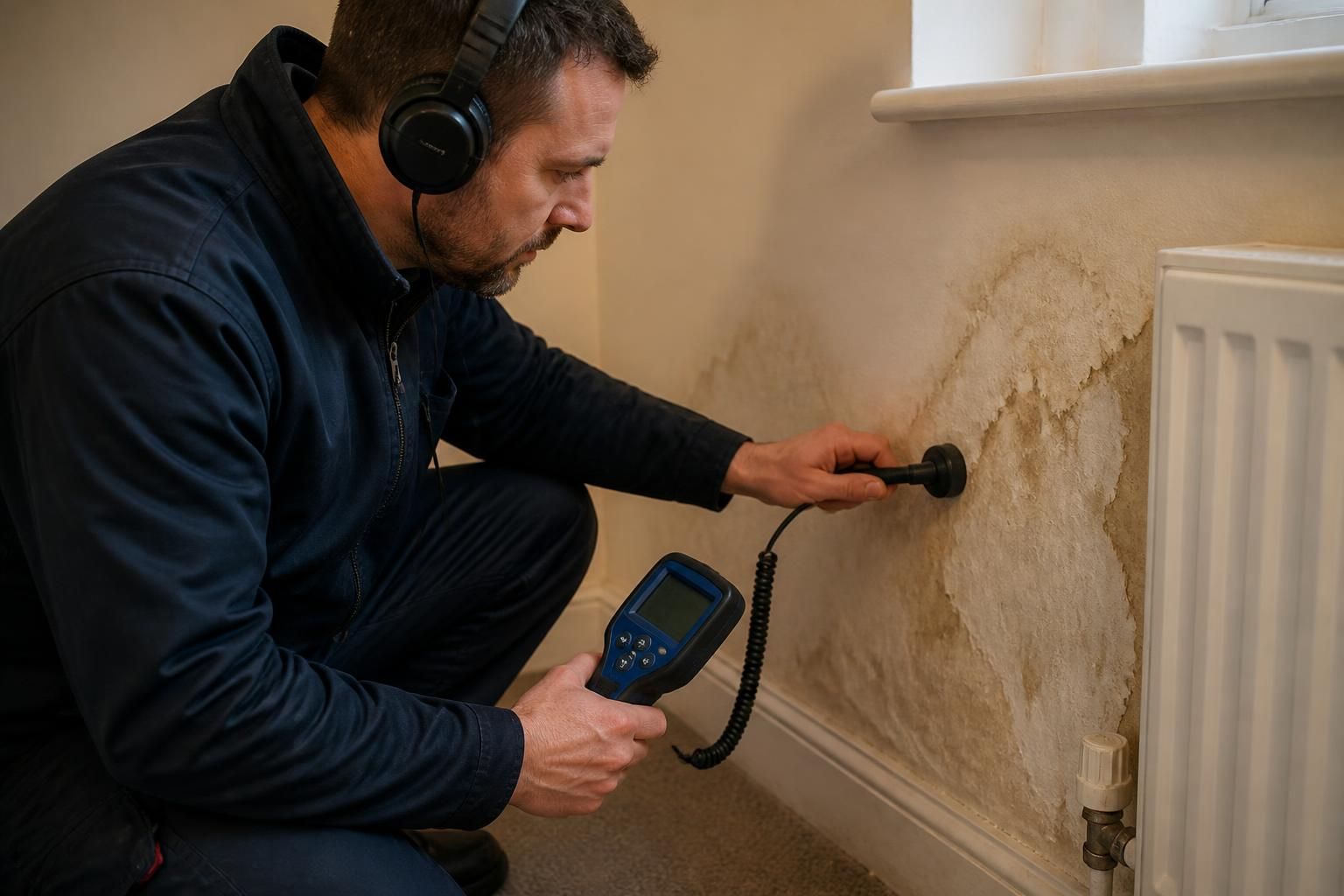
Professional leak detection should be arranged when a plumbing fault is suspected but its location, route or cause cannot be established safely and accurately. A specialist assessment is particularly appropriate where investigating the problem would otherwise involve lifting flooring, removing fixtures or opening walls without knowing whether the leak is actually behind them.
Do not wait for damage to become extensive if water is actively escaping. Turn off the nearest isolation valve, or the main stop tap if necessary, and protect furnishings and flooring while arranging an assessment. If water has reached electrical fittings, avoid contact with the affected area and seek qualified assistance before attempting further checks.
There are also situations where detection is sensible even when the problem appears minor:
- water reappears after an earlier repair;
- the same area requires repeated drying, sealing or redecoration;
- a concealed pipe may be leaking beneath a floor, inside a wall or below a fitted unit;
- pipework has been altered and its condition needs checking before floors or walls are reinstated;
- a property is being renovated, sold, let or purchased and concealed plumbing needs to be assessed;
- the source cannot be confirmed by checking visible joints, appliances and accessible pipework.
Intermittent leaks deserve particular attention. A pipe may only release water when a tap runs, a toilet refills, an appliance operates or a heating circuit is in use. The affected surface can then dry before the next occurrence, making the fault easy to dismiss. A professional can consider when the water appears, which fittings are being used and how the building is laid out rather than relying only on the position of the visible damage.
Accurate detection can also help distinguish a supply-pipe leak from a waste-pipe problem, a failed fitting or water entering from another part of the building. This distinction matters because the repair method differs. Repairing the wrong section can leave the underlying fault in place and create further disruption.
Depending on the property and the suspected pipework, an assessment may involve a visual inspection, checks of accessible connections, pressure testing, acoustic equipment, thermal imaging or other non-invasive techniques. These methods are used to narrow down the leak before any necessary opening-up work is considered. The findings should identify the likely source, the evidence supporting that conclusion and whether a repair or further investigation is recommended.
Before the visit, make a note of when the issue occurs, which fixtures have been used and whether any valves have already been closed. Clear access to stop taps, boilers, kitchen units, bathrooms and visible pipework where practical. Do not remove flooring or wall coverings simply to search for the leak, as this may cause avoidable damage and make the original evidence harder to assess.
For rented homes, tenants should report suspected leaks to the landlord or managing agent as soon as possible and follow any agreed emergency procedure. Landlords should arrange investigation where a plumbing fault could affect the property, neighbouring accommodation or the condition of the building. Ideal Plumbing Services provides professional leak detection and repair support for residential customers in Birmingham and the wider West Midlands, helping establish the cause before suitable remedial work is planned.