A professional drain unblocking inspection is a structured diagnostic examination carried out before or alongside the unblocking work. It establishes how the drainage system is behaving, narrows down the position of the restriction, and assesses whether the problem is caused by a simple obstruction, a damaged pipe or a wider drainage defect.
The inspection usually begins with a discussion of the symptoms. The timing of the problem, affected fixtures, changes in water flow, unusual smells, sounds and any previous drainage work can help indicate whether the issue is isolated or connected to a shared section of pipework. Information about repeated blockages is particularly relevant, as a recurring restriction may point to misalignment, root ingress, scale or a structural fault rather than a one-off accumulation of waste.
A technician then examines the relevant fixtures, traps, gullies, rodding points and inspection chambers where they are accessible. This can show whether water is backing up at one point or whether several outlets are affected. The condition of covers, visible pipe connections and surrounding areas may also provide useful evidence, including signs of overflow, movement, leakage or poor drainage.
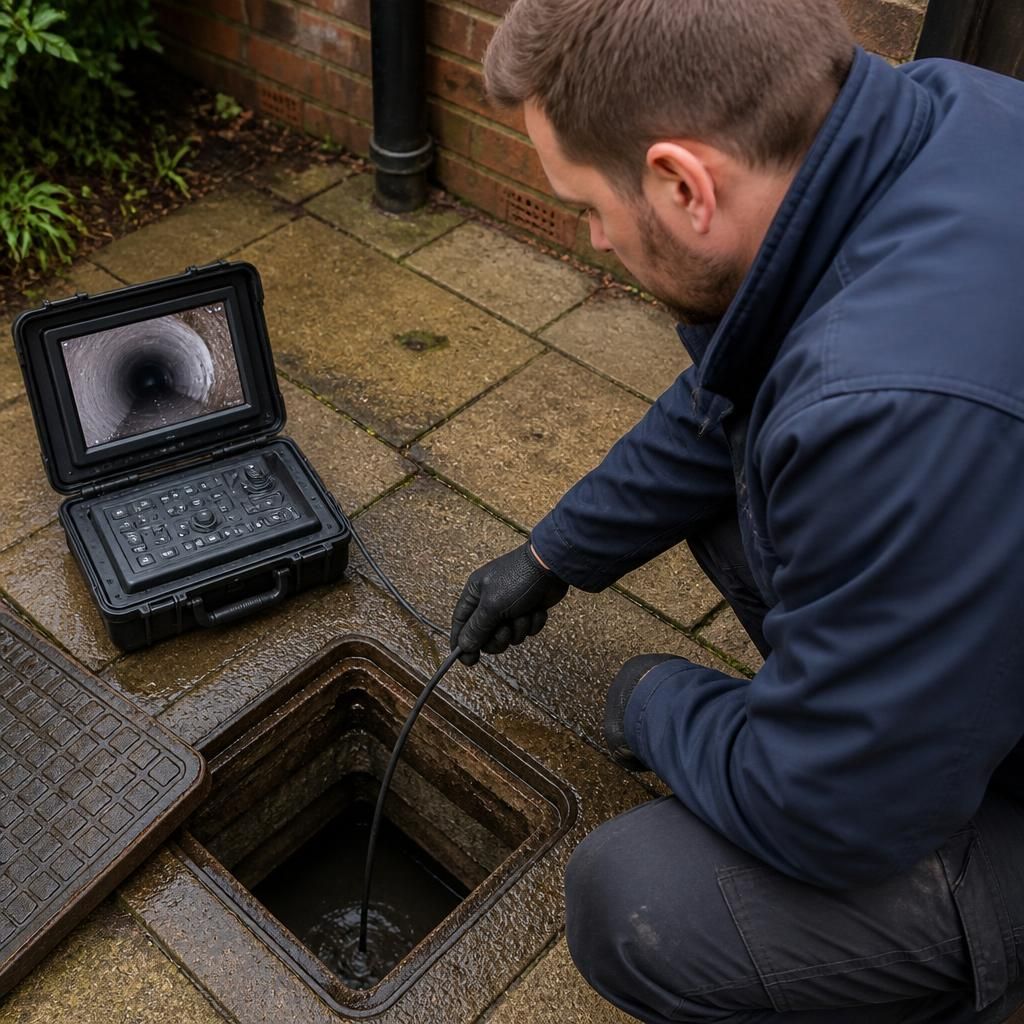
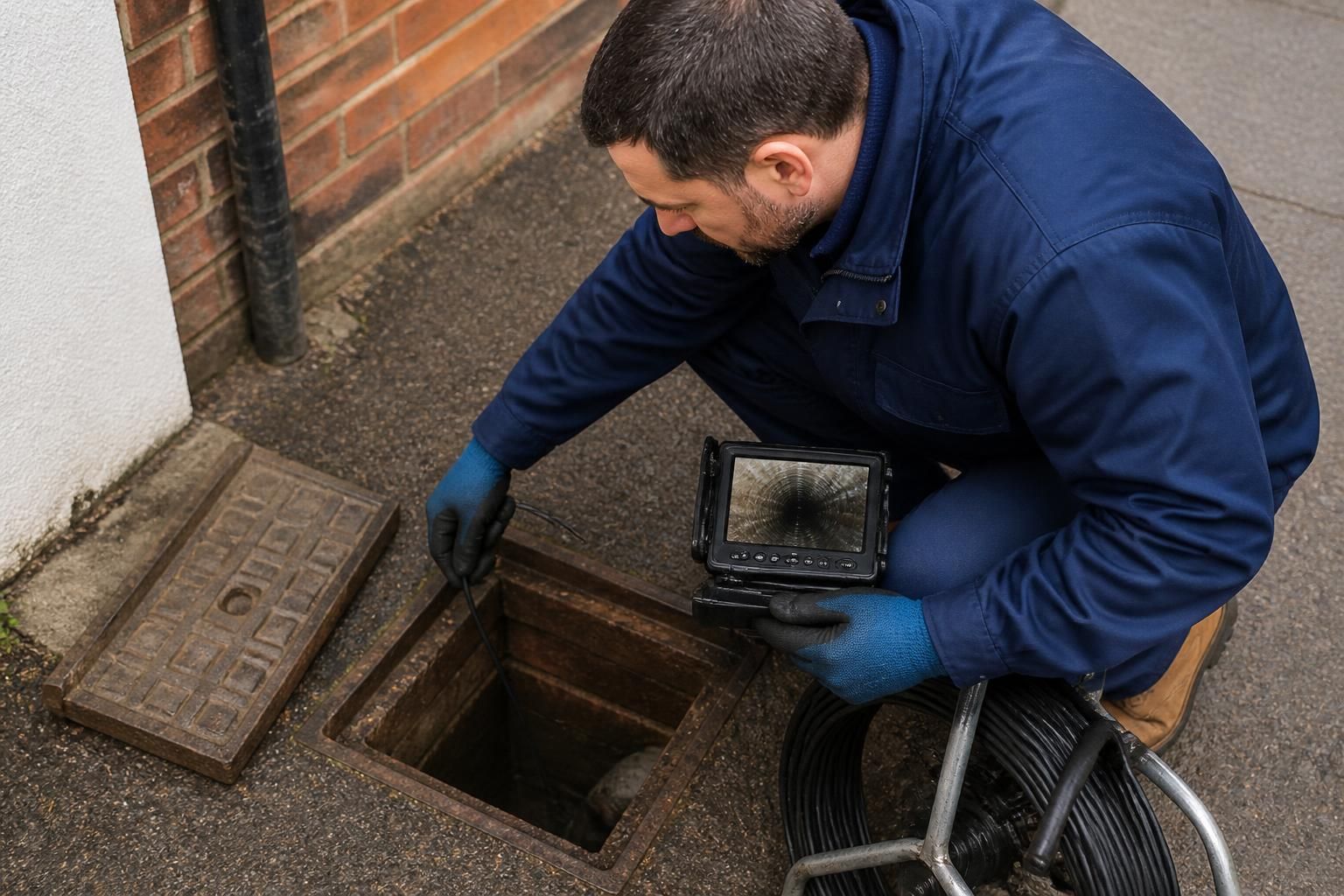
Where the cause or position cannot be established from visible checks, a CCTV drain survey may be appropriate. A small camera is guided through the drainage run to produce images of the inside of the pipe. Depending on the findings, this can reveal:
- Accumulated grease, silt, paper or other material restricting the passage
- Cracks, fractures, displaced joints or collapsed sections
- Tree-root ingress or other material entering through a damaged joint
- Scale deposits and rough internal surfaces that catch further debris
- Standing water, poor gradients or a section that has become deformed
Access is considered as part of the inspection. A suitable entry point might be an internal waste connection, an external gully, a rodding eye or an inspection chamber. The least disruptive practical route should be selected, while avoiding unnecessary removal of fittings or disturbance to surrounding surfaces. If access is restricted, that limitation should be recorded because it may affect how confidently the full drainage run can be assessed.
Drain tracing equipment can also help distinguish between connected runs and identify the route of buried pipework. This is useful where plans are unavailable, several chambers are present or the visible symptoms do not clearly show which branch is affected. Dye testing may be considered where flow direction or a suspected cross-connection needs further confirmation.
Inspection findings are interpreted alongside the symptoms rather than in isolation. For example, a single slow basin may involve a local waste obstruction, whereas several affected fixtures can indicate a restriction farther along the shared drain. Water that clears temporarily but repeatedly returns may warrant investigation beyond routine plunging or jetting.
After the assessment, the technician should explain what was found, what remains uncertain and which remedial options are proportionate. A straightforward obstruction may only require mechanical clearance or water jetting. Evidence of damaged or deteriorated pipework may instead justify a targeted repair, further camera inspection or a more detailed drainage survey. If a repair is proposed, its location and reason should be explained before work proceeds.
A useful inspection record may include camera images, notes about the affected drainage points and details of any defects identified. Keeping this information can help compare future incidents and provide evidence when arranging planned maintenance or discussing responsibility for shared or buried drainage. Ideal Plumbing Services provides drain inspection and unblocking support for residential customers in Birmingham and across the wider West Midlands.