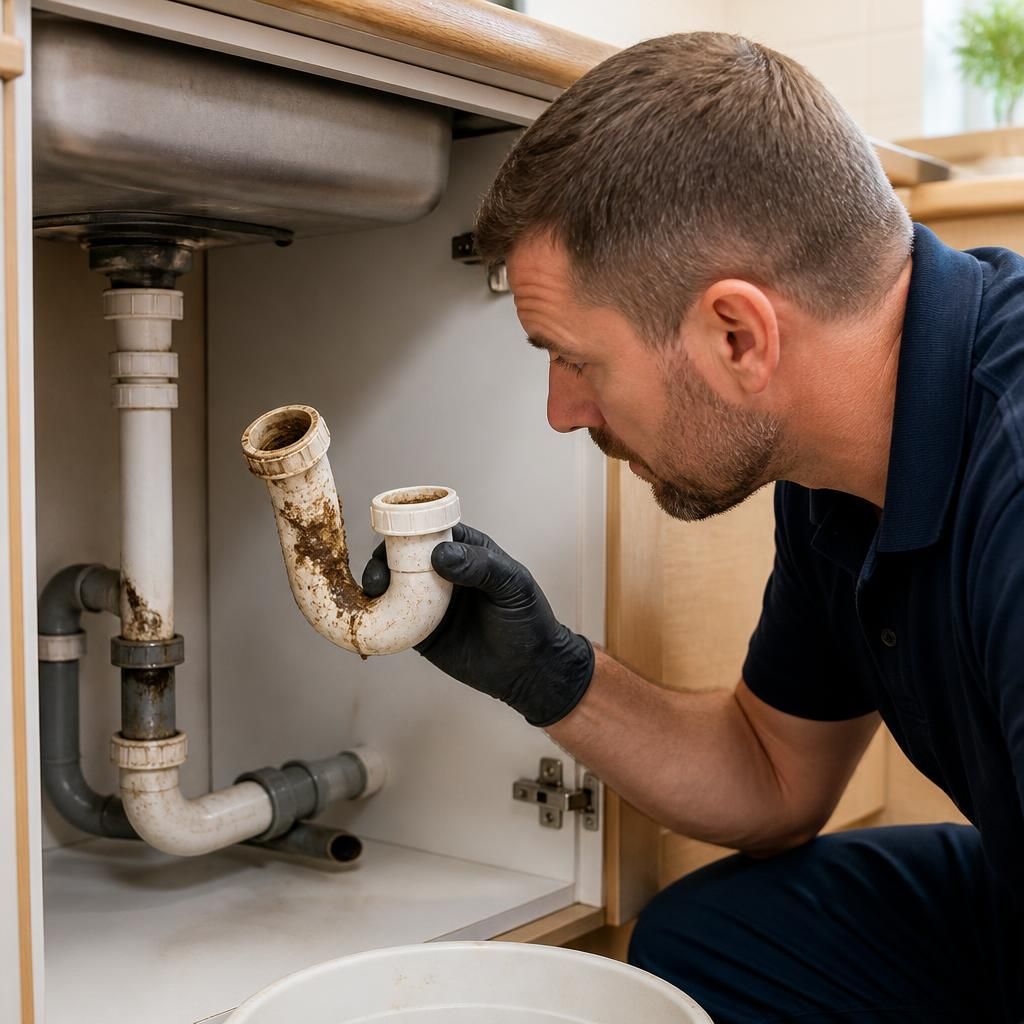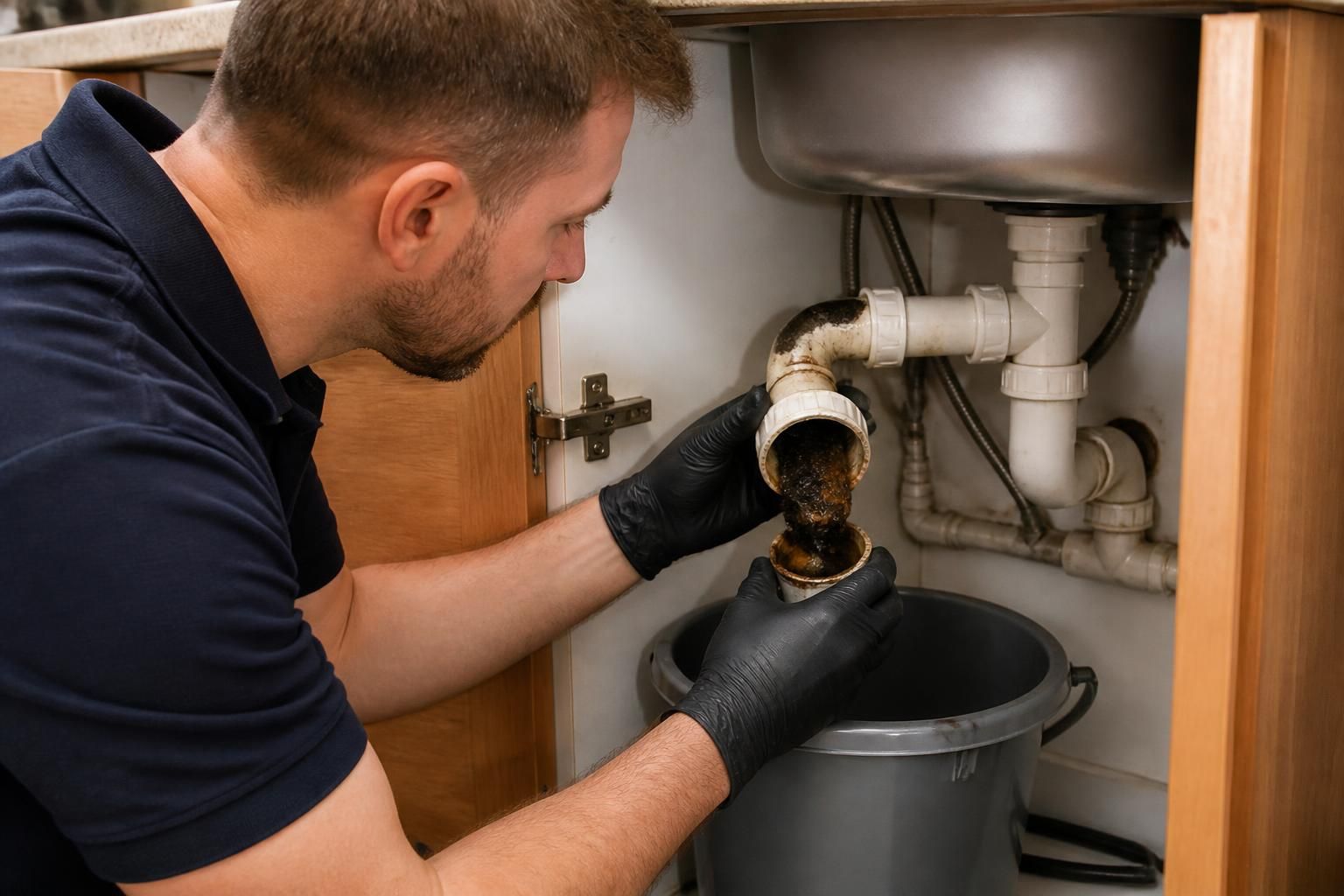
A blocked drain is usually caused by a restriction that narrows the pipe until wastewater can no longer pass freely. In addition to everyday household waste, blockages can develop when unsuitable items are flushed or washed away, mineral deposits reduce the internal diameter, or outside material enters the drainage system.
Common less obvious causes include:
- Flushable wipes and paper towels: These products are more resistant to breaking down than toilet tissue. They can collect at bends, joints or existing restrictions, particularly when several are disposed of together.
- Cotton buds, nappies and dental floss: Fibrous or bulky items can catch on the inside of a pipe and form a framework around which other debris accumulates.
- Mineral scale: Hard-water deposits can gradually coat the pipe wall. This reduces the space available for flow and creates a rough surface where further material can lodge.
- Silt, grit and garden debris: External gullies and surface-water drains may receive soil, leaves, sand and small stones. These materials can settle in low sections or at grates and restrict the outlet.
- Building and maintenance debris: Plaster, cement residue, grout, sealant and other materials entering a drain during renovation work can harden inside the pipe. These obstructions are often too solid for ordinary plunging or chemical treatments.
- Animal or bird activity: Nests, small objects and accumulated organic matter can obstruct open drain covers, gullies and external channels, preventing water from entering or leaving properly.
The arrangement of the drainage system can also influence how easily a blockage forms. A pipe with an insufficient gradient may move water slowly, allowing solids to settle rather than being carried away. Narrow sections, sharp bends, poorly fitted connections and low points can have a similar effect. In some properties, a restriction in a shared drain affects several fixtures at once, while a blockage in a branch pipe may only affect one sink, toilet or shower.
Weather and ground conditions can contribute to drainage problems too. Heavy rainfall can carry silt and debris into external drains, while saturated ground may expose weaknesses around underground connections. In colder conditions, trapped water can expand and worsen an existing restriction. These factors do not always create the original obstruction, but they can turn a partial restriction into a visible overflow or slow-draining fixture.
The location and pattern of the symptoms can provide useful clues. One slow fixture often points to a nearby branch pipe restriction. Several affected fixtures, water rising in an external inspection chamber or an overflow from a low-level drain suggest that the obstruction may be further along the system. Gurgling sounds, unpleasant smells and water levels that rise and fall without the fixture being used can also indicate an underlying drainage problem rather than a simple surface obstruction.
Repeated blockages should not be treated as isolated incidents. Clearing the immediate obstruction may restore flow temporarily, but the same problem can return if scale, settled debris, an unsuitable item or a structural defect remains inside the pipe. A professional inspection can identify the position and nature of the restriction, helping determine whether mechanical clearance, high-pressure cleaning or further drainage work is appropriate.
Prevention starts with keeping unsuitable materials out of the drainage system, using drain covers where appropriate and removing visible debris from external grates. Avoid relying on strong chemical cleaners as a routine measure: they may not remove solid obstructions and can create risks for people working on the pipe later. If a drain repeatedly slows, overflows or affects multiple outlets, arrange an assessment before the restriction develops into a more disruptive failure.