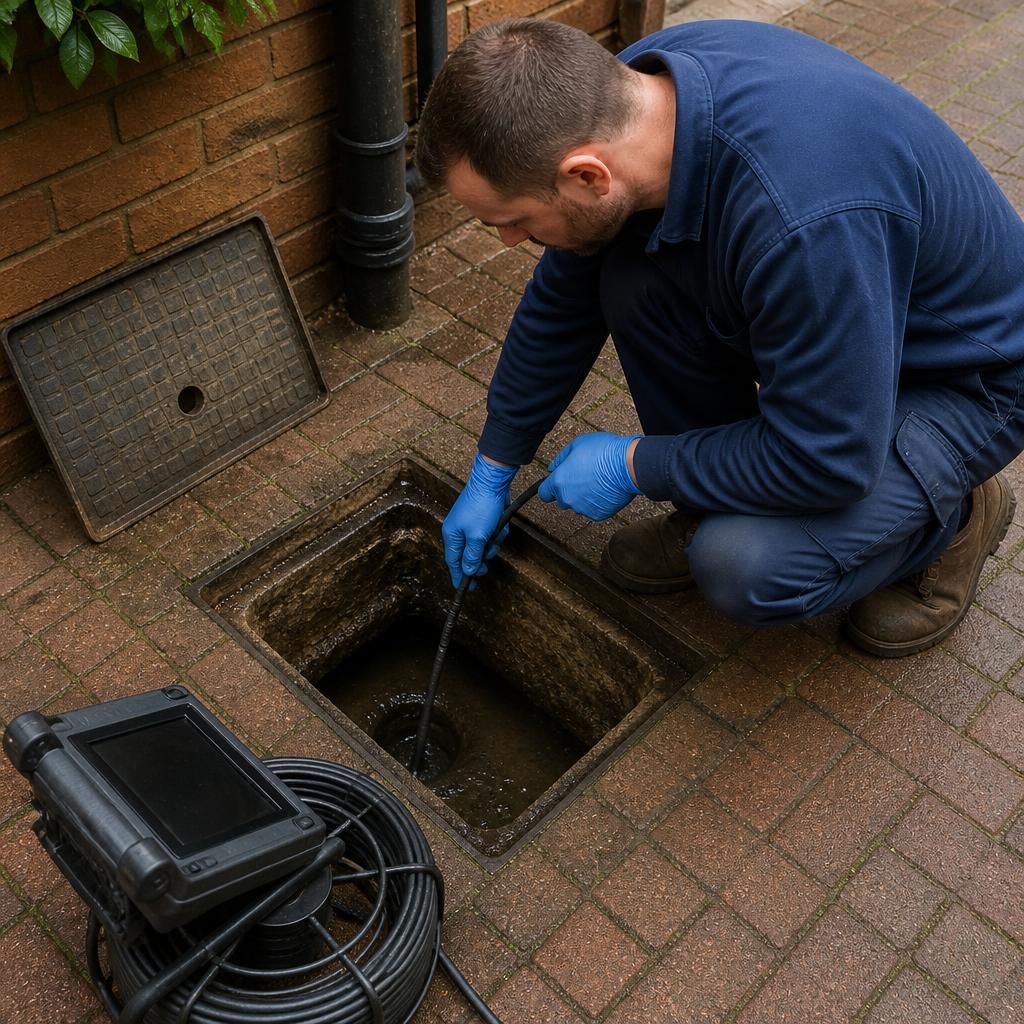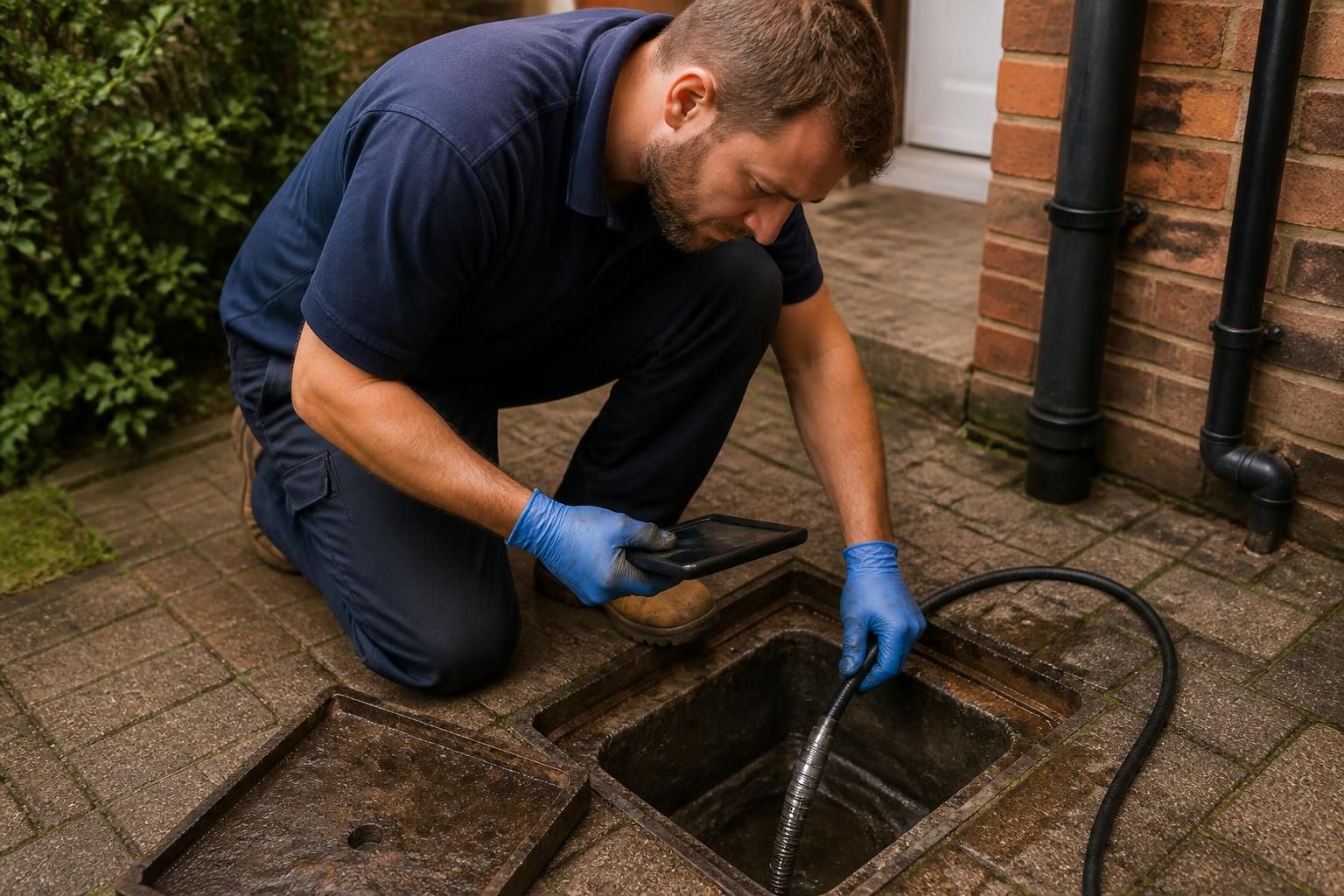
Yes. Sewer drain unblocking can usually be completed with minimal disruption when the condition and position of the blockage are assessed before work begins. The safest approach is to inspect the drainage system, select a method suited to the pipe and obstruction, and avoid disturbing surrounding ground or structures unless the pipe itself has failed.
A professional assessment may include a visual inspection of accessible chambers and a CCTV survey. This can help identify whether the problem is caused by a build-up of grease, silt, wipes, roots, or a damaged section of pipe. It also helps establish the location and condition of the obstruction, reducing the risk of applying unsuitable force or working in the wrong area.
Several precautions help protect the property during the work:
- Existing inspection chambers or rodding points are used where they provide suitable access.
- Drain covers, paving, floors and nearby surfaces are protected from removed waste and dirty water.
- Equipment is operated at a controlled level appropriate to the pipework and the type of blockage.
- The surrounding ground is not disturbed unless inspection shows that access through the pipe is not practical.
- The drainage flow is checked afterwards to confirm that waste water is passing through the affected section.
High-pressure water jetting can be effective for certain deposits, but it should not be treated as a universal solution. Excessive pressure or unsuitable equipment may worsen weaknesses in old, cracked or poorly jointed pipes. Mechanical equipment may be more appropriate for some obstructions, particularly where controlled contact is needed. The method should therefore be chosen after considering the pipe material, diameter, access point and likely cause of the blockage.
In some cases, the blockage is only a symptom of a larger defect. A collapsed pipe, displaced joint, severe root intrusion or damaged inspection chamber may prevent a lasting clearance. If this is found, further work could involve repairing or replacing the affected section. Excavation should generally be considered only when the obstruction cannot be cleared safely through the drainage system or when the pipe requires structural repair.
Property owners can also reduce the risk of avoidable damage by keeping access points clear, not forcing unsuitable objects down toilets or drains, and reporting repeated blockages rather than relying on repeated chemical treatments. Strong drain chemicals may damage certain pipe materials, create a hazard for anyone carrying out later work, and fail to address a structural problem.
For homeowners, landlords and tenants, a careful sewer drain unblocking assessment provides useful evidence about whether the issue is a removable obstruction or a defect requiring repair. Where work is needed in Birmingham or elsewhere in the West Midlands, Ideal Plumbing Services can assess the drainage problem and recommend an appropriate approach for the property.