A blockage affects the sewer line when the obstruction lies in the shared drainage run carrying wastewater away from the property, rather than in a single appliance or branch pipe. The most reliable way to distinguish the two is to consider where the symptoms start, whether they return after local clearing, and what a professional inspection finds inside the pipe.
Look for these indications that the problem may be in the sewer line:
- The same drainage problem keeps returning after a sink, toilet or other individual outlet has been cleared.
- Wastewater drains away briefly and then slows again, suggesting that a partial obstruction remains further along the system.
- Several internal waste pipes appear to be affected at different times, particularly when they connect to the same underground drain run.
- There is a persistent foul odour from more than one outlet, although odour on its own cannot identify the position of a blockage.
- Gurgling, bubbling or changes in water levels occur when another appliance is used. These sounds can indicate restricted airflow or trapped water within a shared pipe.
- The problem is concentrated around an external drain, underground pipe route or shared drainage connection rather than one appliance.
A local branch blockage is more likely when one outlet is affected and nearby fixtures continue to drain normally. Common examples include a trap beneath a basin, the waste pipe serving a kitchen sink, or the short branch connected to a toilet. These restrictions can often be traced to grease, hair, paper, sanitary products or an object lodged close to the affected fitting. However, a local symptom does not prove that the blockage is local, particularly where the same issue has happened repeatedly.
The layout of the drainage system is important. Branch pipes from individual fixtures join larger private drains, which may then connect to a shared sewer. A blockage beyond the junction of several branches can affect those connected outlets, while an obstruction before that junction may remain limited to one part of the property. Drainage plans, inspection points and the position of manholes can help establish which section is involved, but the visible symptom is not always at the point of the obstruction.
Householders should avoid assuming that a chemical drain cleaner has solved the issue because water begins to move. Liquid may pass through a narrow channel while material remains attached to the pipe wall. Repeated use can also make later investigation more hazardous and may damage some pipework or seals. Plunging can be appropriate for a minor local obstruction, but it is unlikely to identify whether a deeper shared drain is restricted.
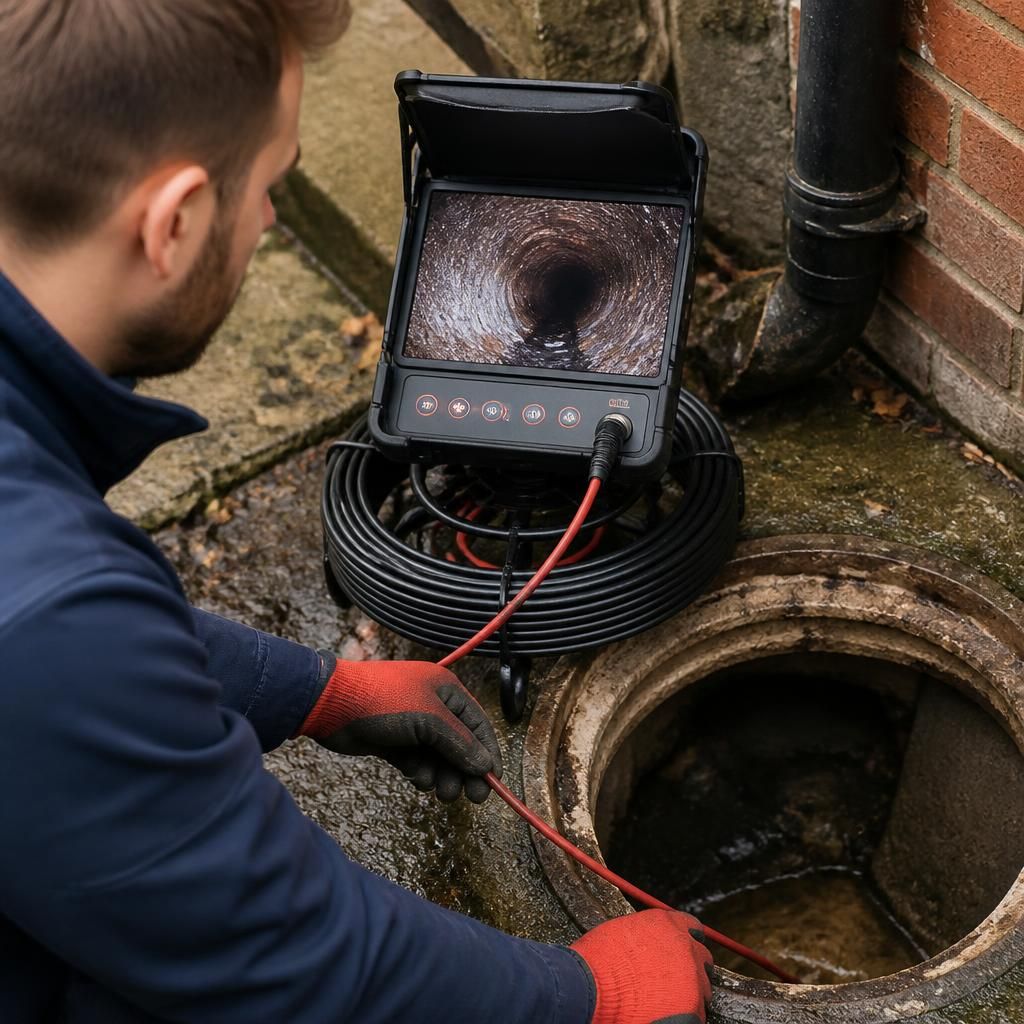
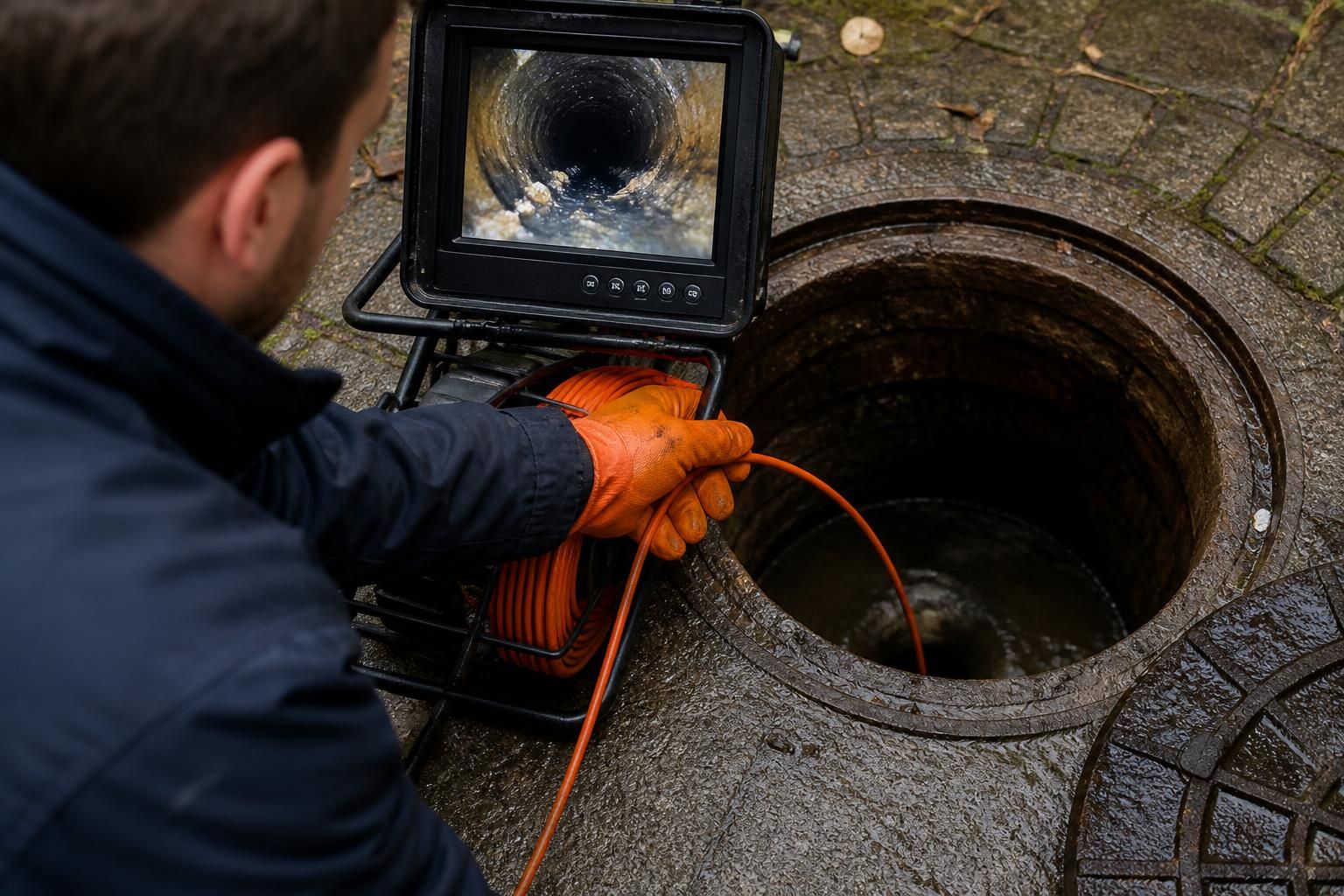
A plumber or drainage specialist will normally isolate the affected section before choosing a clearing method. This may involve checking accessible traps and drain points, testing how connected outlets behave, and inspecting the pipe with a drainage camera. A camera survey can show the position and type of obstruction, such as accumulated deposits, roots, displaced joints, a damaged section or a collapsed pipe. It can also distinguish a blockage from a structural defect that is causing repeated restrictions.
Drain rods or mechanical equipment may remove some obstructions, while high-pressure water cleaning may be considered where deposits coat the inside of a suitable pipe. The correct method depends on the pipe material, access, the obstruction and the risk of forcing debris into a more difficult position. Clearing the pipe without identifying why the problem occurred can lead to recurrence, so a follow-up inspection may be appropriate where the drainage has a history of blockages.
Do not open a sealed inspection cover if wastewater is standing behind it, and keep children and pets away from contaminated water. Avoid using affected sinks, toilets, washing machines and dishwashers until the drainage route has been assessed, as additional discharge can increase the spread of wastewater. If there is sewage inside the property, contamination, a damaged pipe or a blockage that cannot be cleared safely, professional help is appropriate.
Ideal Plumbing Services can assess blocked drains and sewer-line concerns for homeowners, landlords and tenants in Birmingham and the wider West Midlands. The useful information to provide is which outlets are affected, when the issue began, whether it has returned before, and whether any drain-clearing products or equipment have already been used. This helps the plumber decide whether to investigate a branch pipe, a private underground drain or the connection to the wider sewer network.