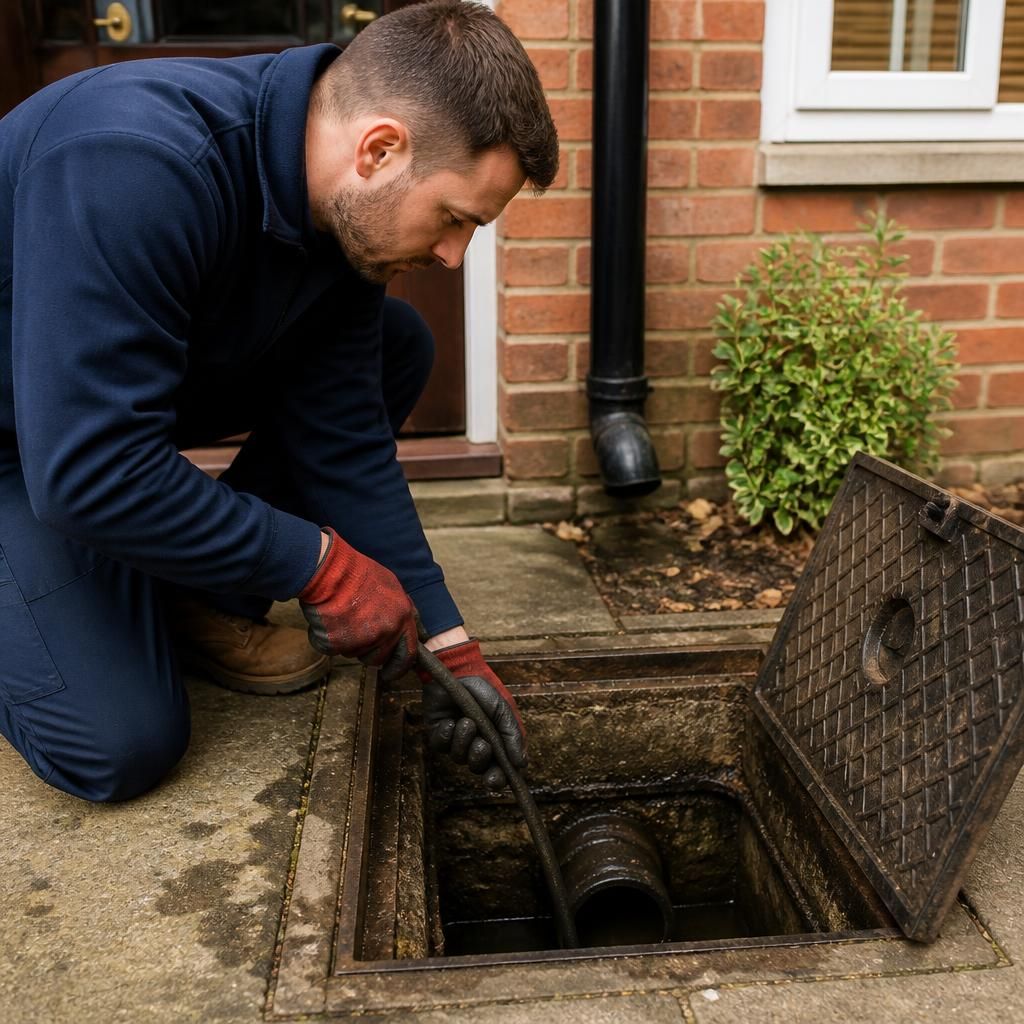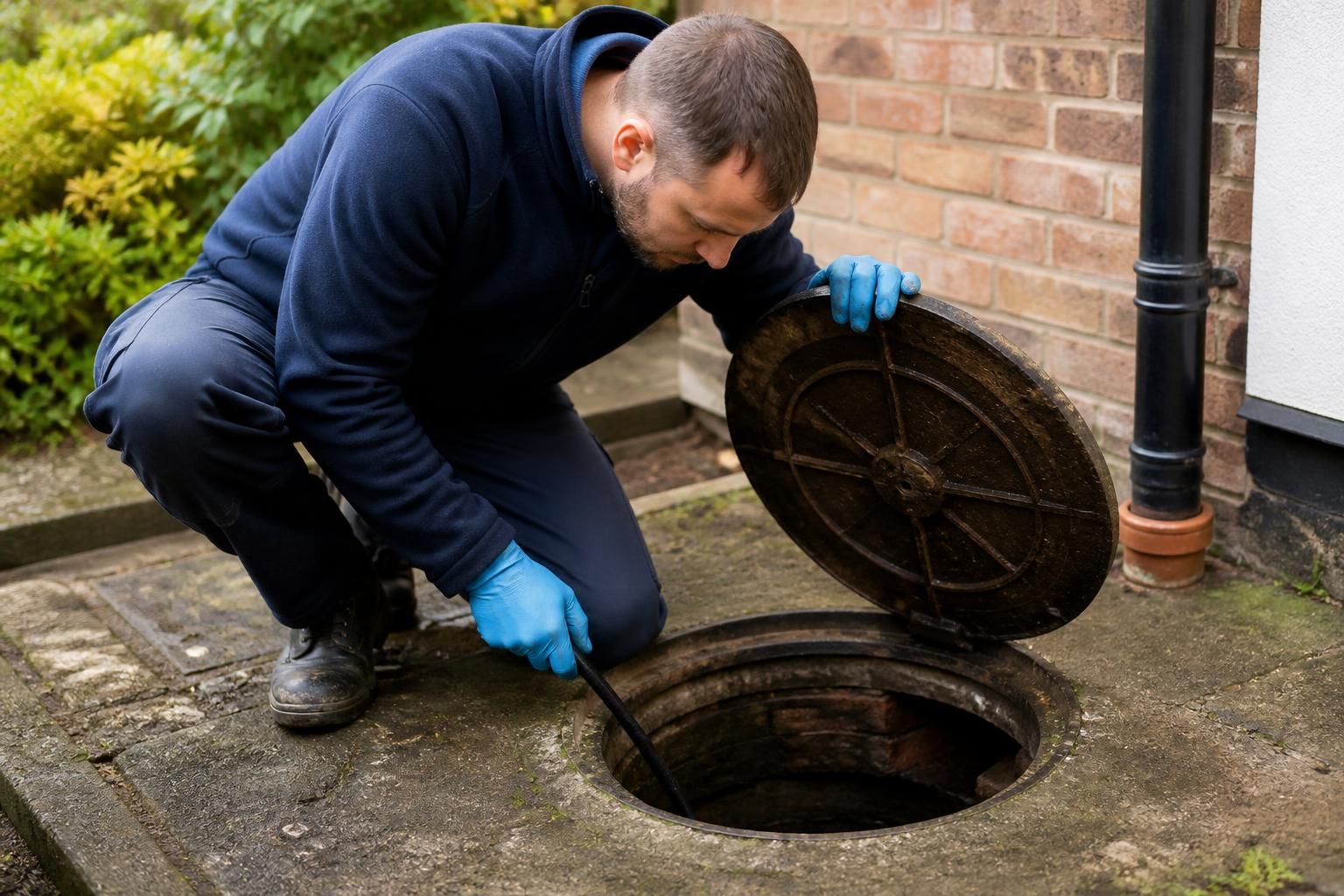
Domestic sewer drain unblocking is appropriate for clearing wastewater pipework that serves a house, flat or other residential property when the obstruction is beyond an individual fixture. It can be used for private drains connected to one home and, where responsibility and access allow, shared drainage serving several properties.
The service is particularly relevant when more than one outlet is affected. For example, slow-flowing toilets, showers and sinks, bubbling drains, or wastewater collecting in an external inspection chamber may indicate that the restriction lies in the property’s main drain or the connected sewer route rather than in a single trap or waste pipe.
- Suitable situations: recurring foul-water blockages, overflowing external drains, backed-up inspection chambers and obstructions caused by grease, wipes, silt, scale or root ingress.
- Less suitable as a first response: a blockage limited to one sink, bath or toilet, where the cause may be a local trap, internal waste pipe or toilet connection. A drainage professional can still investigate if the problem keeps returning or affects other outlets.
Unblocking may be needed in several types of domestic property. In a detached or semi-detached house, the affected pipe may be private drainage within the boundary. In a terrace, maisonette or block of flats, the pipework may be shared with neighbouring properties. Shared drainage can make fault-finding and access more complicated, particularly where several homes experience symptoms at the same time.
Responsibility depends on the position of the blockage, the ownership of the pipework and the arrangements for the property. A homeowner, landlord or tenant may be responsible for internal and private drainage, while a public sewer may fall under the relevant water and sewerage company. Leases and tenancy agreements can also allocate responsibility differently. Establishing where the blockage is located is therefore important before arranging repairs or deciding who should report it.
A suitable assessment normally considers the symptoms, checks accessible chambers and identifies whether wastewater is entering or leaving the affected section. Depending on the findings, the obstruction may be cleared using appropriate mechanical equipment or water-based cleaning. If the blockage is persistent, difficult to locate or linked to suspected structural damage, a CCTV drain survey can help identify defects such as displaced joints, cracks or root penetration. The clearing method should be selected for the pipe material, access conditions and nature of the obstruction.
Where sewage is backing up, occupants should stop using affected toilets, sinks, washing machines and other connected appliances if doing so could add to the overflow. Keep children and pets away from contaminated water, avoid contact with bare skin and do not cover an inspection chamber that is already under pressure. If the blockage is confined to one fixture, avoid repeatedly using chemical drain cleaners, as these may create a hazard for anyone who later opens the pipework and may not resolve the underlying fault.
For domestic customers in Birmingham and the wider West Midlands, Ideal Plumbing Services can assess whether the problem is an internal blockage, a private domestic drain or a sewer connection issue, then recommend the appropriate plumbing or drainage work. This is useful for homeowners, landlords and tenants who need the source of the obstruction identified before deciding on further repairs.