Sewer drain unblocking costs depend on the work required to restore the flow, rather than on a single standard charge. A straightforward blockage may involve locating and clearing an obstruction, while more complex work can include CCTV inspection, high-pressure water jetting, root removal or repairs to damaged pipework. A proper assessment is therefore the most reliable way to establish the likely cost.
What is usually included in the price?
A sewer drain unblocking quotation may cover several separate stages:
- Initial investigation to identify the affected drain and the likely position of the blockage
- Accessing the pipe through a suitable chamber, rodding point or other access opening
- Mechanical rodding or water jetting to remove the obstruction
- Testing the flow after the blockage has been cleared
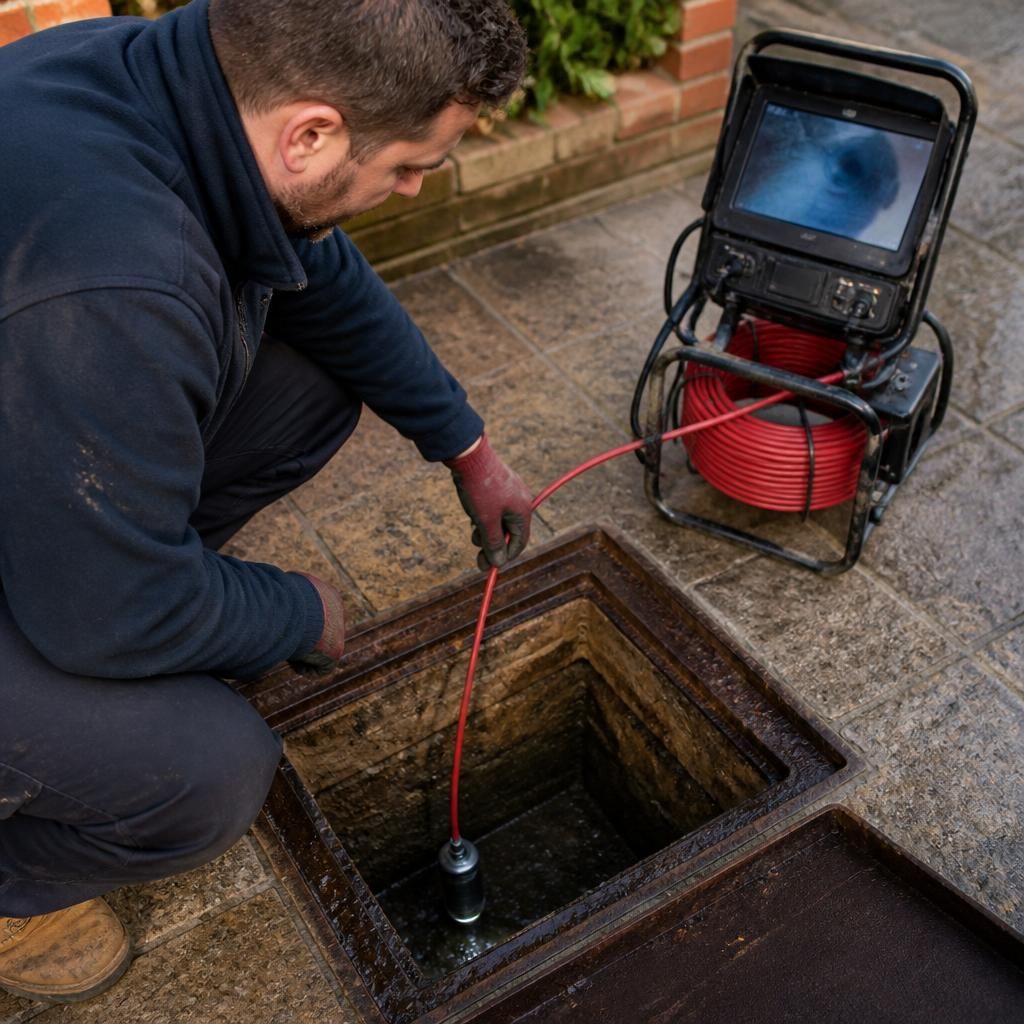
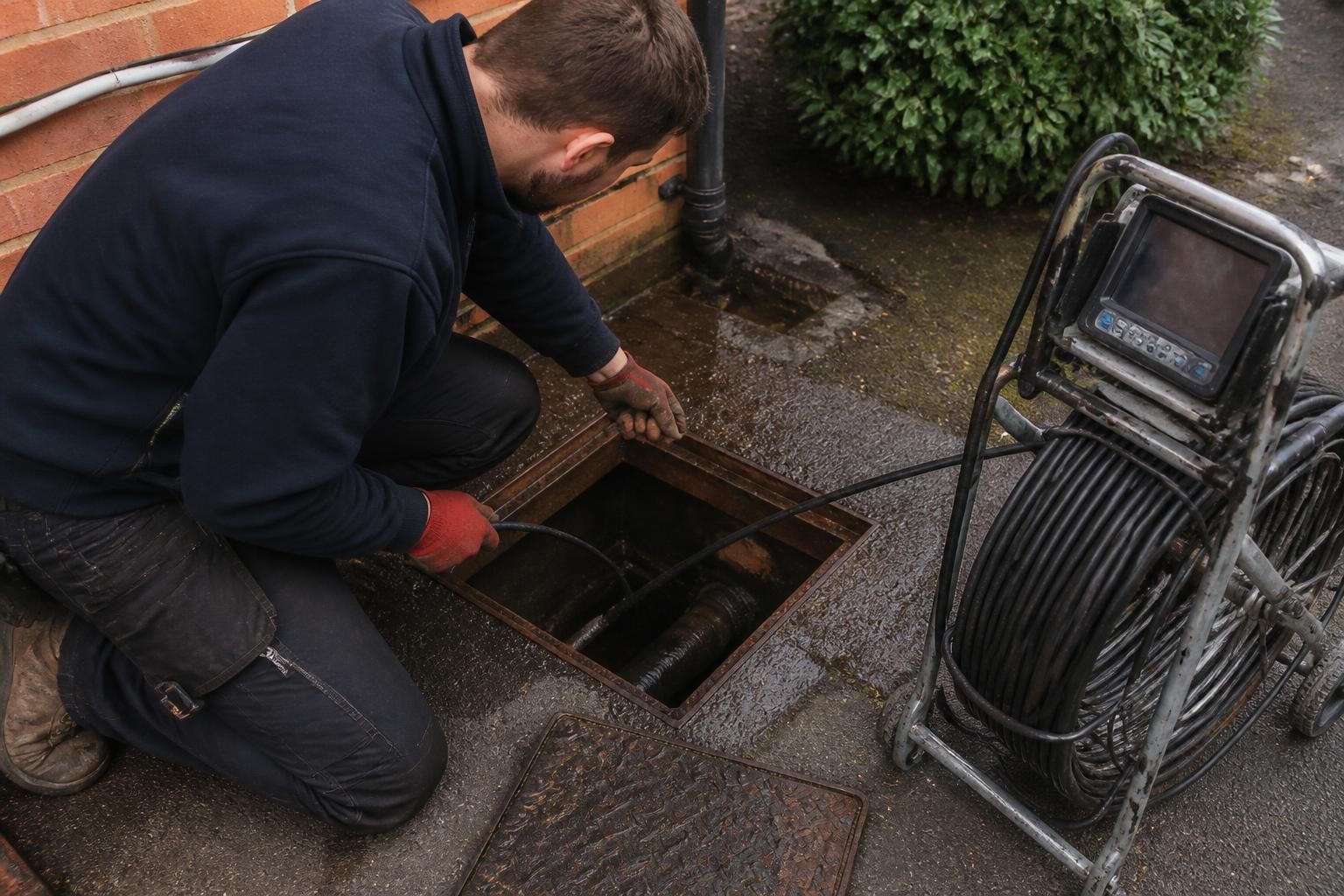
- CCTV drainage inspection where the cause is unclear or the problem has returned
- Advice about any further repair, cleaning or maintenance that may be needed
Some jobs can be completed with one clearance method. Others need more than one stage, particularly where the blockage is compacted, recurring or located deep within the drainage system.
Factors that can increase or reduce the cost
The main pricing factors include the type of obstruction, the length and layout of the affected pipework, and how easily the drainage system can be reached. Grease, wipes, sanitary products, silt, tree roots and displaced materials can each require different equipment or techniques. A blockage caused by a structural defect may also return after clearance unless the damaged section is addressed.
Additional costs can arise where a CCTV survey is needed to confirm the cause, where specialist cutting equipment is required for roots, or where excavation and pipe repair are necessary. Reinstating paving, patios, flooring or other surfaces can be a separate part of the work, so it is sensible to establish whether this is included in any quotation.
Why a low initial price may not be the final cost
A basic unblocking price may relate only to clearing an accessible obstruction. If the blockage cannot be reached using the first method, or if inspection shows a collapsed, cracked or misaligned pipe, further work may be recommended. Clearing the immediate obstruction without identifying an underlying defect can leave the drainage system vulnerable to another blockage.
This does not mean that every blocked sewer requires extensive work. If the pipe is intact and the obstruction can be removed effectively, the job may end after the clearance and flow test. The important distinction is between a one-off obstruction and a recurring problem caused by the condition or layout of the pipe.
Questions to ask before work starts
- What work is included in the quoted price?
- Is the charge for investigation separate from the unblocking work?
- Will CCTV inspection be recommended if the blockage returns?
- Are jetting, root cutting or other specialist methods included?
- Would excavation or surface reinstatement be charged separately?
- Will any further repair be discussed and priced before it is carried out?
These questions help distinguish a simple clearance from a broader drainage investigation and make it easier to compare quotations on a like-for-like basis.
When professional assessment is particularly important
Professional advice is appropriate when several outlets are affected, wastewater is backing up, the blockage keeps returning, or there is a foul smell, unusual gurgling or visible damage around a drain. These signs can indicate that the issue is further along the sewer line rather than limited to one household fitting. Avoid repeatedly using chemical drain cleaners, as they may not clear a substantial sewer blockage and can create hazards for anyone working on the pipe.
Ideal Plumbing Services provides sewer drain unblocking and related drainage support for residential customers in Birmingham and the wider West Midlands. The company can assess the drainage problem, explain the work recommended and confirm the pricing before proceeding.