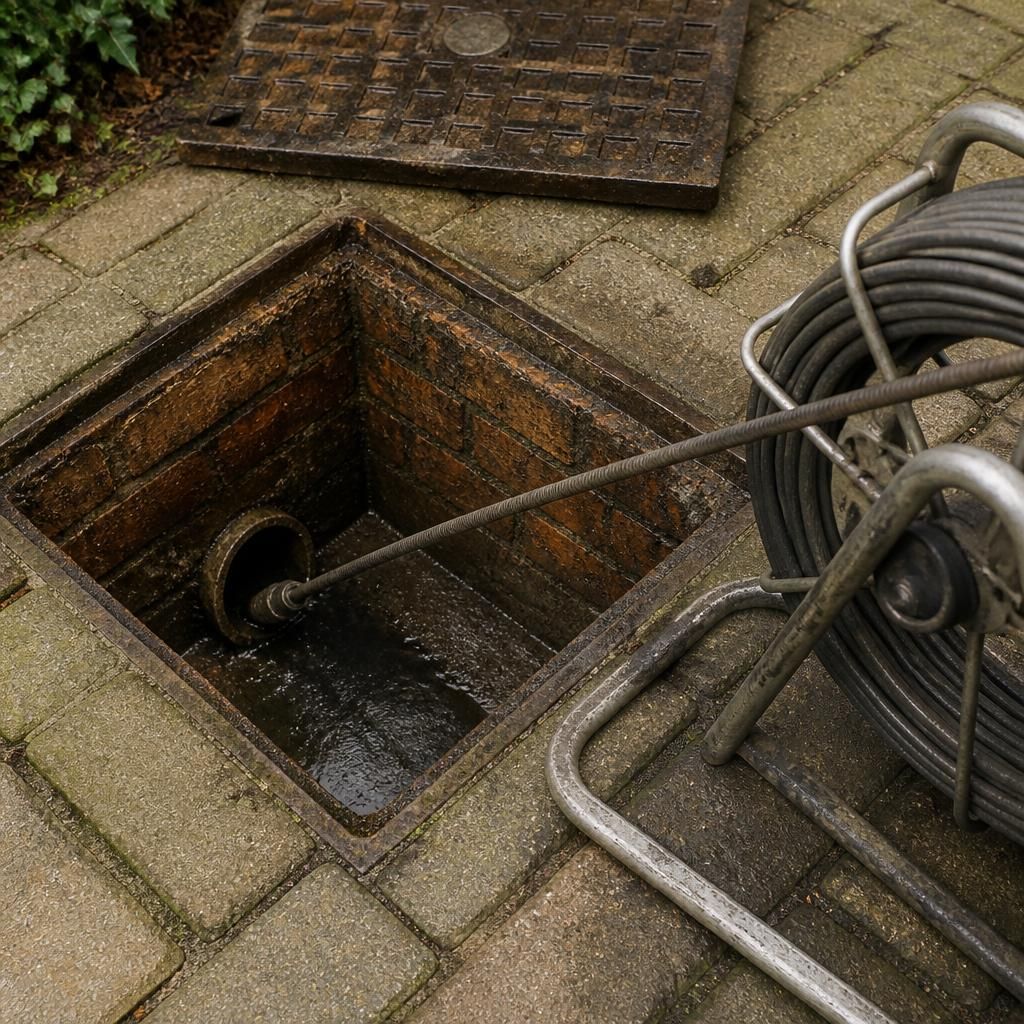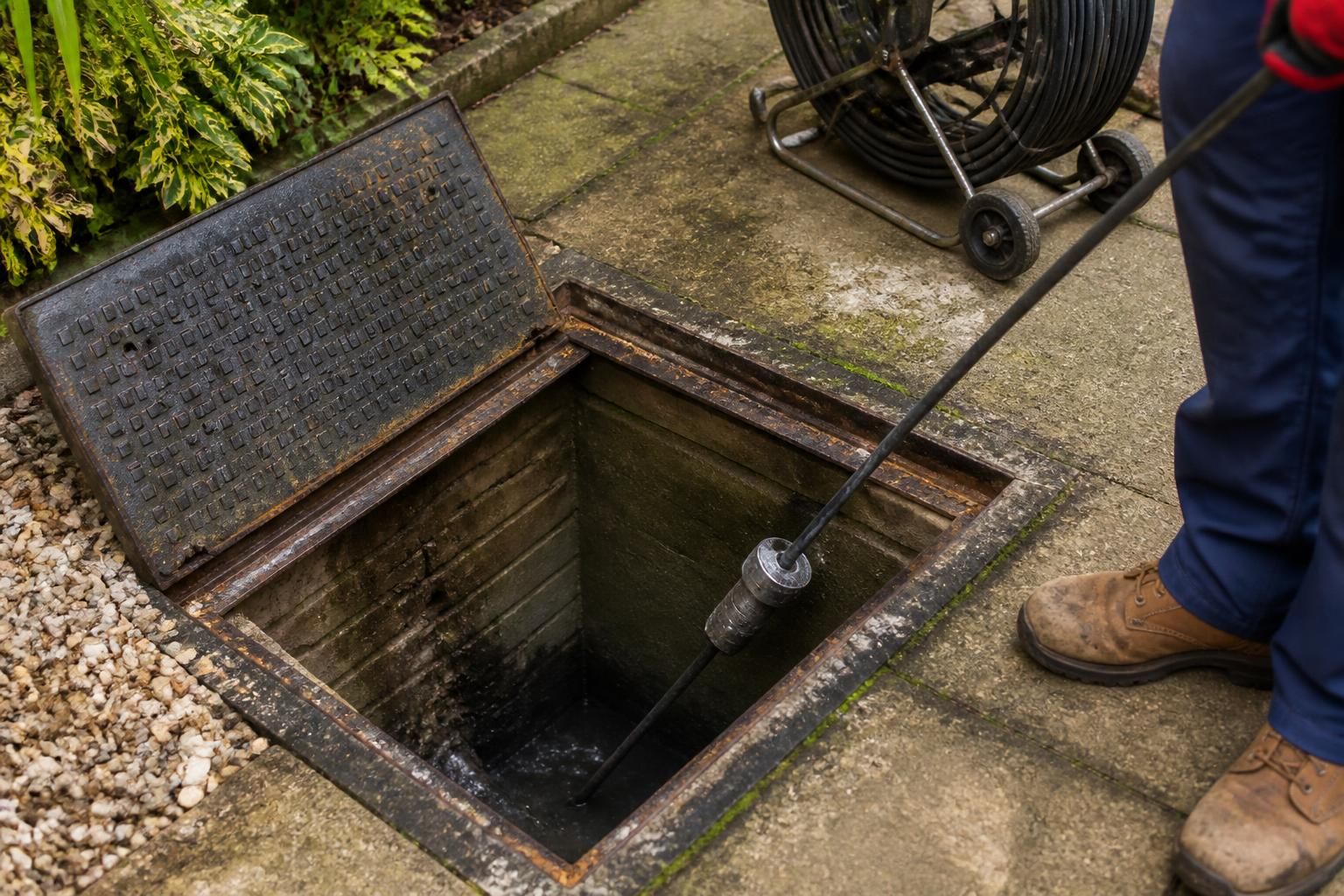
The access required depends on where the obstruction sits, how the drainage system is laid out and which cleaning method is appropriate. The most useful point is usually the nearest accessible opening on the affected run, with enough room around it for inspection, rodding or jetting equipment to be used safely.
Before starting work, the plumber will usually identify the relevant access points and trace the direction of flow. These may include:
- Rodding eyes: small capped access points fitted to some underground or external drain runs. They can provide a direct route for rods or other equipment.
- Inspection chambers: covered chambers that allow the drain run, connections and water level to be inspected. The cover must be safely exposed and removable.
- Manholes: larger access points that may be needed where the sewer is deeper, several pipes meet or more substantial equipment is required.
- Internal access points: in some layouts, access may be taken through a suitable waste pipe, trap or other internal drainage point where an external opening cannot be used.
Access is not limited to finding the cover itself. The surrounding area must also be reachable and safe to work in. This can mean clearing bins, garden furniture, stored items, vehicles or loose materials from around an external chamber. A locked gate, overgrown planting, paving or a buried cover can prevent equipment from being positioned correctly. The plumber may need the property owner, landlord or tenant to arrange entry to side passages, rear gardens, utility areas or other parts of the property.
Where the opening is inside the property, clear floor space may be needed around the affected fixture or pipework. Items may need to be moved to protect them from dirty water and to give the engineer a stable working position. Access should not be forced: damaged covers, fragile fittings and sealed or buried chambers can create additional risks and may require a different approach.
The required working space also varies with the equipment. Manual rods need a reasonably direct route and enough room to join and manoeuvre the sections. Water-jetting equipment needs suitable positioning, a route for the hose and controlled drainage of wastewater. Inspection equipment may need a clear line through the pipe or access from more than one point to locate the obstruction accurately.
If the first access point does not allow the blockage to be reached, the plumber may inspect another point further along the drainage run. This can help establish whether the obstruction is between two chambers, close to a property connection or beyond the private drainage system. Opening additional covers is not always necessary, but it can be useful when the flow level or pipe direction cannot be established from one location.
Before the visit, it is helpful to identify any known chambers or rodding points, unlock gates and provide access to relevant rooms or outside areas. Tell the plumber about recent building work, extensions, landscaping or recurring blockages, as these may have altered the original drainage route. Do not remove a heavy cover, enter a chamber or attempt to clear a deep sewer yourself; confined spaces, contaminated water and unstable covers present serious hazards.
If no suitable private access point can be used, the available options depend on the layout and the location of the obstruction. A professional assessment can determine whether another opening is suitable, whether a minor access solution is required or whether the blockage may lie in a section managed outside the property. The aim is to reach the affected pipe while limiting unnecessary disturbance to flooring, paving, walls and landscaping.