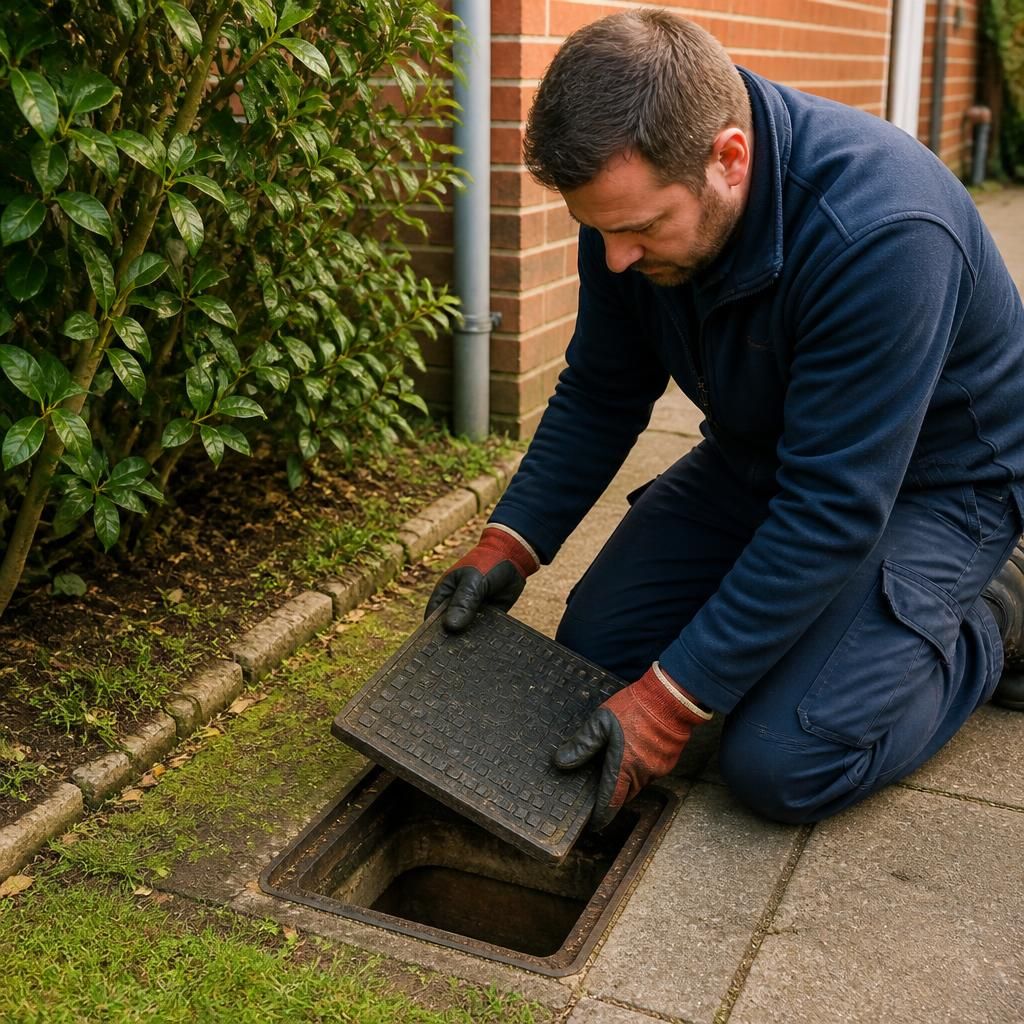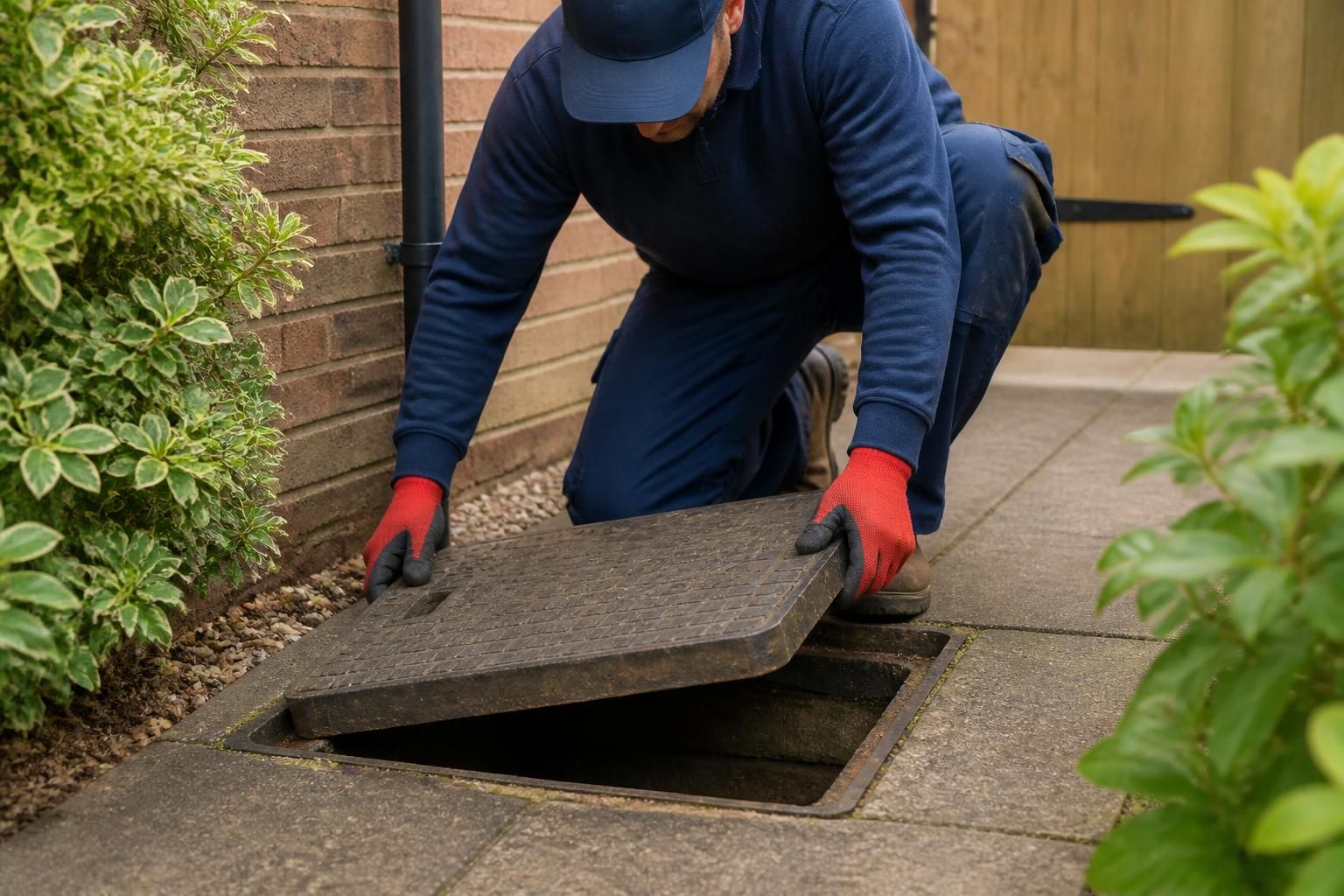
Access for external drain unblocking is arranged by confirming where the drainage system can be entered, who controls that point and whether the route is safe and practical for the required equipment. This includes checking the property layout, any shared or boundary drainage and the condition of the access fitting before unblocking work is started.
The main access arrangements usually involve:
- Confirming ownership or permission: If the relevant drain or access point is in a communal area, neighbouring property or rented premises, permission may be needed from a landlord, managing agent, neighbour or other responsible person.
- Making the route clear: Plants, stored items, garden furniture, vehicles and other obstructions may need to be moved so the engineer can reach the drain safely and position tools without damaging the surrounding area.
- Checking the access fitting: Covers, rodding eyes, gullies and other entry points are checked for damage, corrosion, concrete, soil or tight seals. A cover should not be forced, as this can break the fitting or create a safety hazard.
- Allowing for equipment: The available space affects whether rods, mechanical cleaning equipment or other tools can be used. Narrow side passages, steps, low gateways and restricted garden access should be mentioned when the work is arranged.
For a rented property, the tenant should normally confirm the landlord’s or managing agent’s requirements before work begins, particularly where opening a cover could affect paving, landscaping or a shared accessway. It is also sensible to keep children and pets away from the working area and to tell the engineer about locked gates, alarmed areas or other site restrictions.
Where a drain is shared, access may need to be coordinated between more than one property. The responsible party can depend on the drain’s location, property boundaries and any arrangements applying to the development. Clarifying this beforehand helps avoid delays and ensures that the person authorising the work understands which area may need to be entered.
If the usual entry point cannot be used, the engineer can assess whether another suitable point is available or whether the fitting itself needs attention before unblocking can proceed. The options depend on the drainage layout, the depth and condition of the pipework, and the amount of working space. Access should never be created by breaking paving, walls or other structures without the property owner’s agreement.
After the work, the cover or fitting should be replaced securely and the area left in a safe condition. Any damaged or defective access point identified during the visit should be explained to the property owner, since a weak cover, missing seal or damaged rodding eye can make future maintenance more difficult. Ideal Plumbing Services can assess the practical access arrangements for an external drain and explain what needs to be prepared before unblocking begins.