After an external drain blockage has been located, the work moves from finding the obstruction to establishing why it formed and deciding whether the drain needs cleaning, repair or replacement. The appropriate next step depends on the material causing the restriction, the condition of the pipe and whether the problem is isolated or likely to recur.
The drainage line is assessed in context. A blockage may be caused by accumulated silt, food residue, unsuitable items, tree-root ingress, a displaced joint, cracked pipework or a collapsed section. The position of the obstruction is therefore considered alongside the age, layout and recent behaviour of the drainage system. Repeated slow drainage, foul odours, overflowing chambers or returning blockages can indicate a defect beyond the immediate obstruction.
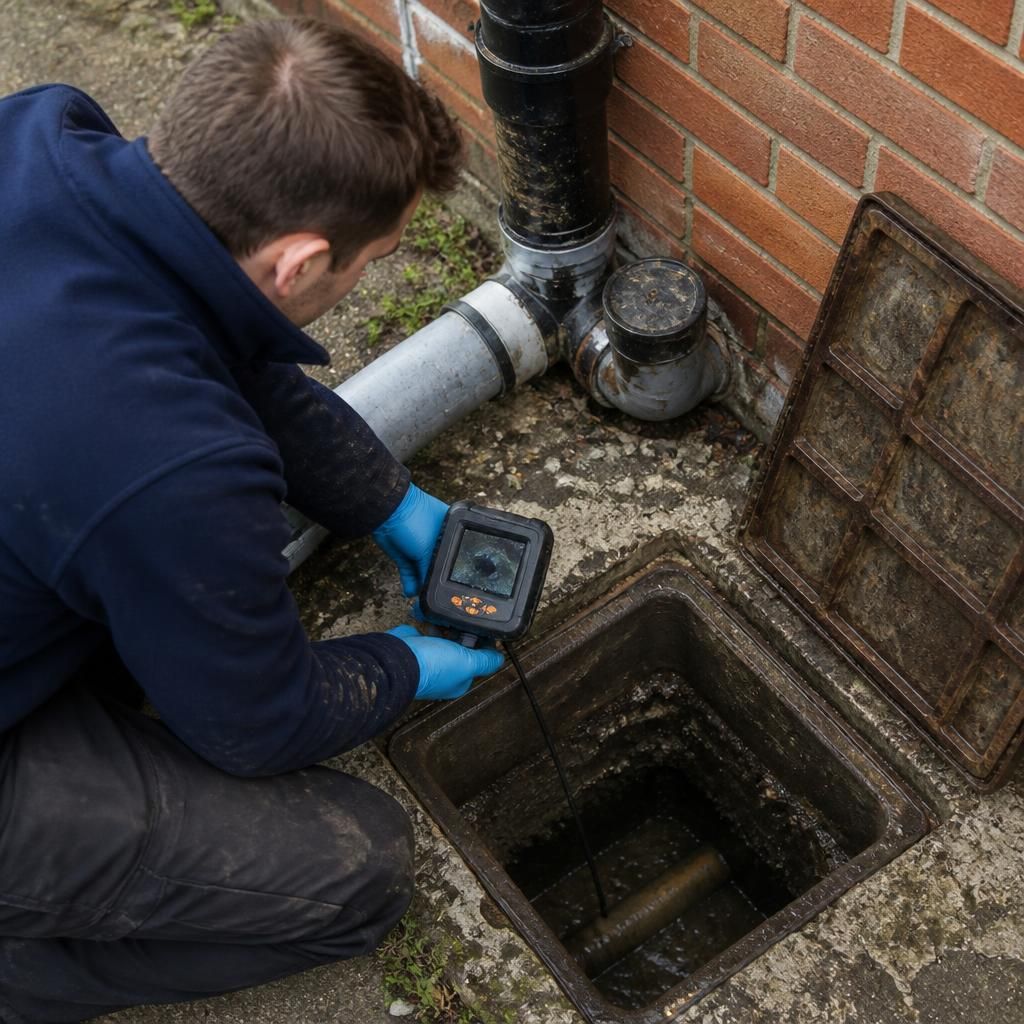
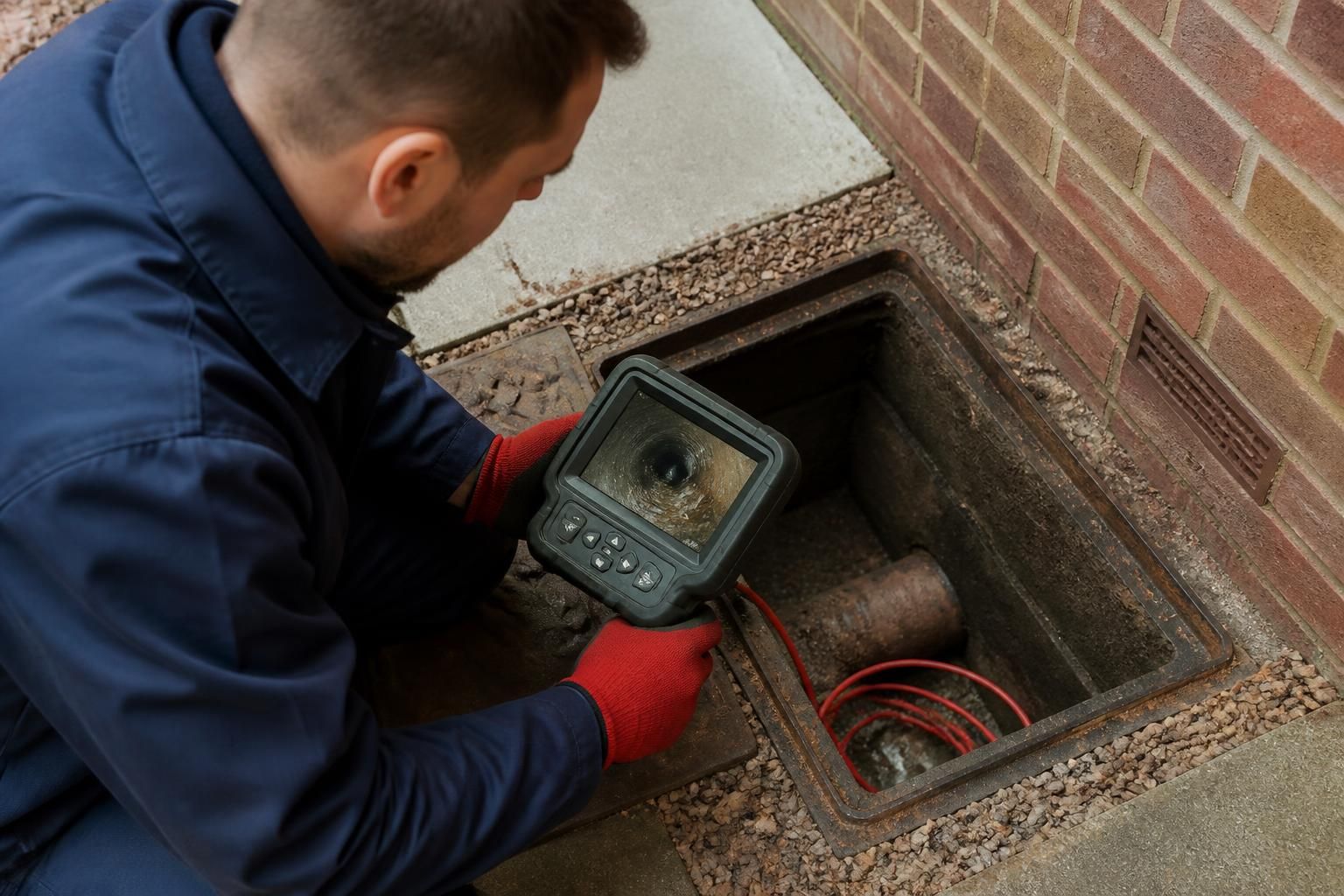
Where suitable access is available, a camera survey may be used to view the inside of the pipe. This can help distinguish a removable obstruction from structural damage and show whether roots, fractures, open joints or standing water are present. The findings can also identify the most practical repair point, reducing the need for unnecessary excavation. If a camera survey is not appropriate, the condition of the drain may instead be assessed through access points, flow behaviour and other visible evidence.
The removal method is matched to the obstruction. A minor restriction may be cleared with mechanical equipment, while more compacted or extensive deposits may require water jetting. Root growth needs particular care because cutting away the visible growth does not necessarily resolve the entry point. Items that have been flushed or washed into the system may need to be extracted rather than forced further along the pipe.
Once the obstruction has been cleared, the drainage route can be checked to establish whether water is moving freely throughout the affected section. If the pipe remains restricted after cleaning, this may indicate a collapse, severe deformation, a persistent root problem or another structural fault. In that situation, repeatedly clearing the same point is unlikely to provide a lasting solution.
If damage is found, the available repair depends on its location and severity. A localised defect may be addressed with a targeted repair, whereas a badly damaged or collapsed section may require the affected pipe to be exposed and replaced. In suitable circumstances, drain relining can provide a way to seal a damaged section without replacing the entire length. The condition of the surrounding pipe and the accessibility of the defect are important when choosing between these approaches.
Before remedial work begins, the proposed method should be explained clearly, including what part of the system is affected and whether excavation, replacement or further investigation is required. If the inspection reveals a different cause from the one initially suspected, the recommended work may change. A clear explanation allows the property owner, landlord or responsible occupier to make an informed decision rather than authorising unnecessary work.
After cleaning or repair, the system should be checked again. This may involve running water through the relevant fixtures, observing discharge through the chamber and carrying out a further visual inspection where suitable. The purpose is to confirm that the repaired section connects correctly, that water is not backing up and that the original symptoms have not simply moved further along the drain.
External drainage work can also affect surrounding surfaces, such as paving, soil, planting areas or access routes. Where excavation has been necessary, reinstatement should be discussed as part of the work so that the property owner understands which surfaces are disturbed and how they will be left. Photographs or survey findings can be useful for recording the condition and location of the pipe before and after repairs.
Once the drain is functioning correctly, sensible maintenance helps reduce the chance of another blockage. Avoid putting fats, oils, wipes, sanitary products or other unsuitable materials into the system, and investigate recurring problems rather than treating each incident as an isolated blockage. Root ingress, damaged joints and poor falls require attention to the pipework itself; routine cleaning alone will not correct those underlying faults.
Ideal Plumbing Services can explain the inspection findings and distinguish between straightforward clearance and work requiring a drainage repair. This gives homeowners, landlords and tenants a clearer basis for deciding what should happen next when an external blockage has been located.