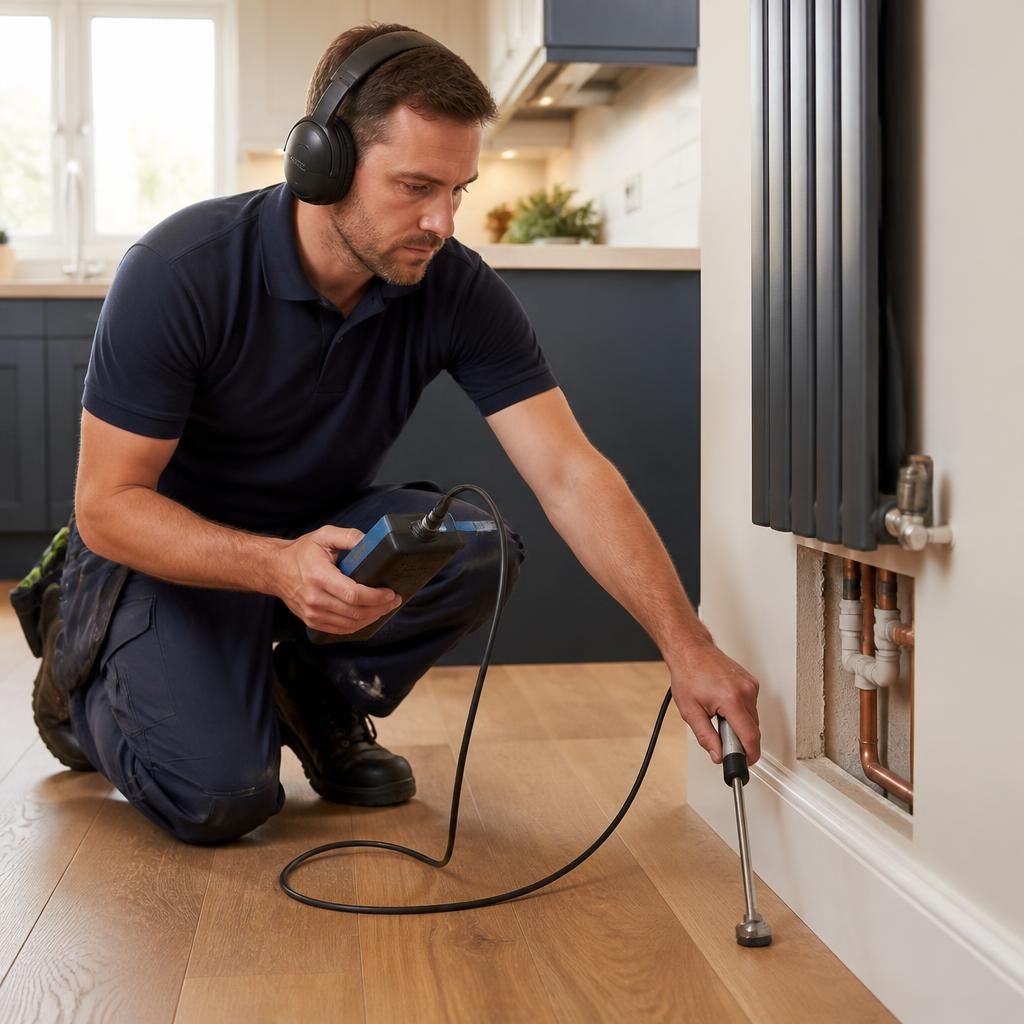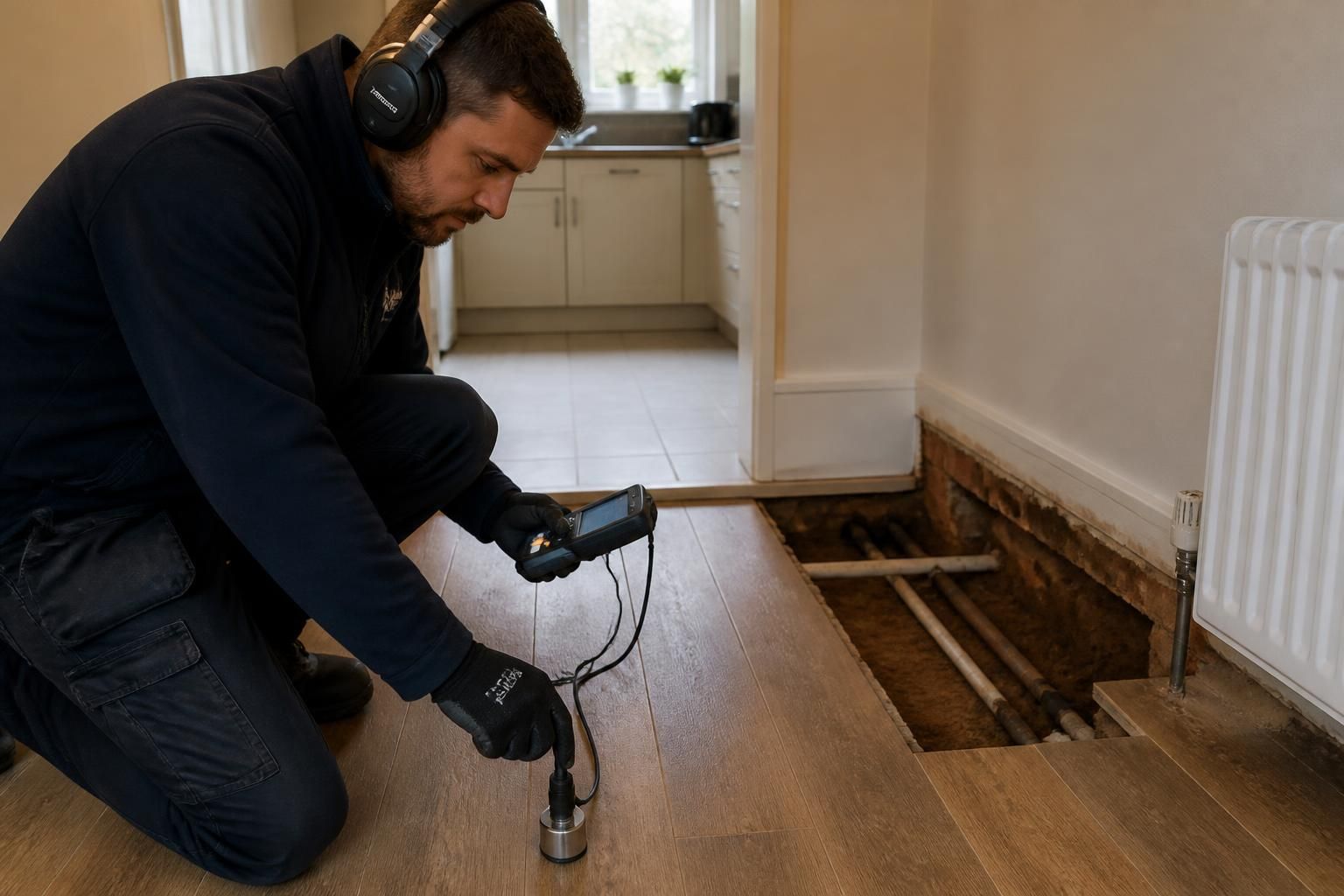
Arrange professional leak detection when the location or cause of a suspected leak cannot be confirmed without opening walls, lifting flooring, excavating ground or dismantling fixtures. A specialist assessment is particularly worthwhile when the problem is intermittent, returns after an apparent repair, affects a concealed pipe or may be causing damage that is not yet visible.
Professional detection should be considered in the following situations:
- The source cannot be identified: Water can travel along joists, behind plasterboard or beneath flooring before appearing away from the failed pipe. Treating the visible patch alone may leave the original fault untouched.
- A previous repair has not resolved the problem: If staining, moisture or other symptoms return, there may be a second fault, a misidentified source or a connection that is still allowing water to escape.
- The leak is intermittent: Leaks linked to showers, heating cycles, toilet use or changes in water pressure may stop before an inspection takes place. Specialist equipment can help identify evidence of moisture even when the pipe is not actively discharging.
- Access would involve unnecessary damage: Detection can help narrow down the affected area before flooring, walls or ceilings are opened. This supports more targeted repairs and helps distinguish a plumbing fault from moisture entering through the building fabric.
- An underground or supply pipe may be involved: A suspected leak beneath a garden, driveway or building can require a different investigation from an internal plumbing fault. Confirmation of the route and location helps determine whether excavation is justified.
- You are planning renovation work: If moisture has been found near a bathroom, kitchen, utility area or heating installation, locating the cause before decorating or replacing finishes can prevent new materials being damaged.
- A property handover or insurance claim requires evidence: An independent record of the suspected location and findings may help explain the nature of the damage. Ask the relevant insurer, surveyor or solicitor what documentation is required before arranging any invasive work.
Detection is also sensible where there is a risk that continued water escape could affect electrical fittings, structural timbers, insulation or neighbouring properties. In these circumstances, isolate the water supply if it is safe to do so and avoid using affected electrical equipment. A qualified professional can then assess the situation without relying solely on visible damage.
During an investigation, a plumber may compare moisture levels, inspect accessible pipework and use non-invasive methods to narrow down the likely source. The exact approach depends on the type of installation and whether the suspected leak is under a floor, within a wall, below ground or connected to a heating system. Detection is not the same as repair: once the location has been established, the appropriate repair method and access requirements can be discussed.
Professional detection is less appropriate as a substitute for basic safety measures. Do not remove flooring, drill into walls or excavate around buried services without knowing what lies beneath. If water is actively escaping, contain it where possible, protect belongings from further damage and arrange an assessment rather than repeatedly drying the affected area and waiting for the symptoms to return.
For homeowners, landlords and tenants, the key decision is whether further investigation can prevent more disruptive work later. When the cause is uncertain, concealed, recurring or potentially damaging, professional leak detection provides a structured way to establish what is happening before repair decisions are made.