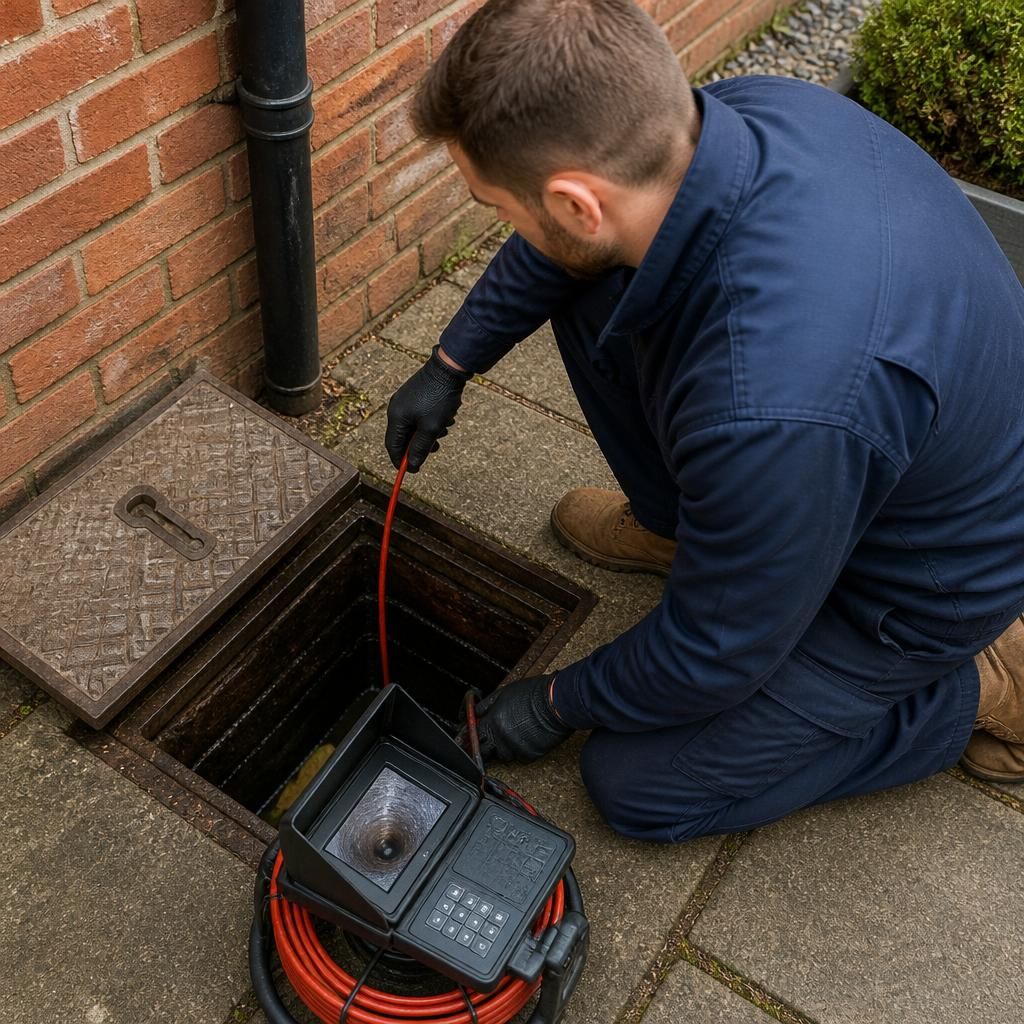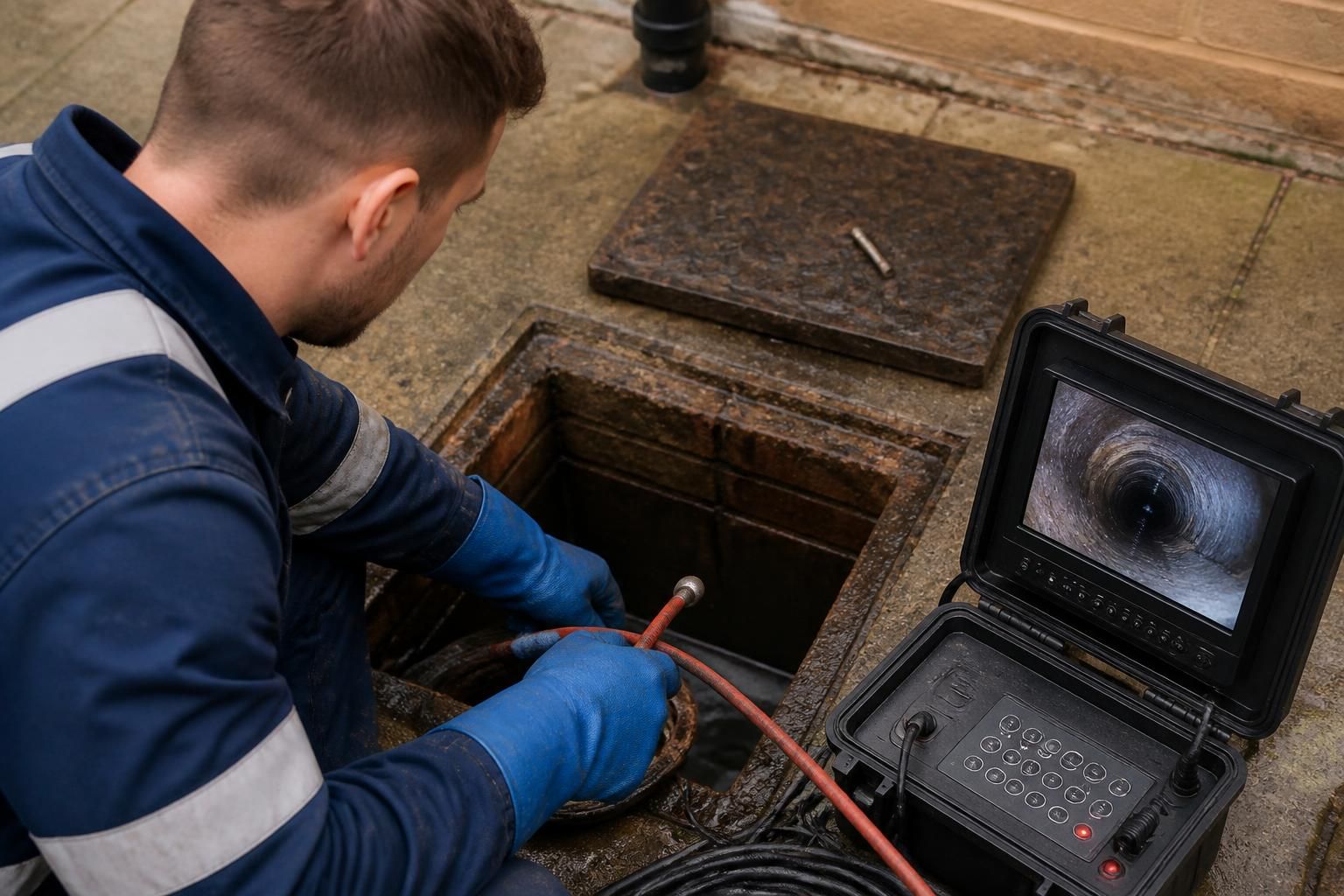
An external drain unblocking inspection is a structured assessment of the drainage system before, during or after clearance. Its purpose is to establish where the restriction is, understand what caused it, check whether the surrounding pipework has been affected and identify the most suitable remedial work.
1. Initial assessment
The inspection begins with a review of the symptoms and the affected drainage points. The engineer may ask when the problem started, whether water is backing up from more than one outlet and whether the issue occurs during normal use or after heavy rainfall. This information helps distinguish an isolated blockage from a wider drainage problem.
They will then inspect visible features such as manhole covers, inspection chambers, channel drains, gullies and the points where waste or rainwater leaves the property. The condition of covers and surrounding ground can also provide useful clues. For example, standing water, damp soil, displaced paving or staining around an outlet may indicate that water is escaping or failing to drain correctly.
2. Safe access and preliminary checks
Before opening an inspection chamber or lifting a cover, the surrounding area is assessed for safe working conditions. Covers may be heavy, damaged or difficult to remove, and the chamber itself can contain contaminated water or hazardous gases. Appropriate precautions are therefore needed before any inspection takes place.
Once access is available, the engineer checks the water level, flow direction and visible condition of the chamber. They may also run controlled amounts of water through connected fixtures to see how the system responds. This can help show whether the restriction is before or after a particular chamber and whether more than one branch is affected.
3. Locating the restriction
The inspection considers the layout of the drainage system rather than treating every slow outlet as a separate fault. The position of chambers, gullies and connected pipe runs is compared with the symptoms inside or outside the property. Where several fixtures drain slowly at the same time, the restriction is more likely to be in a shared section of pipework.
Specialist equipment may be used where the blockage cannot be identified from accessible points. A camera survey can show the internal condition of the pipe and help identify obstructions, while controlled water testing can help confirm the direction and behaviour of flow. These checks are particularly useful when the suspected problem lies beneath paving, a driveway, garden or other difficult-to-access surface.
4. Assessing the cause
Finding the location is only part of the inspection. The engineer also considers what is restricting the flow. Common causes include accumulated silt, grease, unsuitable items, leaves, soil, collapsed sections, displaced joints and tree-root intrusion. In some cases, a blockage has formed because a pipe has settled or become misaligned, meaning that removing the immediate obstruction may not prevent a recurrence.
The inspection also looks for evidence of damage around joints and bends. A crack, fracture or open connection can allow soil into the pipe or allow water to escape into the surrounding ground. If the drainage route passes beneath a structure or hard surface, establishing the condition of the pipe can help avoid unnecessary excavation.
5. Deciding what work is appropriate
The findings determine whether the next step should be routine mechanical cleaning, high-pressure water cleaning, removal of a particular obstruction or a repair to the pipework. The correct method depends on the pipe material, the type of blockage, the amount of access available and the condition of the drain.
Cleaning and repair are different outcomes. Cleaning removes material that is restricting flow, whereas repair addresses a defect that may continue to cause problems. If the inspection identifies damaged or collapsed pipework, the engineer should explain whether a local repair, lining solution or excavation is appropriate. The recommendation should relate to the confirmed fault rather than relying on guesswork.
6. What the findings should include
- The accessible drainage points and sections examined.
- The location and likely nature of the restriction.
- Any visible or recorded defects in the pipework.
- Whether the issue appears isolated or connected to a wider drainage fault.
- The recommended clearance, repair or further investigation.
- Any limitations caused by blocked access, flooded chambers or inaccessible pipe runs.
After an inspection, ask for a clear explanation of the evidence and the proposed work. If a camera survey has been carried out, relevant images or recordings may help show the condition of the pipe. A written description is also useful for landlords, tenants and homeowners who need to keep maintenance records or discuss responsibility for shared drainage.
A professional inspection is especially useful where a blockage returns, several outlets are affected, there is unexplained dampness or the drain serves more than one property. Ideal Plumbing Services provides external drainage inspection and repair support for residential customers across Birmingham and the wider West Midlands, helping establish whether a blockage can be cleared or whether the underlying system needs attention.