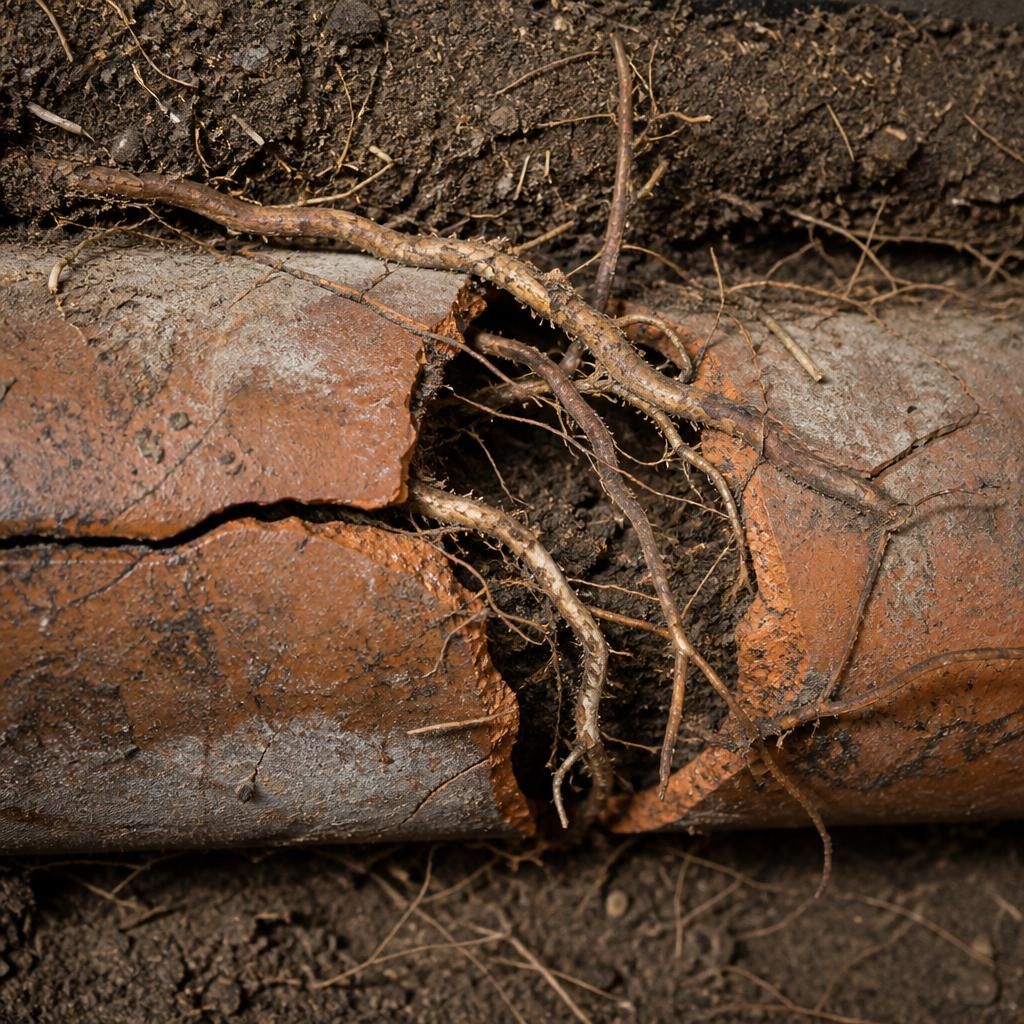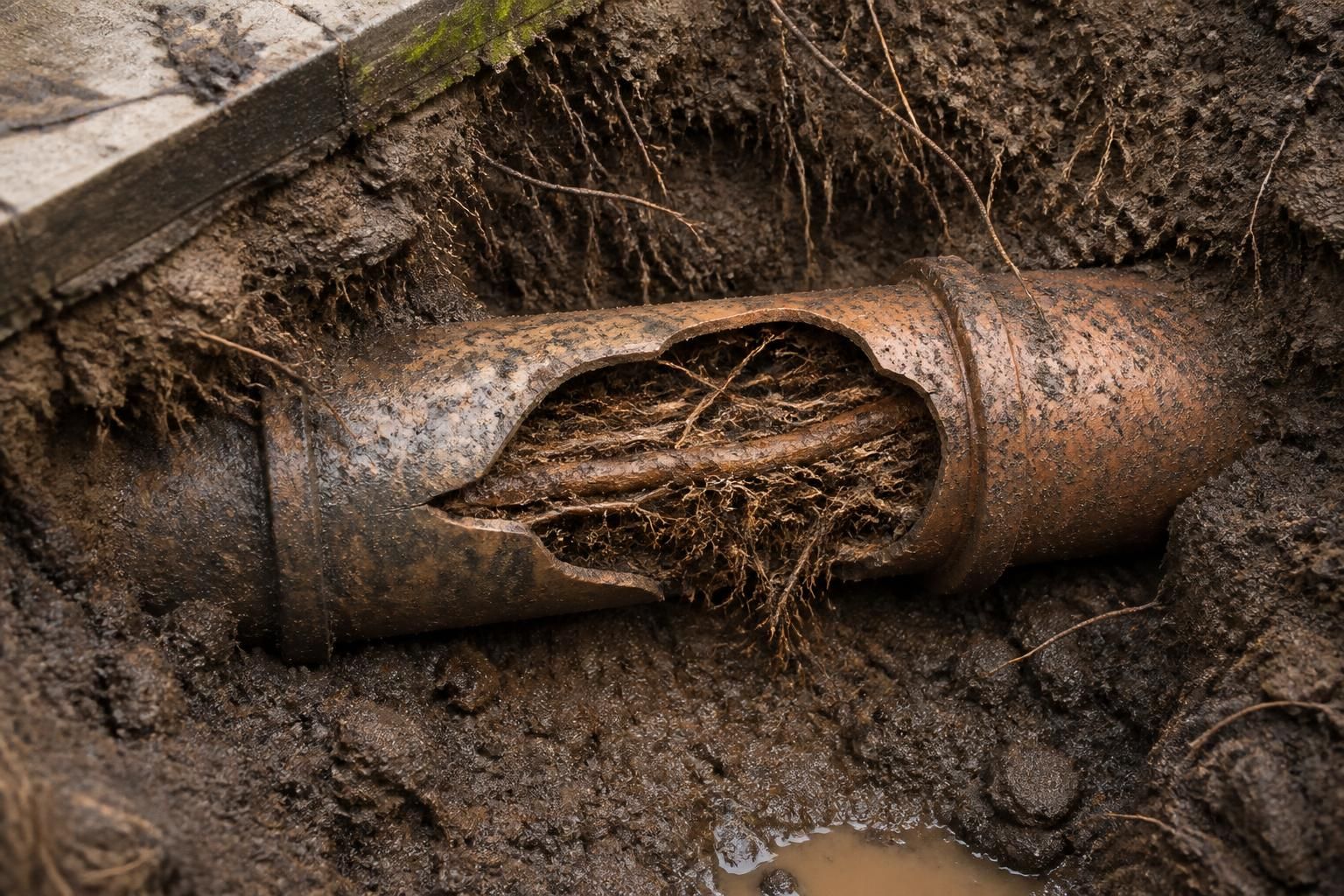
Root-related blockage is a progressive obstruction in which active roots occupy space inside a drain and create a surface where grease, silt, toilet paper and other debris can collect. The result may be a partial restriction at first, followed by increasingly poor drainage as the root growth thickens.
Why roots affect drains: Trees and shrubs naturally seek moisture and nutrients. A leaking or weakened underground drain can therefore attract root growth, particularly where the surrounding soil remains damp. Fine root hairs may develop into a dense network inside the pipe. Although the initial opening may still allow some water through, the accumulating material reduces the effective diameter and interrupts normal flow.
Root intrusion is more likely to become a recurring problem where a drain is old, poorly aligned, displaced by ground movement or affected by deteriorating joints. It can also indicate a wider defect rather than being the only cause of the blockage. Clearing the obstruction without investigating the pipe may restore flow temporarily while leaving the underlying fault in place.
Common warning signs include:
- water draining slowly from sinks, baths or external gullies;
- gurgling sounds from connected waste pipes;
- water rising in an inspection chamber during use;
- repeated blockages in the same part of the drainage system;
- unpleasant smells caused by stagnant wastewater; and
- wet, sunken or unusually lush patches of ground along the drain route.
These signs do not prove that roots are responsible. Fat, silt, collapsed sections and displaced pipework can produce similar symptoms. A root-related fault is best confirmed with a CCTV drain survey after an initial clearance, allowing the internal condition of the pipe to be viewed rather than inferred from surface symptoms.
How the blockage is dealt with: The appropriate method depends on the extent of the growth and the condition of the pipe. Mechanical cutting equipment may remove roots from the inside of the drain, while water jetting can wash away loosened material and residual debris. These methods clear the passage but may not prevent regrowth if the pipe remains damaged. Strong jetting or aggressive cutting can also be unsuitable for fragile or severely deteriorated pipework, so the condition of the drain should be considered first.
If inspection identifies a broken, displaced or badly deteriorated section, a longer-term repair may be needed. Options can include repairing a local section, renewing part of the pipe, installing a suitable internal lining or excavating the affected area. The right option depends on access, pipe condition, depth and the surrounding ground. Excavation may be avoidable in some cases, but it should not be ruled out where the pipe has collapsed or continues to admit roots.
Continuing to use a drain that is repeatedly backing up can allow wastewater to escape into the surrounding ground or enter the property. It may also make a small defect more difficult to repair. Avoid using chemical drain cleaners as a substitute for inspection: they are unlikely to remove established root growth and may create risks for people, pipework and anyone carrying out subsequent work.
After clearance or repair, prevention usually focuses on correcting the pipe defect, checking nearby planting and monitoring any history of repeat blockage. Trees and large shrubs should not be planted where their mature root systems could interfere with underground drainage, and existing roots should not be cut without considering the health and stability of the tree. Where symptoms return, a further inspection is more useful than repeated basic unblocking.
Ideal Plumbing Services can assess suspected root intrusion as part of exterior drain unblocking and advise whether clearance, further investigation or pipe repair is appropriate. A clear diagnosis helps distinguish a one-off obstruction from a structural drainage problem.