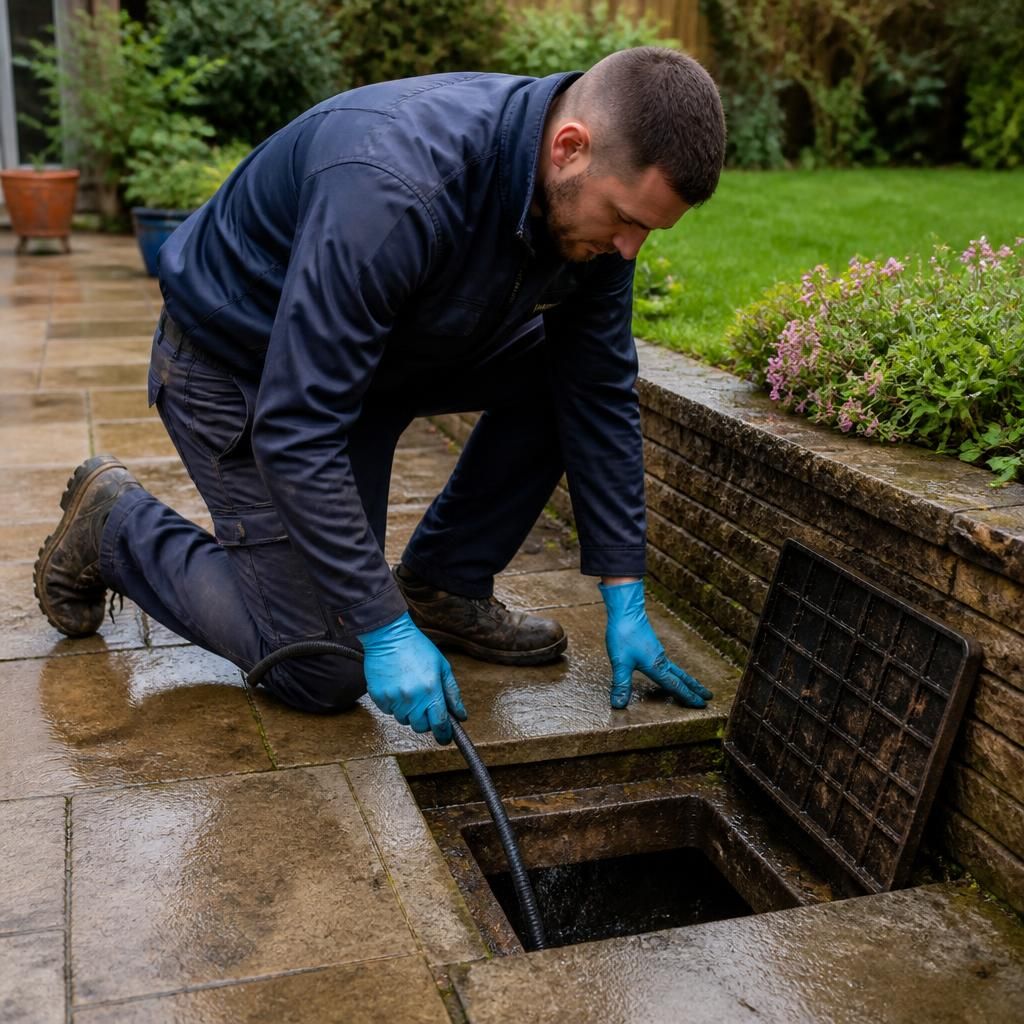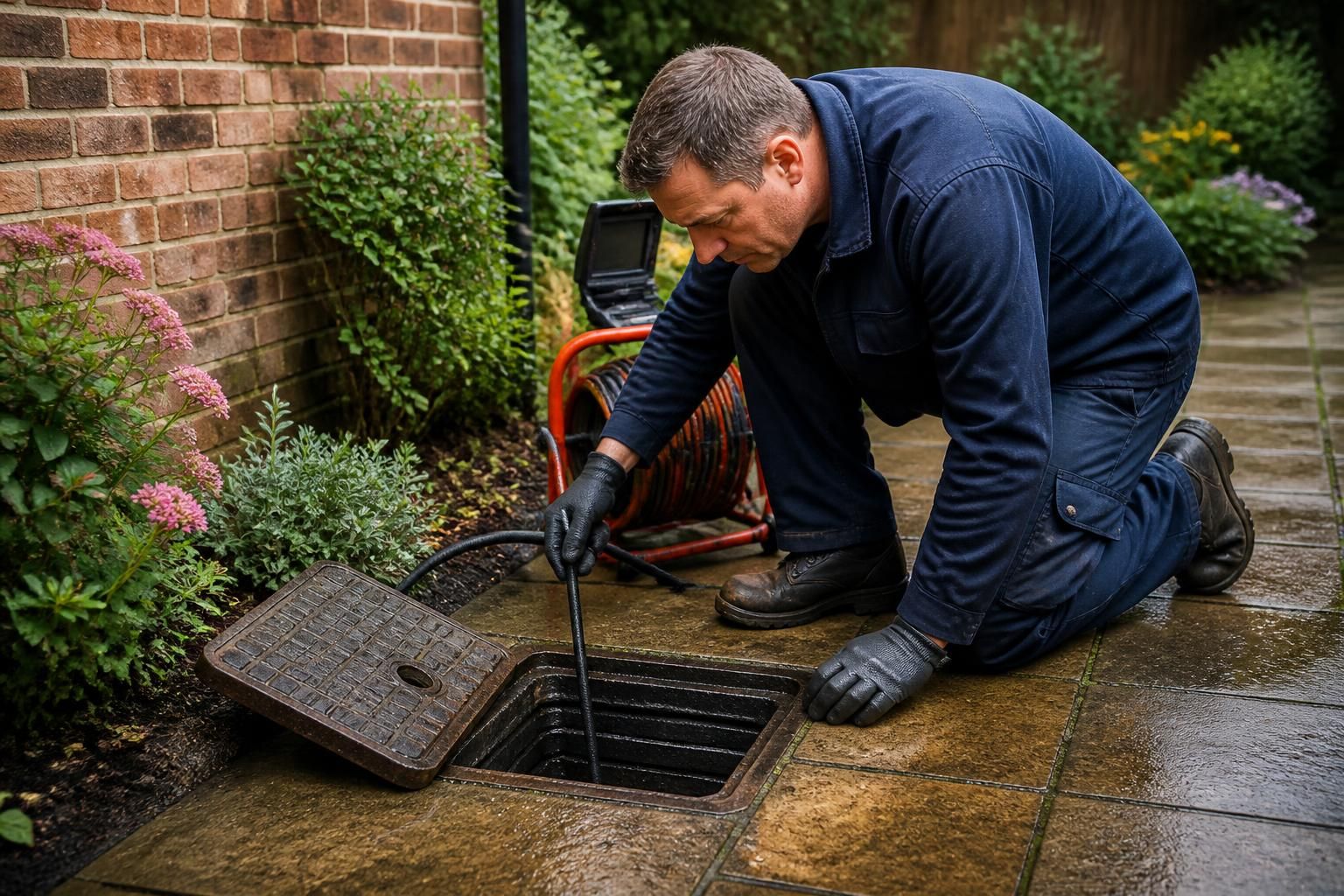
Whether paving or garden areas are affected depends mainly on the location of the blockage, the type of drain construction and the equipment needed to reach it. A competent drainage assessment should identify the most suitable access point and method before any work begins, helping to avoid unnecessary lifting, digging or disturbance.
Drain engineers will usually inspect the system through an accessible inspection chamber, rodding point or drain opening. From there, they may use equipment such as drain rods, a mechanical cleaning head or water-jetting equipment. The method is selected according to the blockage, pipe condition and available access. Using the correct equipment matters: excessive force or unsuitable tools can damage fragile pipes, joints or nearby surfaces.
Potential effects on external areas include:
- Paving: covers, slabs or blocks may need careful removal if the only access point is beneath them. Poor lifting technique can chip edges, crack slabs or disturb the bedding beneath.
- Lawns and borders: access may involve limited foot traffic or the temporary movement of plants, containers or soil. Saturated ground is more prone to rutting and compaction.
- Driveways and paths: heavy equipment can mark delicate surfaces, particularly where the surface is already cracked or unstable.
- Drain covers and chambers: damaged or incorrectly seated covers can create a trip hazard and allow soil or debris into the drainage system.
Where excavation is unavoidable, the affected section should first be located as accurately as possible. Removing only the necessary slabs or soil reduces the size of the disturbed area. Paving should be lifted rather than broken where practical, with blocks or slabs kept in order so they can be reinstated correctly. Excavated soil should be placed on a suitable protective sheet instead of directly on the lawn or remaining paving.
Garden damage is more likely when the blockage is caused by a collapsed pipe, displaced joint or root intrusion rather than a simple build-up of waste. In these cases, clearing the obstruction may not resolve the underlying defect. A camera inspection can help establish whether repair or replacement is needed, and whether digging can be confined to a particular section instead of opening a wider trench.
Several precautions help protect the surrounding area:
- Confirm the location and depth of the drain before digging.
- Use existing chambers and access points whenever they are suitable.
- Protect paving, walls, plants and lawn edges from tools, hoses and removed materials.
- Keep jetting pressure and mechanical equipment appropriate for the pipe and its condition.
- Control run-off and remove wastewater or debris safely rather than allowing it to spread across the garden.
- Check the drain flow after unblocking to confirm that the obstruction has been cleared.
After the work, disturbed paving should be laid on a stable, level base, with joints restored to help prevent movement and weed growth. Soil should be returned in layers and lightly settled rather than heavily compacted over shallow pipework. Grass may need reseeding, while plants should be replanted only if their roots have not been damaged. Any broken or unstable surface materials should be identified before the area is left.
If a drain repeatedly blocks, or if water remains beneath paving or in the soil, the issue may be a defect rather than a one-off obstruction. In that situation, further investigation is preferable to repeated clearing, as continued water saturation can weaken bedding, erode soil and affect nearby surfaces. Ideal Plumbing Services can assess external drainage and advise on a suitable approach for residential properties in Birmingham and the West Midlands.