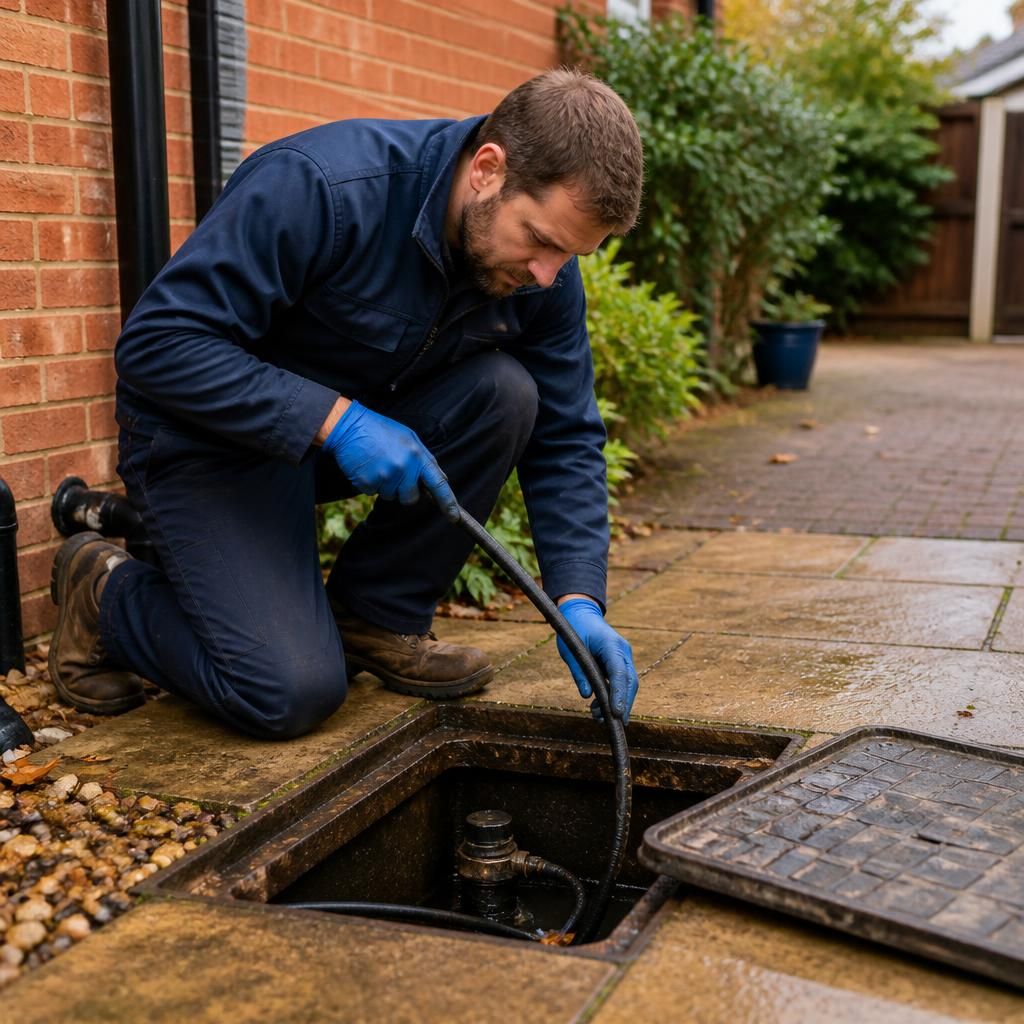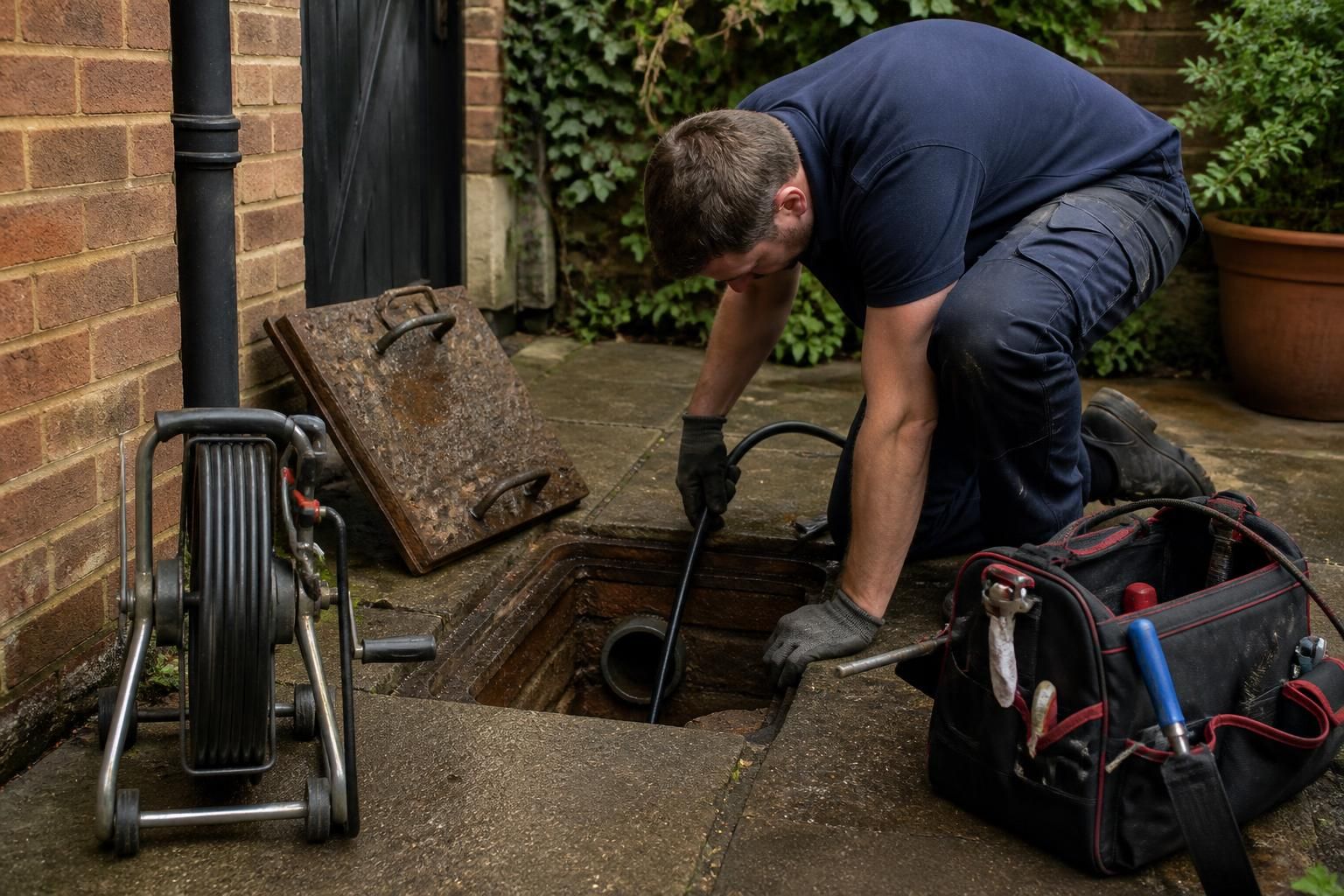
Exterior drain unblocking is appropriate for most types of residential property, but the correct approach depends on the drainage arrangement, the location of the obstruction and the condition of the pipework. A detached house, terrace, semi-detached property, bungalow or block of flats may all have external drainage that can be cleared, although each may require a different access point, tool or working method.
Property layout makes a difference. Houses commonly have individual gullies, soil pipes, inspection chambers and underground runs serving the kitchen, bathroom or rainwater system. In flats and maisonettes, several homes may connect to shared drains before reaching the main sewer. This means that a blockage affecting one property may be located in a communal section rather than directly outside the affected home. Responsibility for access and repairs can also involve a landlord, managing agent or property owner.
Older properties may have drainage layouts that are less straightforward than those in newer developments. Pipes can run beneath extensions, driveways, patios or landscaped areas, while inspection chambers may be concealed beneath covers or surface materials. A drainage professional will normally establish which fixtures are affected, inspect the available external points and identify the likely direction of flow before choosing a method. This helps prevent unnecessary disturbance to the surrounding area.
External unblocking is most suitable when the issue is a removable obstruction. Common examples include an accumulation of silt, leaves, grease, food debris, unsuitable paper products or other material that has restricted the flow. Outdoor gullies can also become blocked by soil and garden debris, particularly where surface water enters the same drainage system. Mechanical rodding or water-based cleaning may be considered according to the pipe size, blockage type and condition of the drain.
Not every drainage problem should be treated as a simple blockage. Repeated symptoms, foul smells, slow discharge in several fixtures, overflowing inspection chambers or wastewater backing up may indicate a deeper defect. Possible causes include displaced joints, fractures, intrusive roots, poor gradients or a damaged connection. In these circumstances, clearing the obstruction may restore flow temporarily without resolving the underlying fault. Investigation and a suitable repair may be more appropriate than repeated unblocking.
Some residential situations need additional care:
- Shared drainage: the affected section may serve multiple homes, so the source of the problem needs to be distinguished from the point where symptoms appear.
- Properties with septic or private drainage systems: the system may require a different assessment from a standard connection to the public sewer network.
- Drains beneath hard landscaping: an obstruction may still be treatable from an existing chamber or rodding point, but concealed pipework can make investigation more involved.
- Properties with older or unusual pipework: the material, diameter and condition of the drain should be considered before forceful equipment or high-pressure cleaning is used.
- Homes affected by recurring blockages: the priority should be identifying why the restriction keeps returning, rather than repeatedly removing the immediate symptom.
Safety is another factor in deciding whether external drain work is suitable. Inspection chambers and drain covers can be heavy, contaminated or unstable, and wastewater may contain harmful substances. Residents should avoid entering chambers or attempting hazardous work themselves. Keeping children and pets away from an open drain, and reporting the symptoms accurately, can help the plumber assess the problem safely.
Before arranging work, it is useful to note which sinks, toilets, baths or external gullies are affected, whether the problem follows rainfall, and whether neighbouring properties have similar symptoms. These details can help distinguish a local blockage from a shared or wider drainage issue. Photographs of overflowing water or the position of an inspection chamber may also be helpful where access is difficult.
For Birmingham and West Midlands homes, Ideal Plumbing Services can assess the external drainage arrangement and advise whether unblocking is a suitable first step or whether further investigation is needed. The appropriate solution should address the cause, protect the surrounding property and avoid treating a structural drainage defect as a routine blockage.