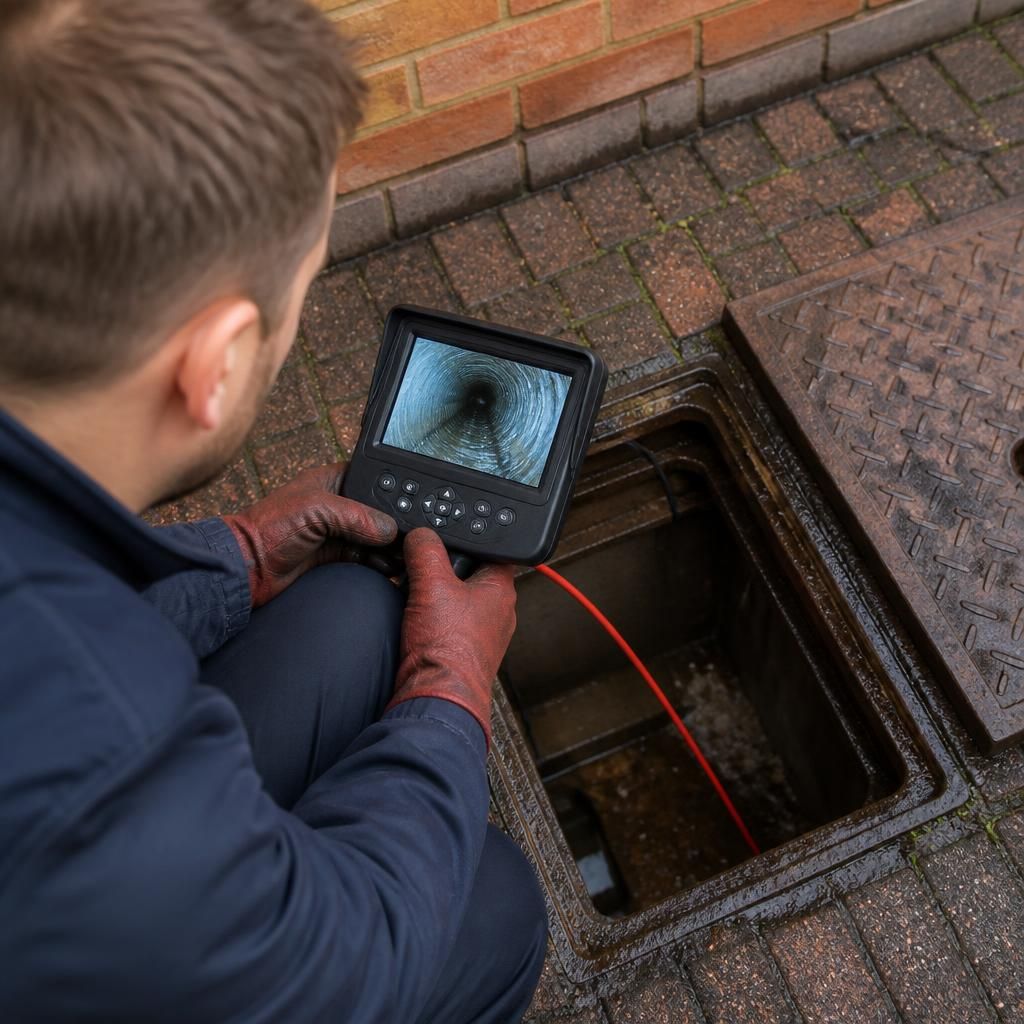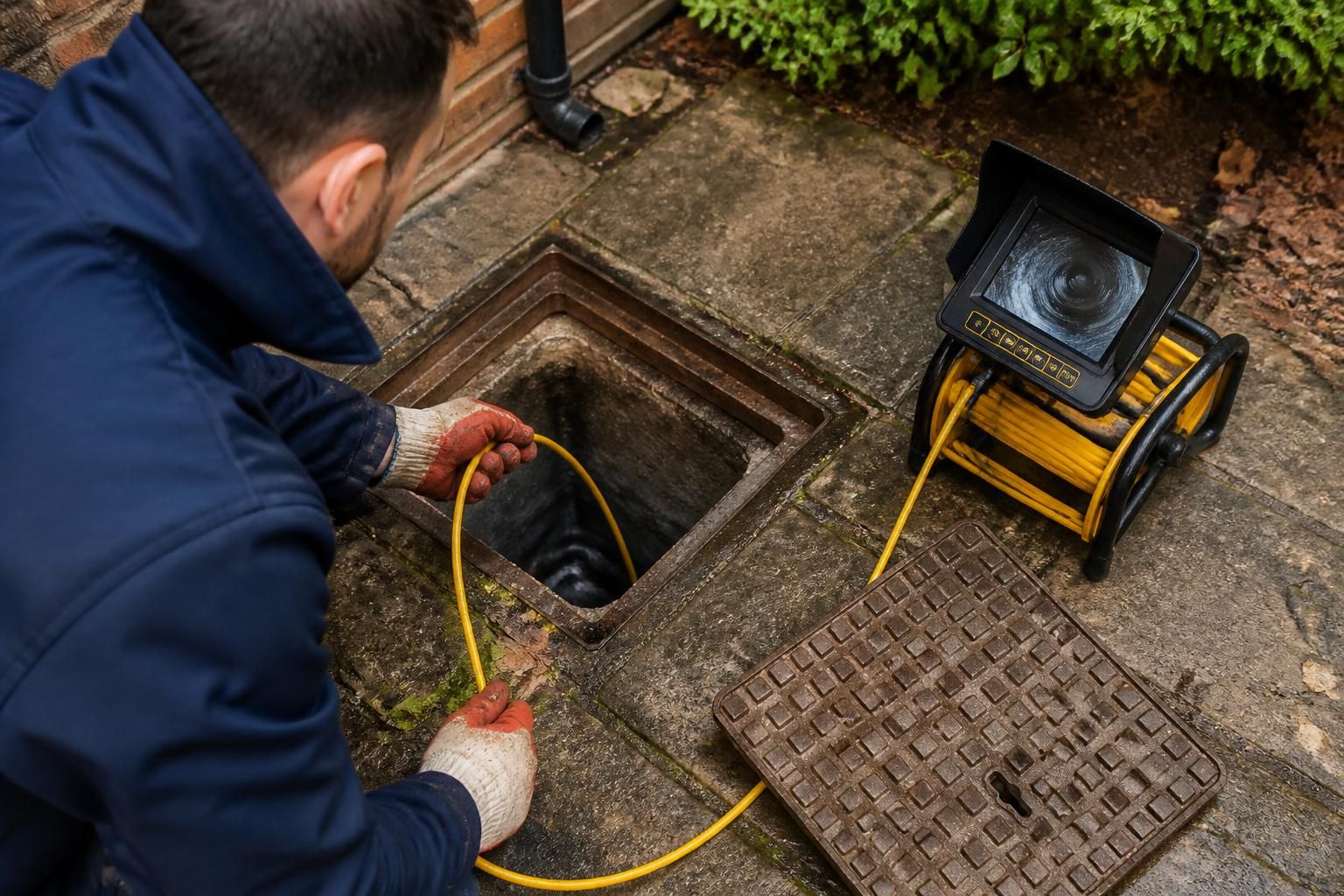
There is no single price for exterior drain unblocking because the final cost depends on the blockage, the drain’s location and the equipment or repair work needed. A straightforward blockage near an accessible inspection chamber is generally less involved than a deeply obstructed drain that requires specialist equipment, excavation or replacement work.
The main factors affecting the cost are:
- Access to the drain: An accessible manhole or inspection chamber makes it easier to inspect and clear the pipe. Restricted access, buried covers or a drain beneath paving can increase the labour involved.
- The nature of the blockage: Accumulated silt, grease, paper and other debris may require a different cleaning method from hardened deposits, foreign objects or a collapsed section of pipe.
- The position and depth of the obstruction: A blockage close to the property may be simpler to locate and clear than one further along the outside drainage run or beneath a driveway, path or garden.
- The equipment required: Manual clearance, mechanical drain rods, high-pressure water jetting and drain inspection cameras each involve different levels of equipment and labour. A camera inspection may be recommended where the cause cannot be identified from the surface.
- Whether the problem is a blockage or a defect: Clearing the obstruction may restore flow, but cracked, displaced or collapsed pipes, damaged joints and tree-root intrusion can require additional work. Drain repair or replacement should be priced separately from the initial unblocking where possible.
- Waste removal and reinstatement: If material must be removed from the drain, or access involves lifting paving or disturbing a garden area, disposal and making good may form part of the overall quotation.
Before work starts, ask what the quoted charge includes. A clear quotation should explain the inspection, the proposed unblocking method, labour, equipment, waste disposal and any recommended follow-up work. It should also make clear whether investigation or diagnostic work is charged separately and whether the price covers only an initial attempt or further work if the obstruction is more extensive than expected.
Some drainage companies use a fixed charge for a defined unblocking service, while others price according to labour, equipment and the complexity of the job. Neither approach is automatically better. The important point is that the basis of the charge is explained before you authorise work, particularly if specialist equipment or excavation may be needed.
A professional assessment should distinguish between a temporary clearance and a lasting solution. If water flows away after the blockage is removed but returns later, the underlying cause may be a damaged pipe, poor falls, recurring debris or roots entering through a joint. Repeated unblocking charges can then become more costly than identifying and addressing the fault properly.
For landlords, keeping the written findings, photographs or inspection footage can help establish what work was carried out and whether further maintenance is needed. Homeowners may also want a record where drainage runs beneath hard landscaping or where repair work could affect future access.
When comparing quotations, look beyond the headline price. Check whether the contractor has allowed for the actual location of the external drain, whether additional equipment is included, what happens if the blockage cannot be cleared by the first method and whether any repair recommendation is optional or essential. A very low initial figure may not represent the total cost if investigation, jetting, excavation or reinstatement is added later.
Ideal Plumbing Services can inspect the drainage problem, identify the likely cause and explain the recommended work and charges before proceeding. This helps you compare the cost of a simple clearance with the potential cost of investigation or repair when an exterior drain blockage is linked to a wider drainage defect.