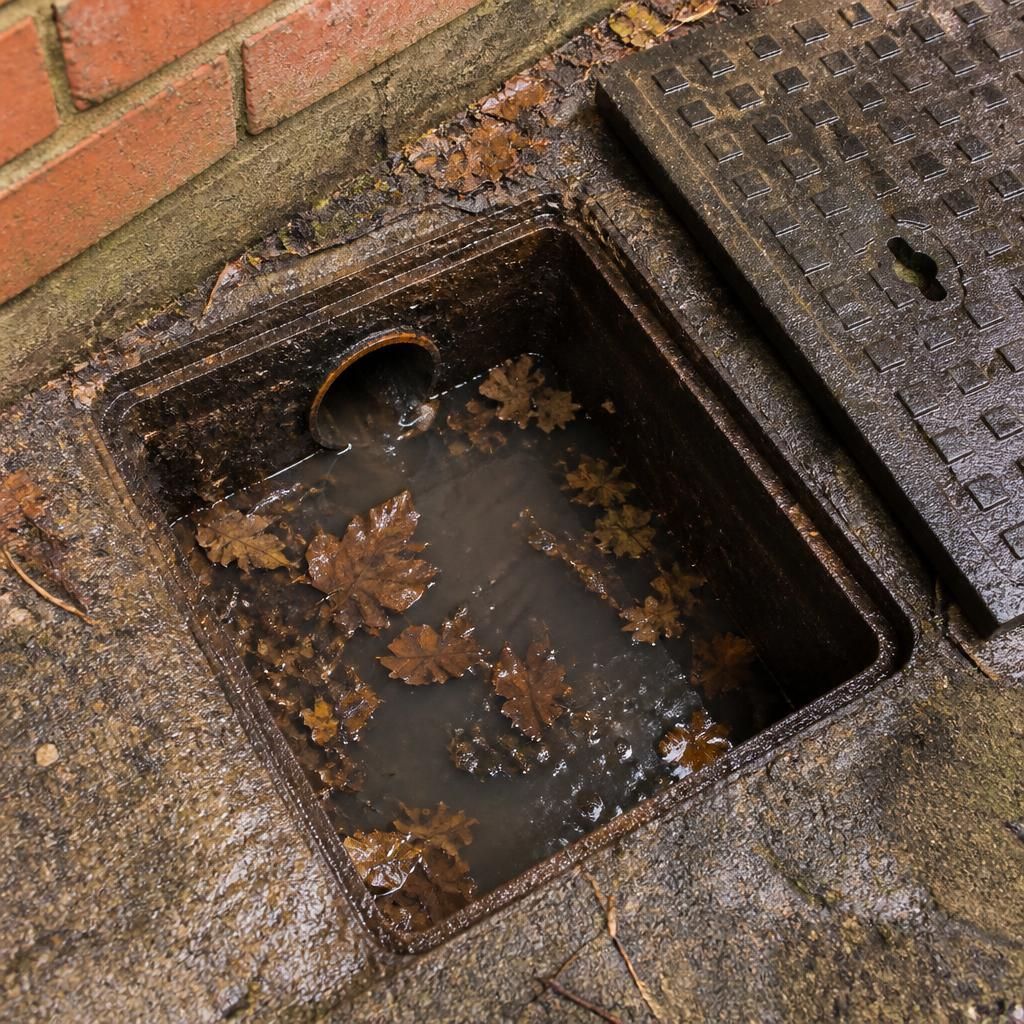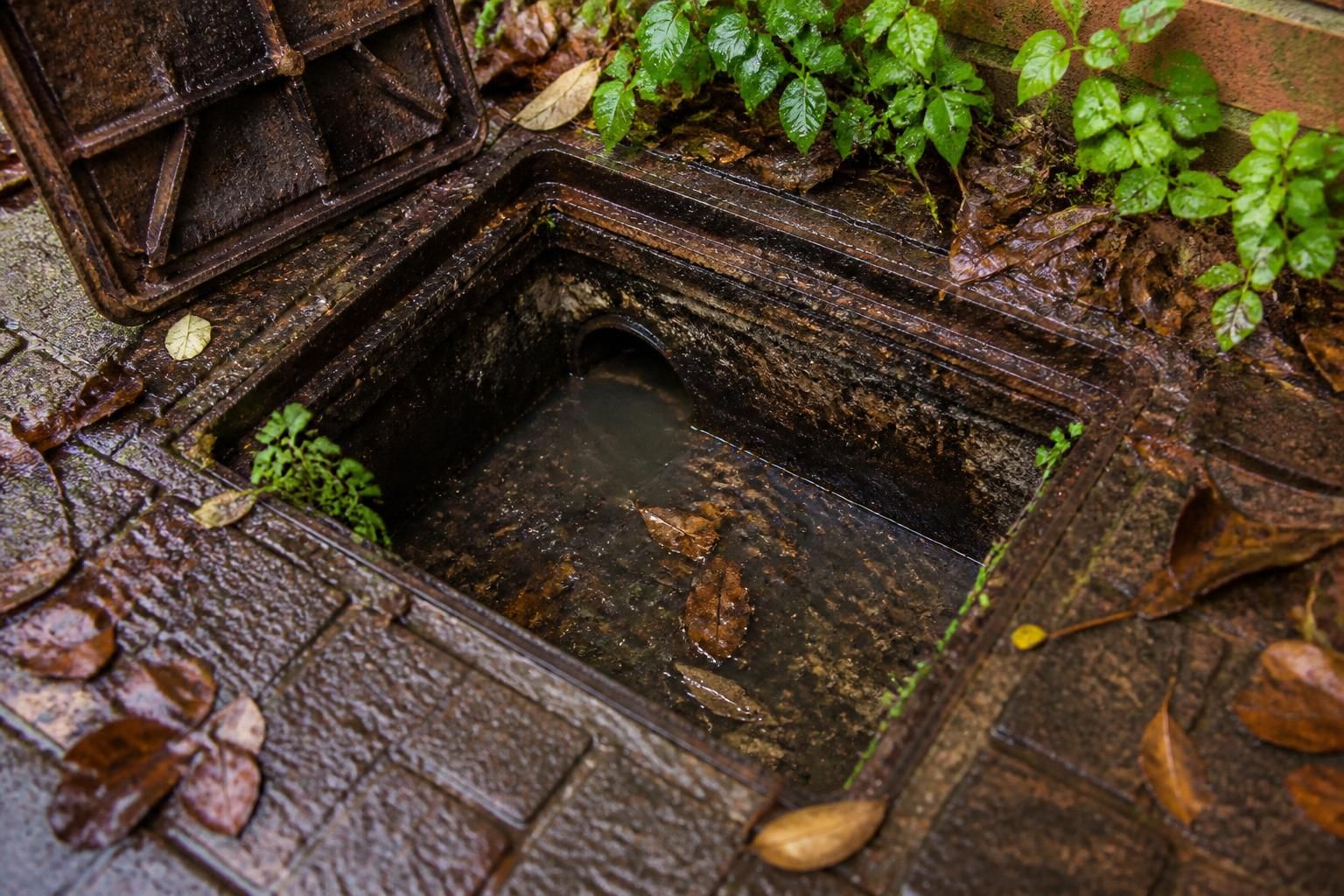
You can usually identify a blocked exterior drain by looking for a persistent change in how water leaves the property, together with physical evidence around the drain itself. The most reliable confirmation comes from inspecting the chamber and checking whether the obstruction is local to one drain or is affecting the connected drainage run.
Start with a visual inspection. From a safe position, check whether the grate, gully or inspection chamber is covered by leaves, silt, soil, litter or other debris. A drain that looks full rather than empty may contain trapped water behind a blockage. You may also notice a dirty water line on the chamber walls, deposits around the outlet, or damp ground that remains wet when there has been no recent rainfall.
Look at the area surrounding the drain as well as the opening. Repeatedly saturated soil, washed-out earth, subsidence or cracks near the drainage route can indicate that water is escaping from a damaged or overloaded pipe underground. These clues do not prove that the drain is blocked, because defective joints, collapsed sections and damaged gullies can create similar symptoms, but they indicate that the drainage system needs closer assessment.
Consider whether the problem is local or shared. If only one outside gully is affected, the obstruction may be close to that opening or in the short pipe leading away from it. If several connected drains show the same problem, the restriction is more likely to be farther along the private drainage run. Where a property shares a sewer connection, the issue may also involve a shared section rather than a single household drain.
It is useful to observe the drain during normal household water use, but avoid deliberately flooding it. Note whether the chamber level changes, whether water clears slowly after use, and whether the problem affects one fixture or several. This information can help a plumber locate the likely section of pipe without relying only on the appearance of the grate.
Check for an obvious obstruction without entering the drain. Surface debris can sometimes be removed carefully with gloves and suitable tools, provided there is no sewage present and the cover can be handled safely. Do not put your hands into standing water, lean into a chamber, remove a heavy inspection cover without assistance, or use chemicals in an attempt to clear an exterior blockage. Drain covers can be heavy, and contaminated water may contain harmful bacteria.
A plunger or drain rod may be unsuitable where the pipe is deep, damaged or connected to other drainage points. Aggressive rodding can dislodge joints, become trapped in a pipe or push the obstruction farther along. Chemical drain cleaners can also damage some materials, harm surrounding soil and create a hazard for anyone who later works on the drain.
Some conditions require professional investigation rather than simple cleaning. Arrange an inspection if the issue returns after surface debris has been removed, if the chamber remains full, or if there are signs of sewage contamination, ground movement or pipe damage. A professional may lift the cover safely, assess the flow through the chamber, use mechanical equipment to clear the obstruction and recommend a camera inspection when the cause is not visible.
Possible underlying causes include accumulated grease and silt, foreign objects, poor pipe falls, displaced joints, cracked pipes and tree-root intrusion. These causes can produce similar external symptoms, so clearing the immediate blockage may not prevent recurrence if the pipe itself has a structural problem.
Keep children and pets away from affected areas, avoid contact with wastewater and record where damp patches or damaged ground appear. If wastewater has entered the garden, driveway or building, explain what you observed when contacting a qualified drainage professional. Ideal Plumbing Services provides plumbing and drainage support for residential customers in Birmingham and across the wider West Midlands, including assessment of exterior drainage problems and appropriate repair options.