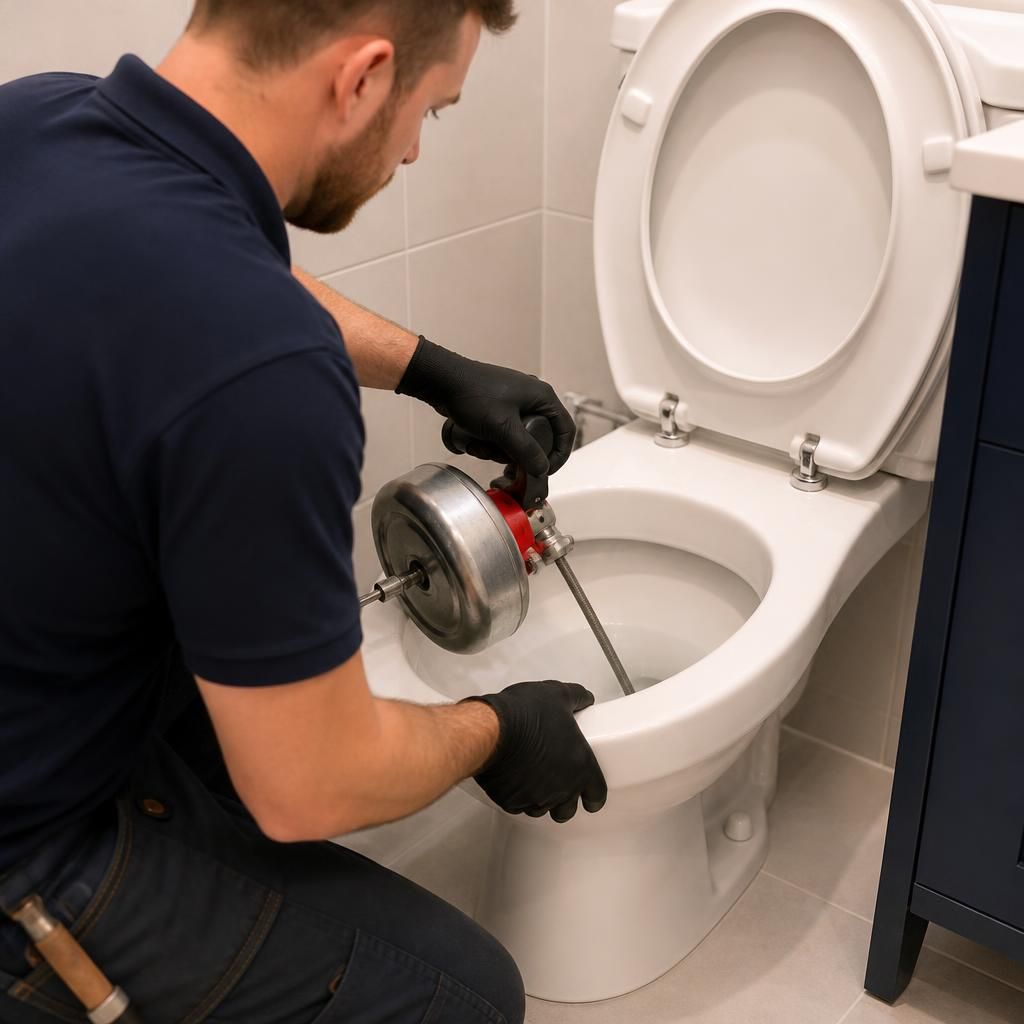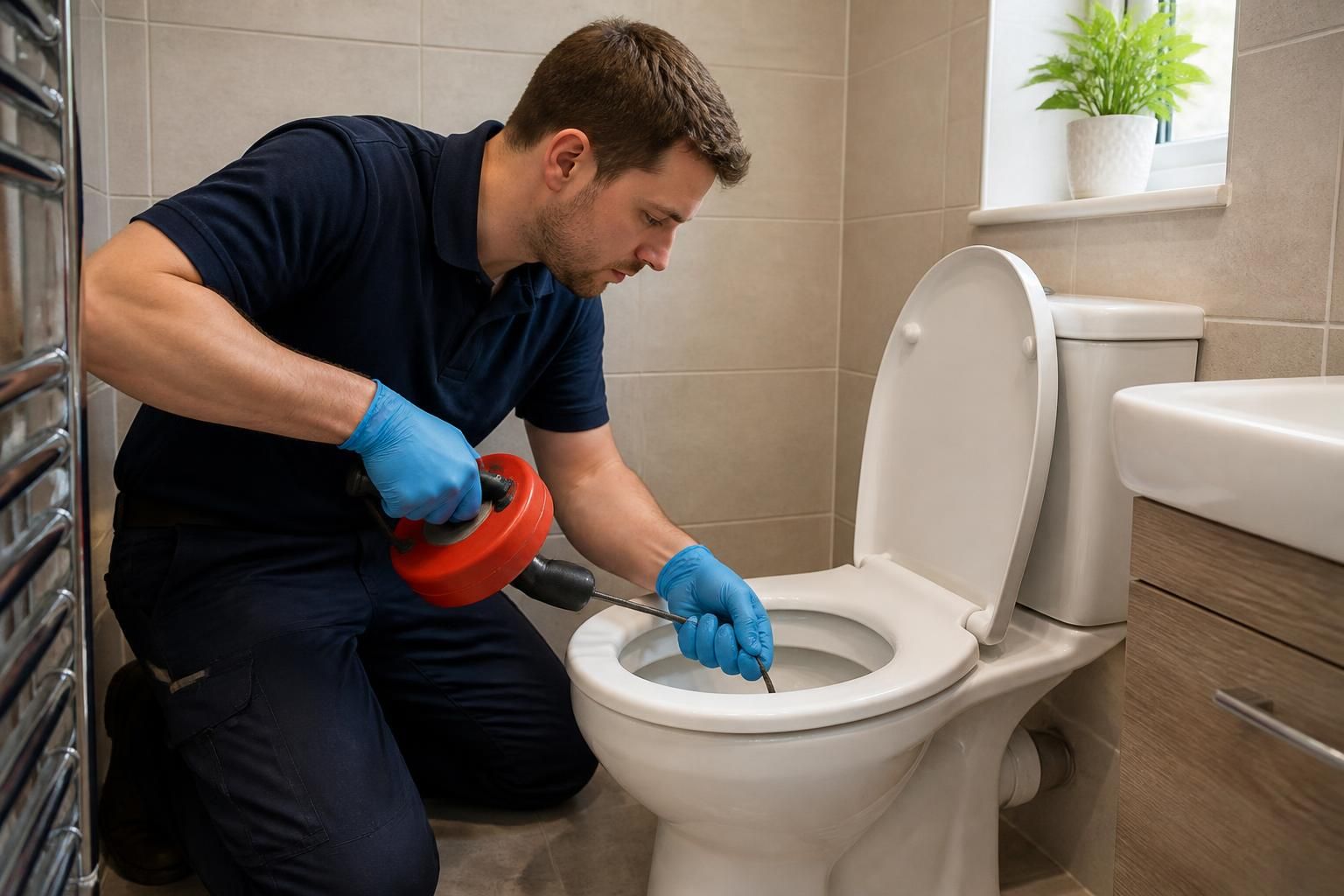
In most cases, the obstruction can be reached from the toilet pan, so the toilet can remain in place. The plumber will first establish whether the restriction is in the toilet’s internal trap or further along the waste pipe, then select equipment that can dislodge or retrieve it without damaging the ceramic surface or seals.
A typical non-removal process may include:
- Initial inspection: checking the water level, flushing behaviour and any visible signs of an object or restricted flow.
- Plunging: using a suitable toilet plunger to create controlled pressure and draw the blockage through the trap.
- Mechanical clearance: using a hand-operated toilet auger or similar drain-cleaning tool to break up the obstruction or hook and retrieve it.
- Flow testing: flushing and observing the discharge to confirm that water drains normally and does not rise in the pan.
A toilet auger is generally more appropriate than pushing a long, rigid object into the pan. Improvised tools can scratch the glaze, damage the trap or drive a solid item further into the waste pipe. Chemical drain cleaners are also unsuitable for many toilet blockages because they may remain in the bowl, create a handling hazard and fail to dissolve objects such as wipes, sanitary products, toys or other solid items.
Removal becomes more likely when the obstruction is firmly wedged in the trap, cannot be reached safely from above, or is too large to pass through the outlet. It may also be considered where the toilet itself has an internal fault, such as a damaged trap or an object lodged in a position that prevents effective use of clearing equipment. If the blockage is further down the branch waste pipe, removing the toilet may not solve the underlying problem; access through a suitable drainage point may be more appropriate.
Before using pressure or an auger, a plumber should consider the toilet’s condition and the material causing the blockage. Extra care is needed with older or damaged pans, loose cistern connections and floors that may already show signs of movement or leakage. The aim is to apply enough controlled force to clear the restriction without cracking the pan, disturbing the pan connector or causing a joint to leak.
If removal is necessary, the water supply is isolated, the cistern and pan are emptied, and the connections are disconnected before the pan is lifted. The obstruction can then be inspected or removed directly. The toilet must be refitted with an appropriate seal or connector, secured without overtightening, and tested for both proper flushing and leaks. This additional work is why a competent assessment is preferable to attempting to force a suspected object through the trap.
A recurring blockage, slow drainage in nearby fixtures, bubbling sounds or water backing up elsewhere suggests that the restriction may be in the shared waste pipe rather than the toilet alone. In that situation, repeated plunging may provide only temporary relief, and the drainage route should be investigated to identify the actual point of obstruction.