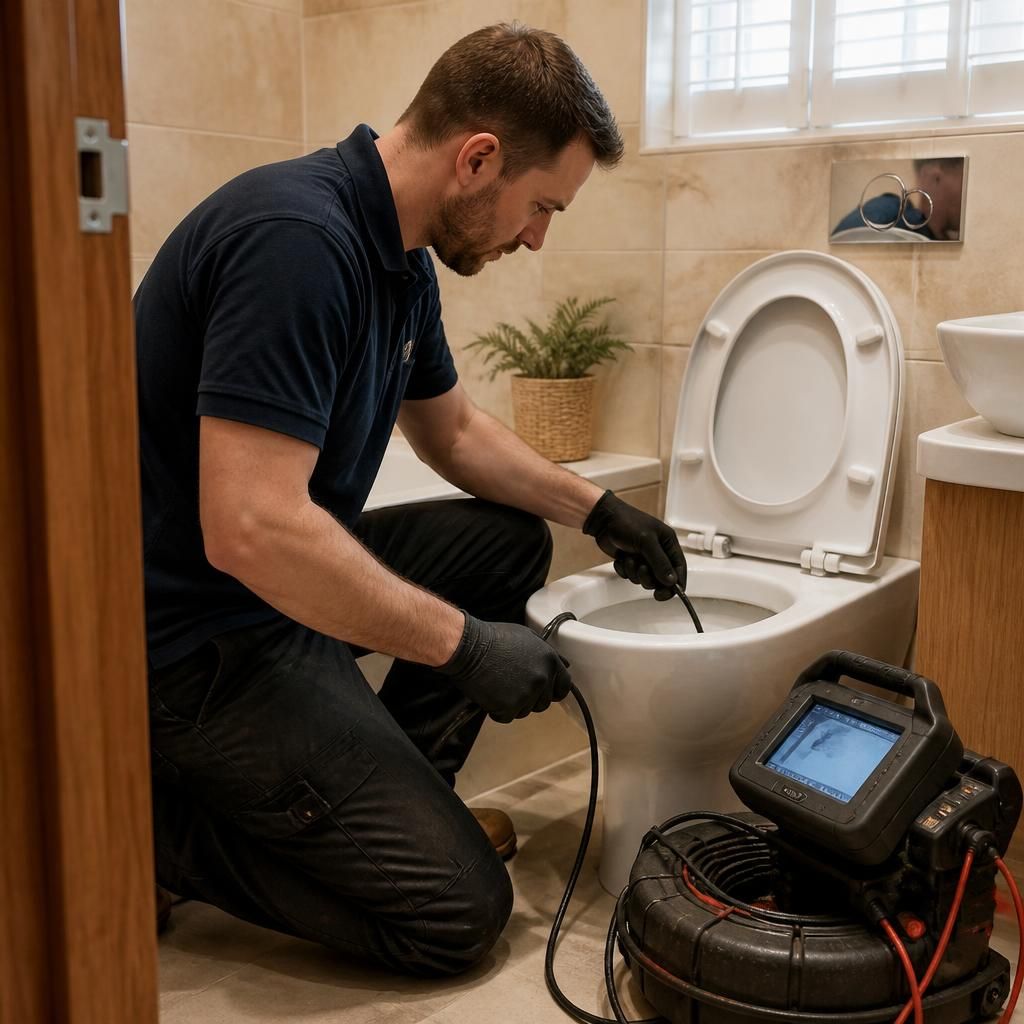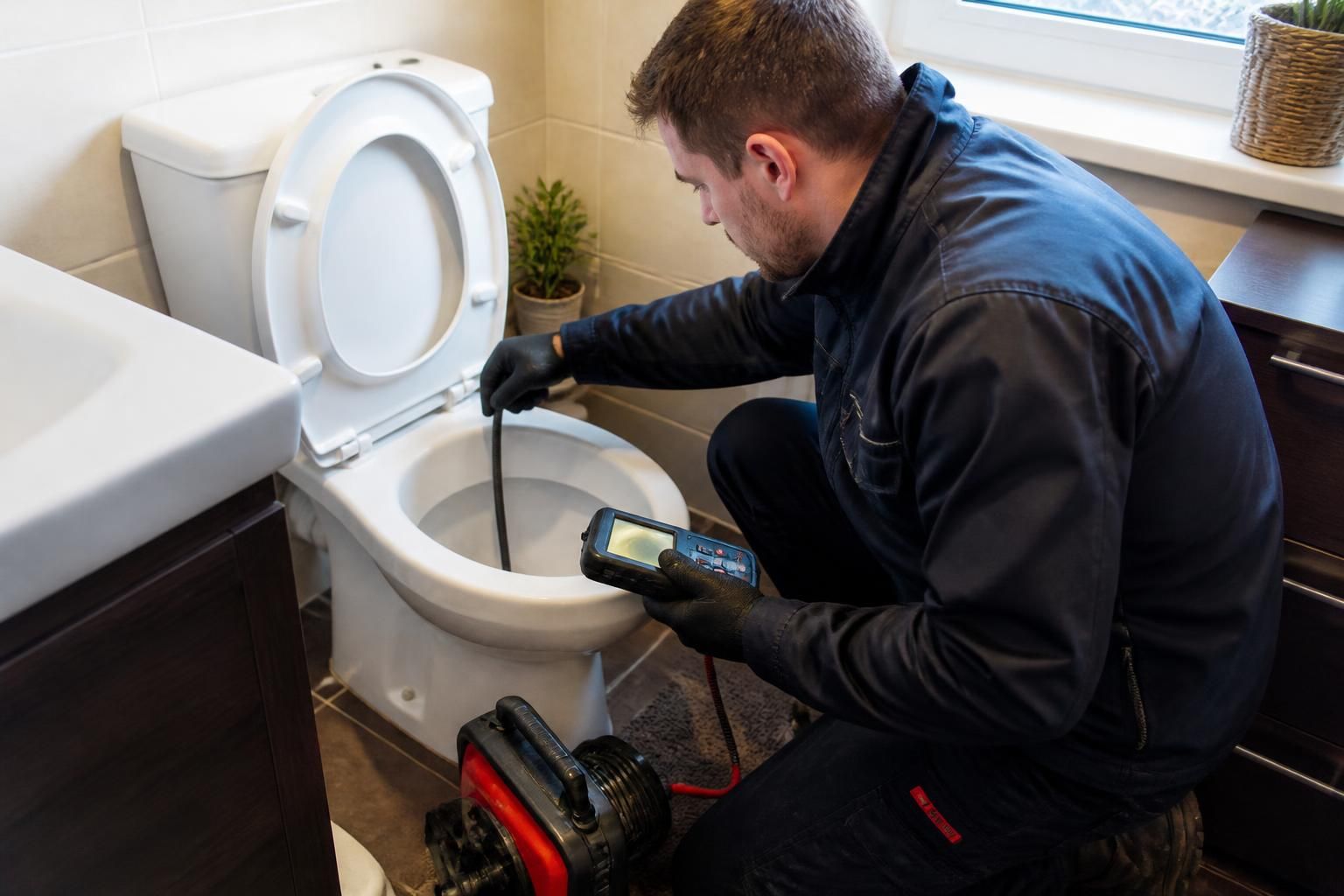
The cost of toilet drain unblocking is based on the work needed to remove the obstruction safely, rather than on the toilet itself. A straightforward blockage close to the pan generally requires less labour and equipment than a deep obstruction in the branch pipe, a recurring blockage or a fault that needs repair after the toilet has been cleared.
What affects the price?
- Location of the blockage: An obstruction in the trap or immediately beyond the toilet may be accessible with standard unblocking equipment. If it has travelled further into the drain, locating and clearing it can take more time.
- Cause and severity: Excess paper, wipes, sanitary products, foreign objects and accumulated deposits require different approaches. A partial blockage may also need more investigation if it has been present for some time.
- Access: The position of the toilet, available working space and access to inspection points can affect the labour involved. Difficult access may make equipment setup and testing more involved.
- Equipment required: A plunger, drain snake, mechanical auger or water-jetting equipment may be suitable depending on the obstruction. Drain inspection equipment may be considered where the cause is unclear or the problem keeps returning.
- Additional repairs: Clearing the blockage is separate from repairing a cracked pan, damaged flush pipe, leaking seal or defective soil connection. These issues can become apparent once the toilet is usable again.
What should be included in a quote? A clear quotation or estimate should explain whether it covers diagnosis, the unblocking work, equipment, testing and any necessary follow-up. It should also distinguish between clearing the obstruction and repairing or replacing damaged plumbing. If further work is recommended, the reason and additional cost should be explained before it begins.
The cheapest initial price is not necessarily the lowest overall cost if it covers only an attempted clearance or excludes equipment and follow-up work. Ask whether the charge is for a successful clearance, an assessment, or a set amount of labour, and check whether any extra work requires approval.
Why a recurring blockage can cost more: Repeated plunging may restore the flow temporarily without removing the underlying cause. Recurring problems can indicate a restriction further along the pipe, a poor connection, a damaged section or unsuitable items being flushed. In these cases, a plumber may need to investigate the drainage route rather than simply repeat the same treatment.
Before work starts, describe what is happening: whether the toilet is completely blocked, whether the water level rises, whether other fixtures are affected and whether the issue has happened before. This information helps determine the likely equipment and scope of the visit. Do not keep flushing a blocked toilet, as this can cause an overflow and increase cleaning or repair requirements.
For an accurate figure, the plumber needs to assess the blockage and the access available at the property. Once the cause and required method are understood, the cost can be explained on the basis of the actual work rather than an unsuitable standard price.