Toilet drain unblocking should not damage a bathroom when the obstruction is assessed correctly and the method is suited to the toilet and pipework. Damage is more likely when excessive pressure is used, an unsuitable tool is inserted too far, or chemical products weaken components before mechanical work begins.
The toilet pan is made from rigid ceramic, so it can crack if a metal tool is forced against it or if the blockage is struck aggressively. The pan connector and rubber seals can also be disturbed, allowing water to escape beneath the toilet or into the surrounding floor. In a concealed or wall-connected system, rough handling may affect the waste connection rather than the visible toilet itself.
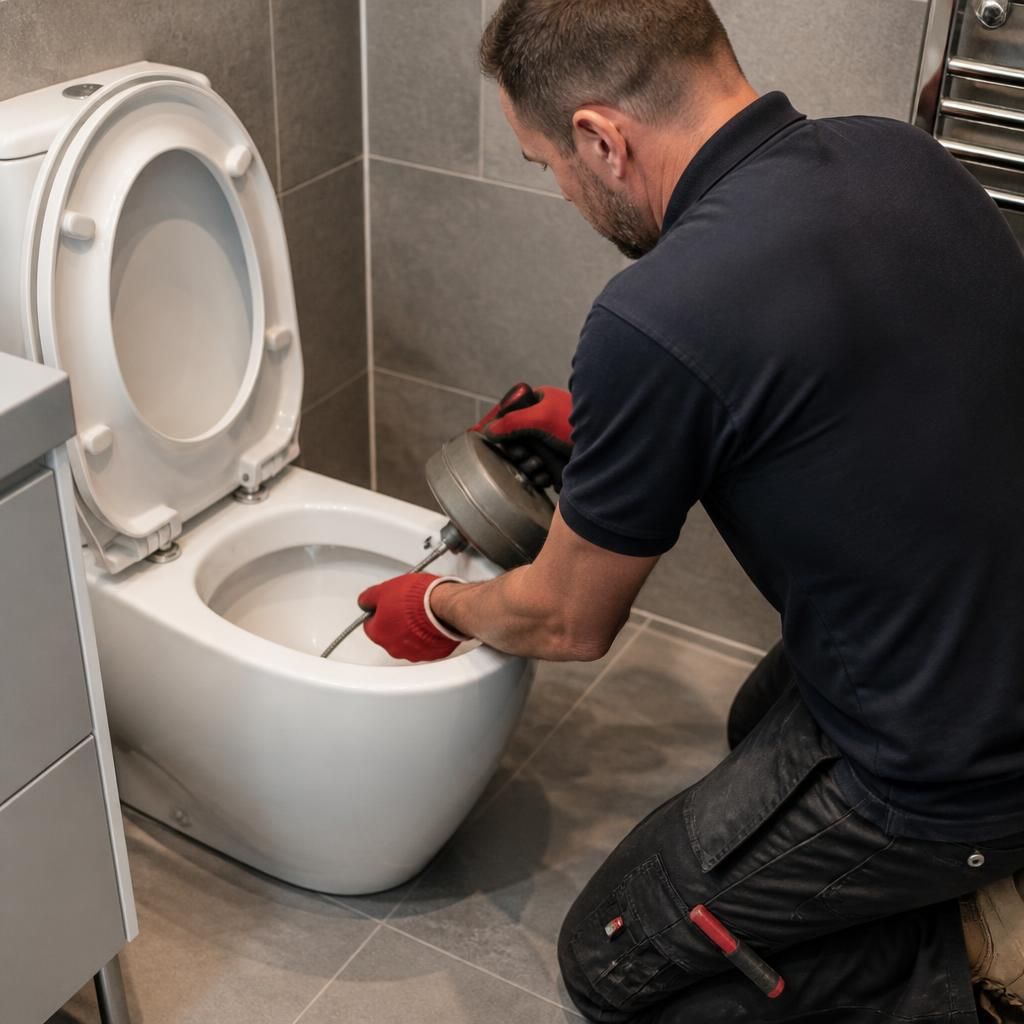
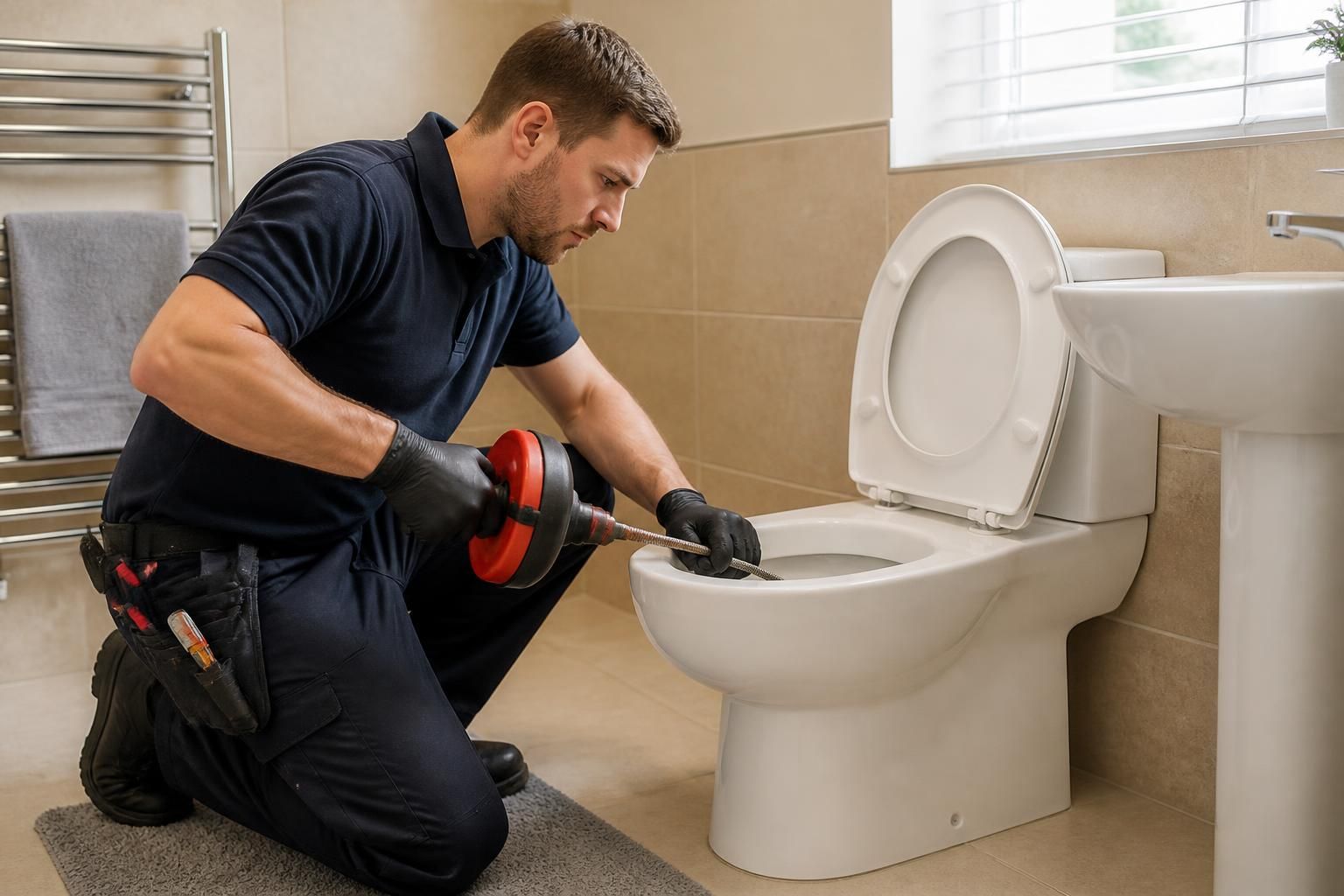
A careful unblocking process usually starts with identifying whether the blockage is in the toilet trap, the branch waste pipe or a shared drain. The plumber should protect the floor, control the water supply if the bowl is close to overflowing and use a suitable tool with measured pressure. A toilet plunger may be appropriate for a soft obstruction, while a closet auger or other specialist equipment may be needed when the blockage is further into the waste pipe.
- Protecting the bathroom: absorbent coverings and controlled removal of standing water help reduce contamination and prevent water reaching flooring, cabinets or skirting.
- Avoiding pan damage: tools should be designed for toilet waste systems, rather than improvised rods, coat hangers or sharp objects.
- Protecting the waste connection: force should be directed through the pipe, not against the ceramic outlet or connector.
- Checking the result: the toilet should be tested with controlled flushes while checking the base, pan connector and nearby pipework for leaks.
Repeated plunging can make matters worse if the water level does not change, if a solid object is lodged in the trap or if another fixture also drains slowly. A blockage that returns after being cleared may indicate restricted pipework, a displaced connection or a problem in a shared drain. These signs call for investigation rather than continued force.
Chemical drain cleaners are particularly unsuitable for many toilet blockages. They may not dissolve a solid object, can damage seals or finishes, and leave hazardous residue in the bowl or pipe when mechanical equipment is later used. Never mix different cleaning products, and tell the plumber if any chemical has already been added.
Professional help is advisable when the toilet is overflowing, an object may have been flushed, the pan is cracked, water is appearing around the base, or the blockage affects other fixtures. If the toilet needs to be removed, the pan connector and fixings should be inspected and replaced where necessary before the toilet is refitted and tested.
Ideal Plumbing Services can assess the cause of a blocked toilet and select an appropriate method for the bathroom and drainage layout. With over 20 years' experience, the team provides residential plumbing support across Birmingham and the wider West Midlands, with clear information about the work before repairs proceed.