Commercial leak detection does not have a single standard price. The final cost depends on the time and specialist equipment needed to identify the source, the complexity of the building and the level of documentation required. A professional quotation should separate the investigation from any repair work so that you can see exactly what is included.
What a commercial leak detection quotation may include
- Initial assessment: Reviewing the reported symptoms, affected areas, building layout and available plumbing information.
- Detection work: Using appropriate non-invasive or minimally invasive methods to trace the leak and narrow down its source.
- Access and investigation time: Allowing for plant rooms, ceiling voids, service ducts, floors, wall cavities or other restricted areas that may need to be examined.
- Findings and reporting: Providing a verbal explanation or written report describing the suspected source, evidence gathered and recommended next steps.
- Travel and applicable charges: Confirming whether these are included in the quoted price and whether VAT is included or added separately.
The main difference between a straightforward investigation and a more involved commercial survey is the amount of work required to reach a reliable conclusion. A visible escape from an exposed pipe may require less investigation than unexplained moisture appearing several rooms away from the concealed pipework. In the latter case, the plumber may need to test different sections of the system and compare readings before identifying the likely route of the water.
Factors that can affect the cost
- Size and use of the premises: Offices, shops, warehouses, care settings, rental buildings and other commercial properties can have very different plumbing layouts and access requirements.
- Pipework complexity: Multiple floors, zones, tanks, pumps, boosted supplies and interconnected services can make it harder to isolate the affected section.
- Type of suspected leak: Pressurised water leaks, heating-system leaks, underground pipework and hidden drainage faults may require different testing methods.
- Accessibility: Locked rooms, high-level services, fixed flooring, suspended ceilings, stored goods and restricted plant areas can increase the time needed to investigate.
- Operational constraints: Work may need to be planned around staff, visitors, tenants, equipment or sensitive areas. This can affect how the inspection is organised, even when the detection method itself remains unchanged.
- Required evidence: A property manager may only need the leak located, while an insurer, landlord or facilities team may require photographs, readings, a formal report or a repair recommendation.
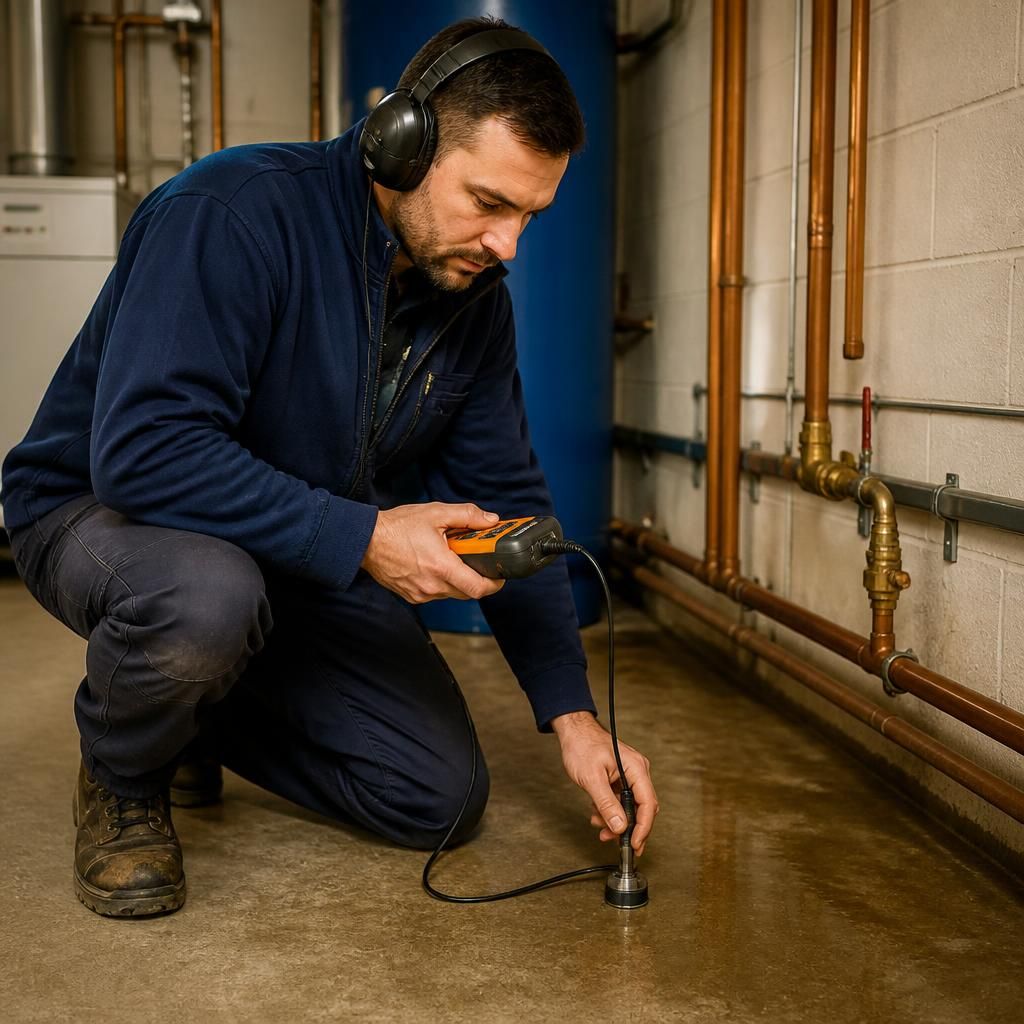
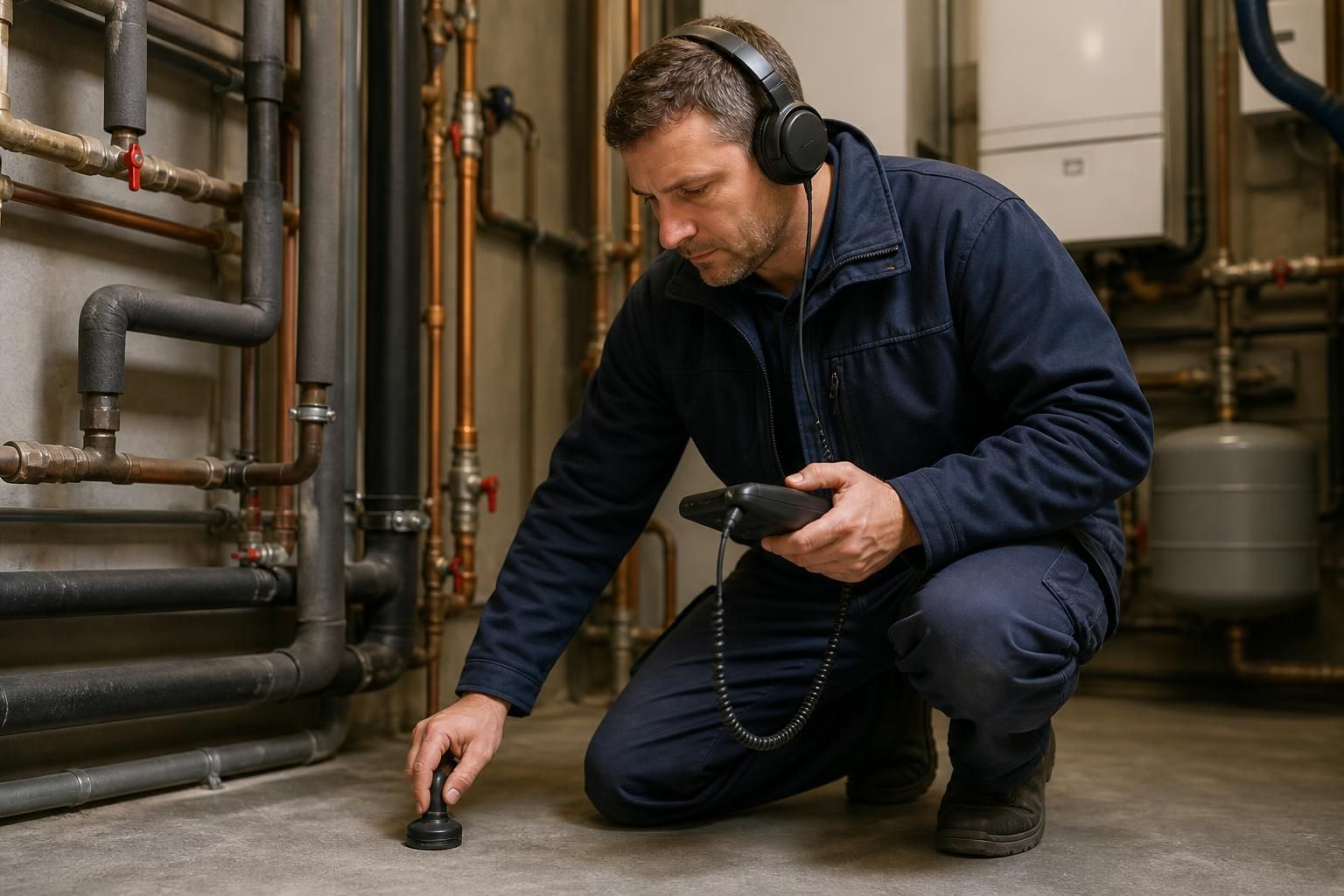
Specialist equipment can also influence the price. Depending on the circumstances, a survey may use acoustic listening equipment, thermal imaging, tracer gas, moisture measurement or pressure testing. These methods are selected according to the type of system and the available evidence rather than being used automatically on every visit. The purpose is to gather enough information to locate the fault while limiting unnecessary opening-up of walls, floors or ceilings.
Is repair included in the detection cost?
Usually, detection and repair should be treated as separate stages. Leak detection establishes where the fault is likely to be and what access may be required. Repairing it may involve replacing a fitting, opening a concealed surface, repairing a section of pipework or arranging further work by another contractor. Separating the two allows the customer to approve the repair after the cause and scope are understood.
It is sensible to ask whether the quotation covers a fixed investigation, an hourly or time-based charge, a written report and any return visit. You should also clarify whether opening up finishes, reinstatement, specialist access equipment, parking, disposal and repair materials are excluded. These items are not necessarily part of the detection itself, but they can affect the final project cost.
For occupied commercial premises, the most useful quotation is one that explains the proposed method, expected access requirements and information the survey will provide. Before instructing a contractor, provide details of when the moisture was first noticed, which areas are affected, whether water usage or pressure has changed and whether previous repairs have been attempted. Accurate background information can help the plumber choose a suitable investigation plan and avoid testing that is not relevant to the fault.
When comparing quotations, the lowest price is not necessarily the most useful measure. Check whether each proposal offers the same level of investigation, equipment, reporting and follow-up advice. A clear written scope, transparent charges and a separate repair estimate make it easier to compare commercial leak detection services and budget for the work with fewer unexpected costs.