Professional leak detection is most beneficial for commercial premises where a small water loss could interrupt operations, affect multiple occupants or damage building fabric and equipment. The strongest candidates include high-occupancy venues, buildings with extensive plumbing or heating systems, sites containing valuable stock, and properties where the source of a leak is not immediately visible.
Leisure and fitness premises such as gyms, sports centres, swimming facilities and spas have unusually high water demand. Showers, changing-room facilities, plant rooms and circulation systems can create several possible sources when pressure drops or dampness appears. A targeted investigation can help distinguish a supply-pipe issue from a problem with sanitaryware, heating equipment or drainage.
Industrial and manufacturing sites can also benefit, particularly where water serves production processes, wash-down areas, welfare facilities or heating systems. A leak may not be obvious in a large operational building, especially when background noise masks escaping water. Locating the affected section helps the responsible person plan an appropriate repair rather than opening up floors, walls or machinery areas without sufficient evidence.
Data, communications and technical facilities require careful investigation because water near electrical infrastructure, cabling or controlled environmental systems can create operational and safety concerns. Leak detection is appropriate where there is unexplained moisture, a pressure change or evidence that a pipe is losing water near valuable technical assets. The inspection method should be selected to limit unnecessary access to restricted areas.
Apartment blocks and multi-occupancy buildings benefit when the origin of a leak is disputed or difficult to assign to a particular unit. Shared risers, communal heating, service cupboards and individual connections can make responsibility unclear. A professional assessment can help establish whether the issue is within a private area, a shared installation or another part of the building, providing useful information for repairs and property management records.
Warehousing, storage and distribution premises are suitable candidates where stock is stored close to floors, walls or service routes. Even a relatively modest leak can affect packaging, stored goods, access routes and loading areas. Detection is especially useful where there is no obvious pool of water but repeated dampness, staining or unexplained pressure loss suggests an active problem.
Places of worship, community buildings and public venues may have older or extended plumbing arrangements, infrequently used rooms and several separate washroom facilities. Intermittent use can make a leak harder to notice, while a minor defect may continue between visits. A planned investigation is sensible when there are recurring signs of moisture or an unexplained change in water consumption.
Professional detection is also valuable for premises with one or more of the following characteristics:
- water meters showing movement when the building should be unoccupied;
- repeated loss of pressure in plumbing or heating circuits;
- damp patches, staining, mould or deterioration of flooring and finishes;
- unusual sounds from pipework, plant rooms or service cupboards;
- recurring repairs that resolve symptoms but not the underlying fault;
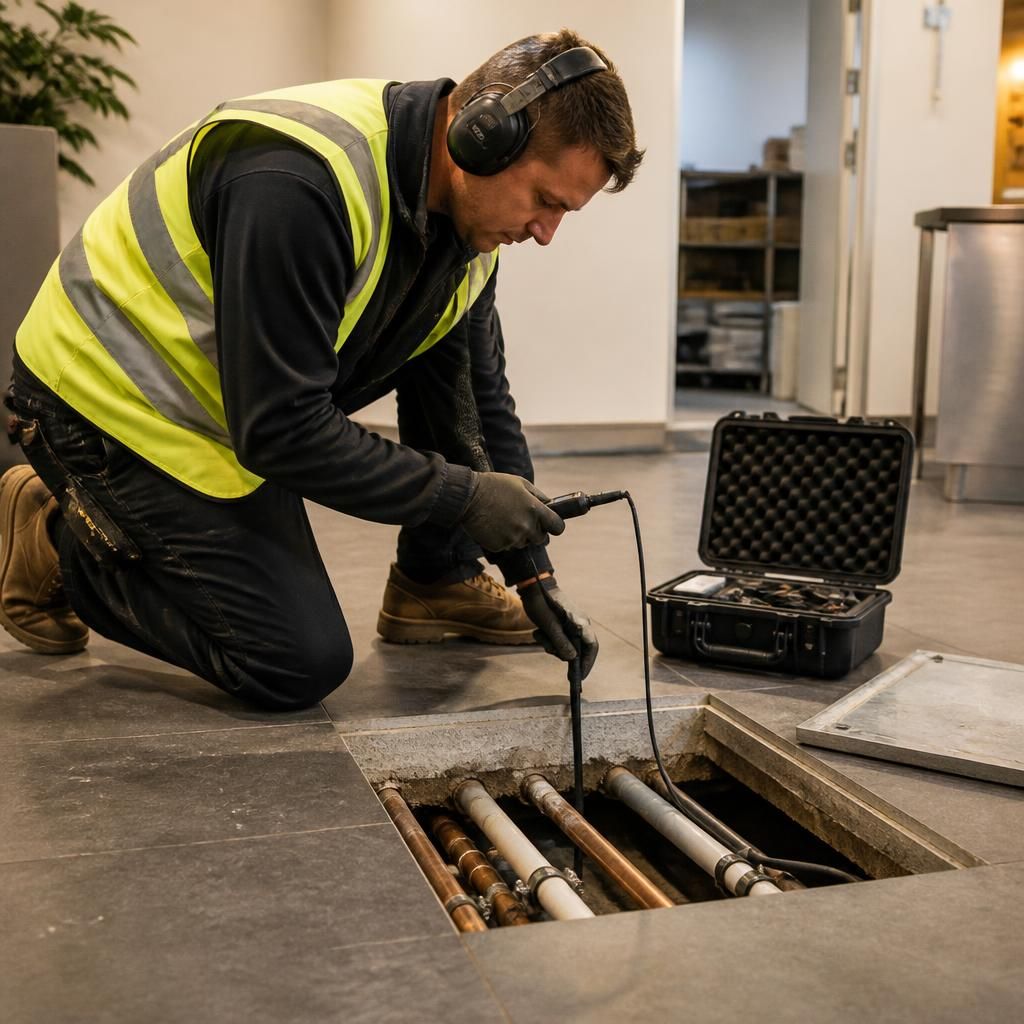
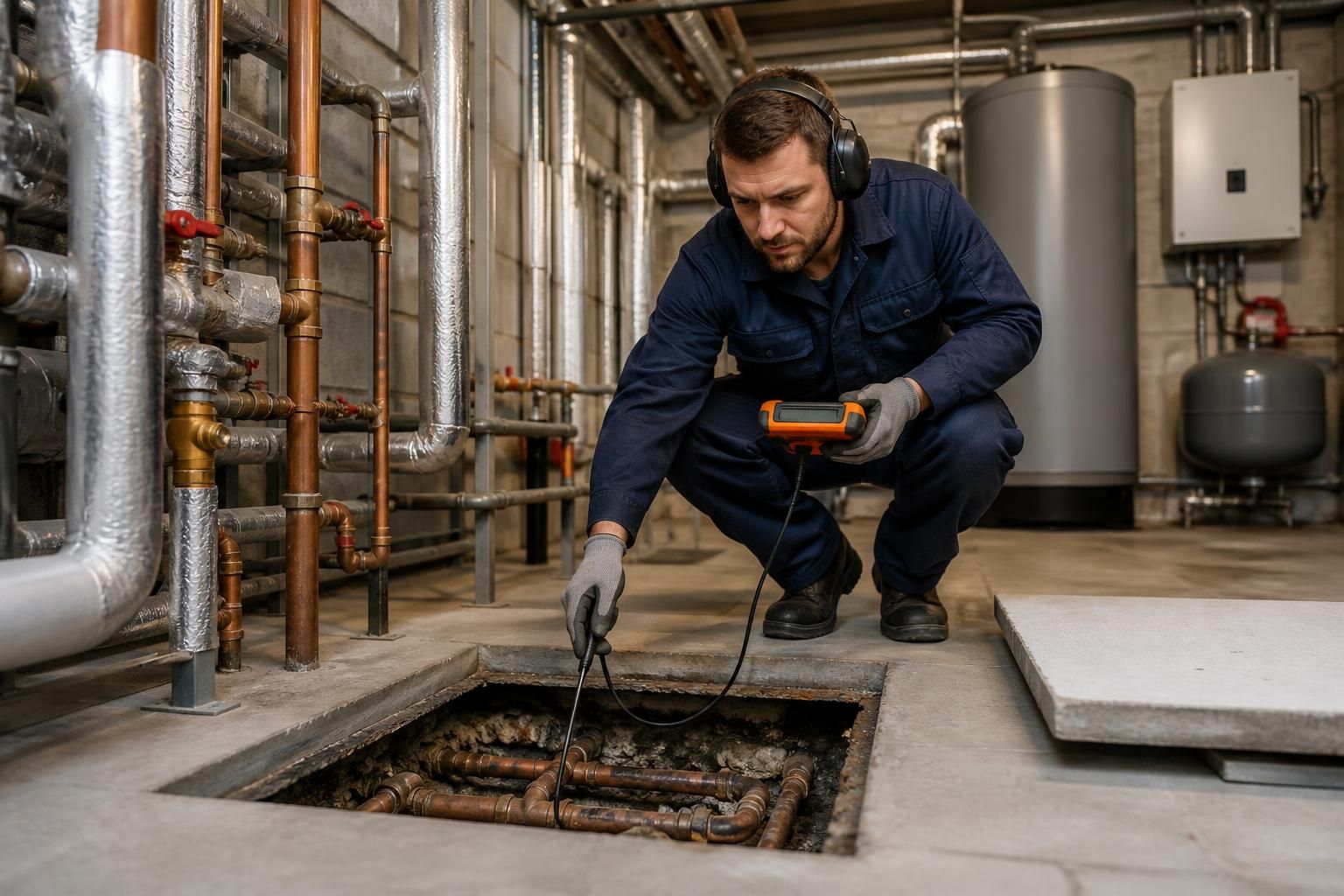
- pipework beneath solid floors, behind finished walls or within restricted-access areas;
- multiple tenants, departments or occupiers sharing one water installation.
The need for detection does not depend solely on the size of the premises. A small business can face significant disruption if a leak affects its only washroom, hot-water system, stockroom or electrical area. Conversely, a large site may have enough separation between systems to make a localised investigation more practical. The relevant factors are the complexity of the installation, the consequences of continued water loss and how confidently the source can be identified by ordinary visual checks.
An assessment should normally consider the building layout, the plumbing and heating arrangement, recent repair history and the exact symptoms reported. This information helps determine whether the suspected fault is on a supply line, heating circuit, appliance connection or another part of the installation. Ideal Plumbing Services provides leak detection and repair support for commercial customers, with findings used to guide the next stage of remedial work rather than treating visible damage alone.