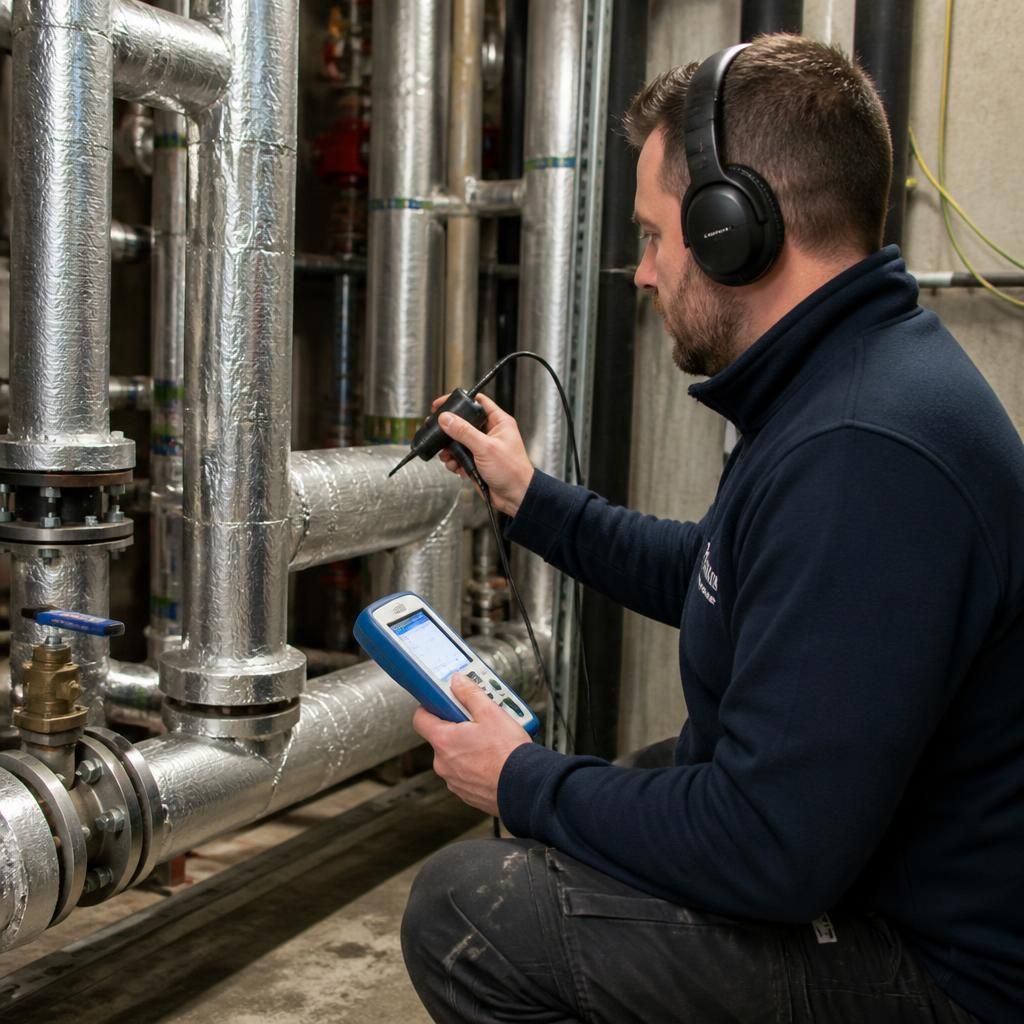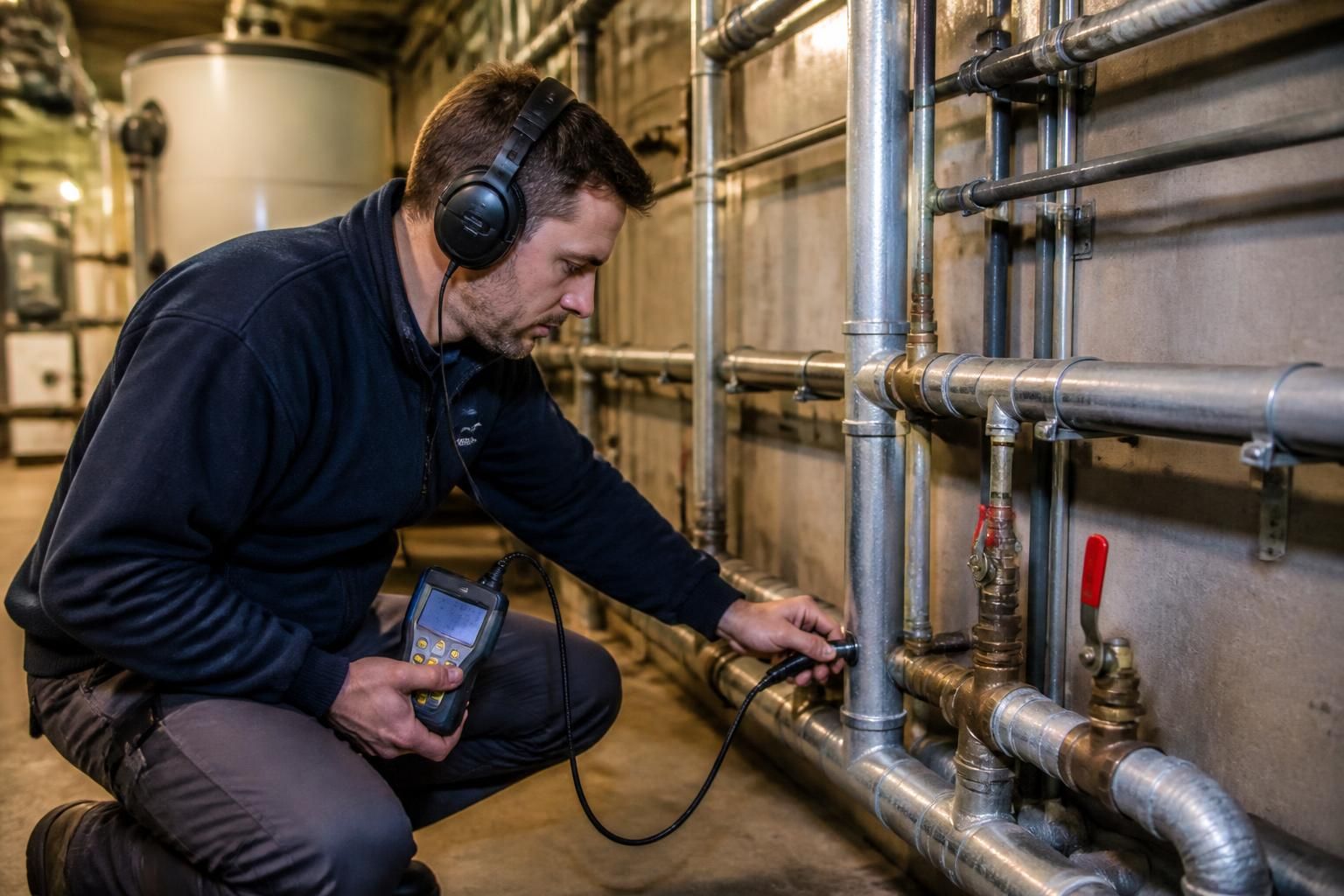
Commercial leak detection equipment is selected to identify the location, extent and likely source of water loss while limiting the need to remove finishes or open large areas. A professional survey normally combines measurement, location and verification tools rather than relying on a single device.
Pressure and flow monitoring equipment helps establish whether a closed system is losing water. Digital gauges can record changes in pressure, while flow meters can indicate continued consumption when outlets and appliances are not in use. This information helps distinguish a leak from normal fluctuations caused by pumps, valves, expansion vessels or changing demand.
Pipe and service locators can help map the route of buried or concealed pipework before more detailed testing takes place. Knowing where a supply runs is particularly useful beneath hard flooring, in service yards, within plant areas or around suspended ceilings. It reduces the risk of investigating an unrelated section of the building.
Inspection cameras and borescopes provide visual access to restricted spaces such as service voids, ducting, wall cavities and accessible pipe interiors. A flexible camera may reveal standing water, corrosion, damaged joints or an obstruction without requiring extensive dismantling. Camera inspections are most useful where there is a suitable access point and a clear route to the suspected area.
Dye and fluid-testing equipment can be used where water from different sources needs to be distinguished. A suitable non-permanent dye introduced into an isolated system may help confirm whether water appearing in another location is connected to that system. Testing must be controlled carefully in commercial premises to avoid staining, contamination or confusion with normal building services.
Electrical and environmental measuring tools support the interpretation of findings. Instruments may be used to check temperature, humidity, surface conditions and electrical safety around damp areas. These readings do not necessarily prove the position of a failed pipe, but they help identify whether moisture is active, residual or related to condensation and ventilation rather than a plumbing leak.
The choice of equipment depends on several site conditions:
- the material, diameter and age of the pipework;
- whether the system is pressurised, gravity-fed or intermittently used;
- the depth and accessibility of concealed services;
- the construction of floors, walls, ceilings and external surfaces;
- background noise from machinery, traffic, pumps and occupied areas;
- the type of water involved, such as a supply, heating or drainage system.
Equipment readings require interpretation rather than automatic acceptance. A warm patch may result from a heating pipe rather than escaping water, while a damp reading can remain after a leak has been repaired. Similarly, sound can travel through pipework and structural materials, making the loudest point different from the actual failure. Technicians compare readings from several locations and, where practical, confirm the suspected route with a second method.
A typical investigation begins with a review of the building’s plumbing layout and any reported symptoms. The suspected system is then isolated or monitored where this can be done safely and without affecting essential operations. Measurements are taken, accessible services are traced, and the results are compared with visible damage, usage patterns and the construction of the premises. Further testing is used to narrow the location before opening a surface or recommending a repair.
Good equipment should also produce a clear record of the investigation. Useful documentation can include test conditions, readings, marked-up plans, photographs and the area identified for access. This gives the property owner, landlord or facilities team a practical basis for deciding whether to arrange a targeted repair, investigate related damage or carry out follow-up monitoring.