Once a commercial leak has been located, the next stage is to turn the diagnostic findings into a controlled repair and recovery plan. This normally involves identifying the failed component, selecting an appropriate repair method, checking the effect on the rest of the system, and arranging the work so the premises can return to normal use safely.
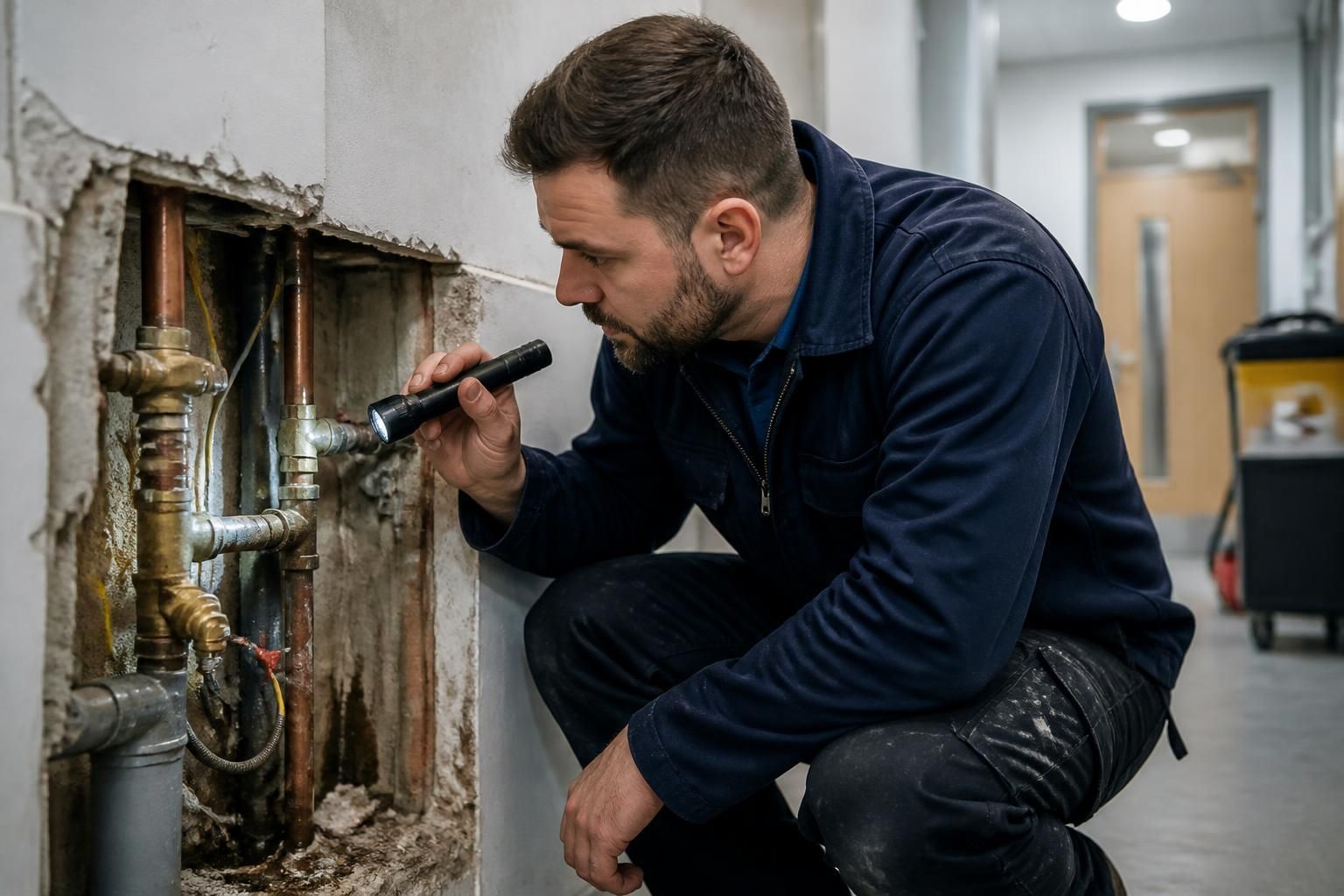
The location of the visible water is not always the precise point of failure. A concealed pipe, joint, valve, appliance connection or drainage fitting may be responsible, so the diagnosis should distinguish the source from secondary moisture. The condition of nearby materials and any signs of continuing spread are also relevant when deciding what work is necessary.
A commercial leak report or job record should normally set out:
- the confirmed or most likely source of the leak;
- the affected pipework, fitting, appliance or sanitary installation;
- any limitations on the diagnosis, such as restricted access;
- recommended repair options and their relative advantages;
- parts, access equipment and follow-up work likely to be required; and
- any areas that should be monitored after the repair.
The repair itself may involve replacing a failed joint, valve or section of pipework, renewing a connection, repairing an appliance feed, or carrying out more extensive plumbing work where the installation is deteriorated. The most suitable option depends on the pipe material, the condition of surrounding components, accessibility and the consequences of leaving older parts connected to a new repair.
Before work is authorised, the responsible person should clarify the scope and cost. A useful quotation separates the repair from associated tasks such as removing access panels, lifting or replacing finishes, drying affected areas, and testing other connected equipment. Where the full extent cannot be confirmed until access is created, that uncertainty should be explained before additional work begins. Clear records help landlords, facilities managers and insurers understand what was found and why a particular repair was recommended.
Testing follows the repair. This may include checking joints for visible seepage, running the relevant fixtures, observing pressure behaviour and confirming that connected outlets drain correctly. Where a section of pipework has been altered, the surrounding installation should be checked for movement, stress or further defective connections. A repair should not be treated as complete merely because water is no longer visible at the original location.
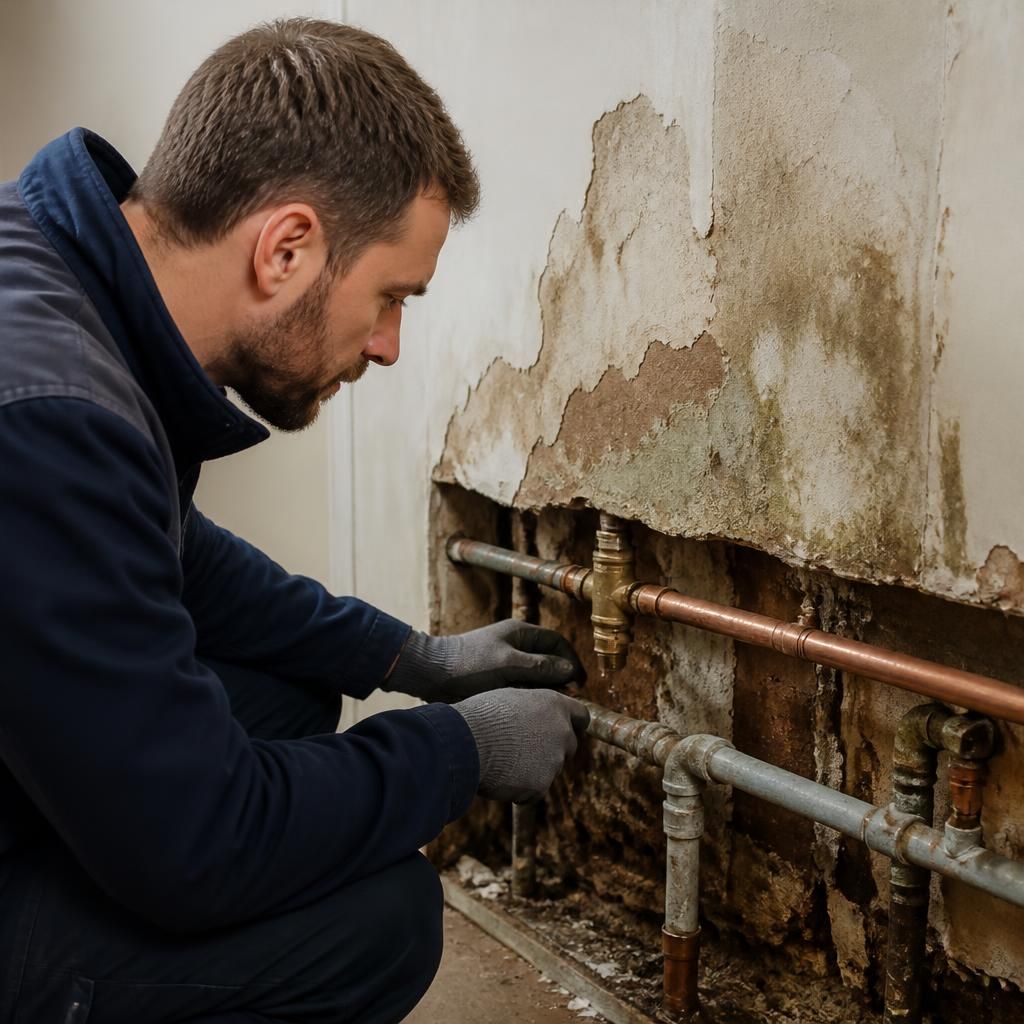
Attention may then turn to the building fabric and contents. Wet plasterboard, flooring, insulation, cupboards and stored goods can retain moisture after the plumbing fault has been corrected. The plumber can identify areas requiring further assessment, while drying, mould prevention, decoration and specialist restoration may need to be handled by the appropriate contractor. Photographs, invoices and repair notes can be useful for property records or an insurance claim.
For occupied commercial premises, the work should also be coordinated with the people responsible for the building. They may need to manage access, protect stock, move equipment, notify staff or tenants, and plan any temporary restriction on facilities. This is particularly important where the affected installation serves toilets, kitchens, plant rooms or other essential areas.
Once the system is operating normally, the final information should include the work completed, parts replaced, test results where relevant, and any remaining recommendations. If the cause was linked to corrosion, poor support, recurring blockages, high pressure or ageing components, addressing that underlying issue can reduce the likelihood of another leak. Planned inspections and maintenance may also be appropriate for larger or older commercial plumbing systems.