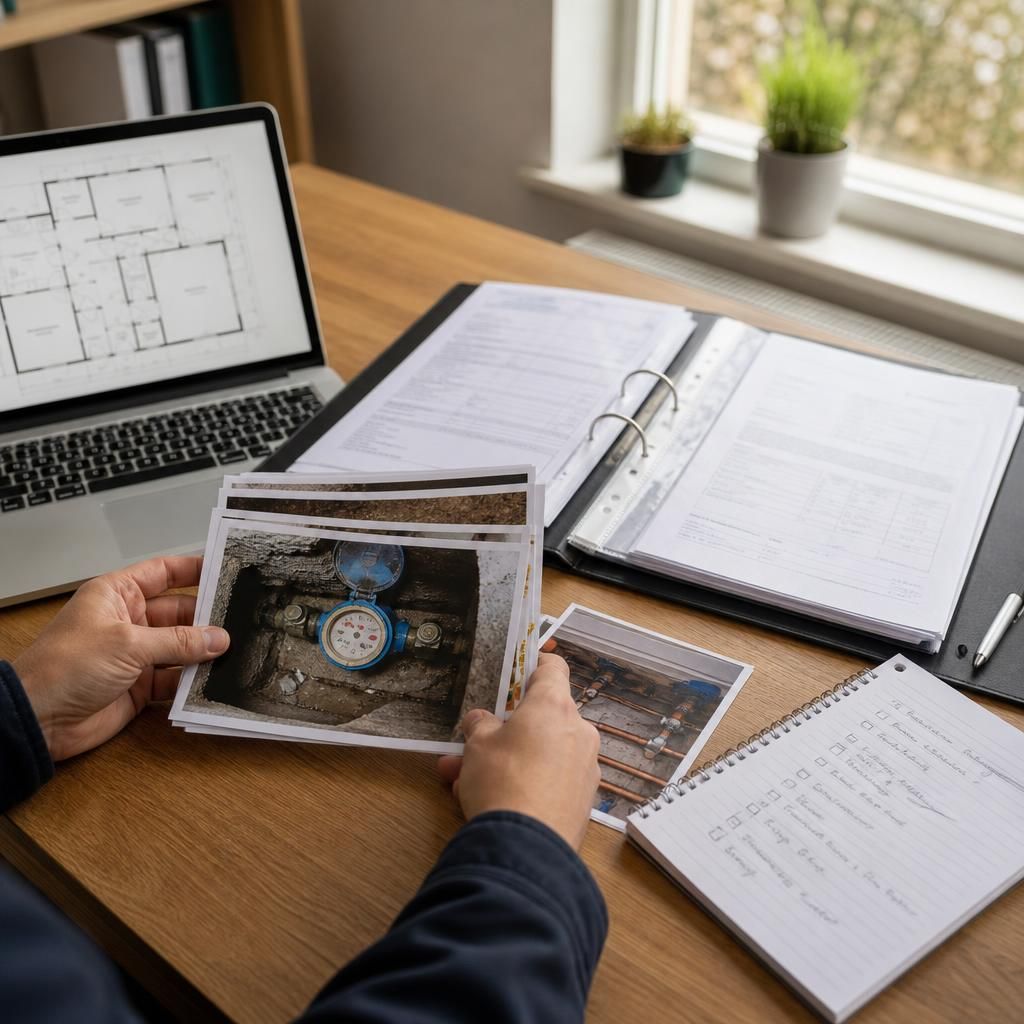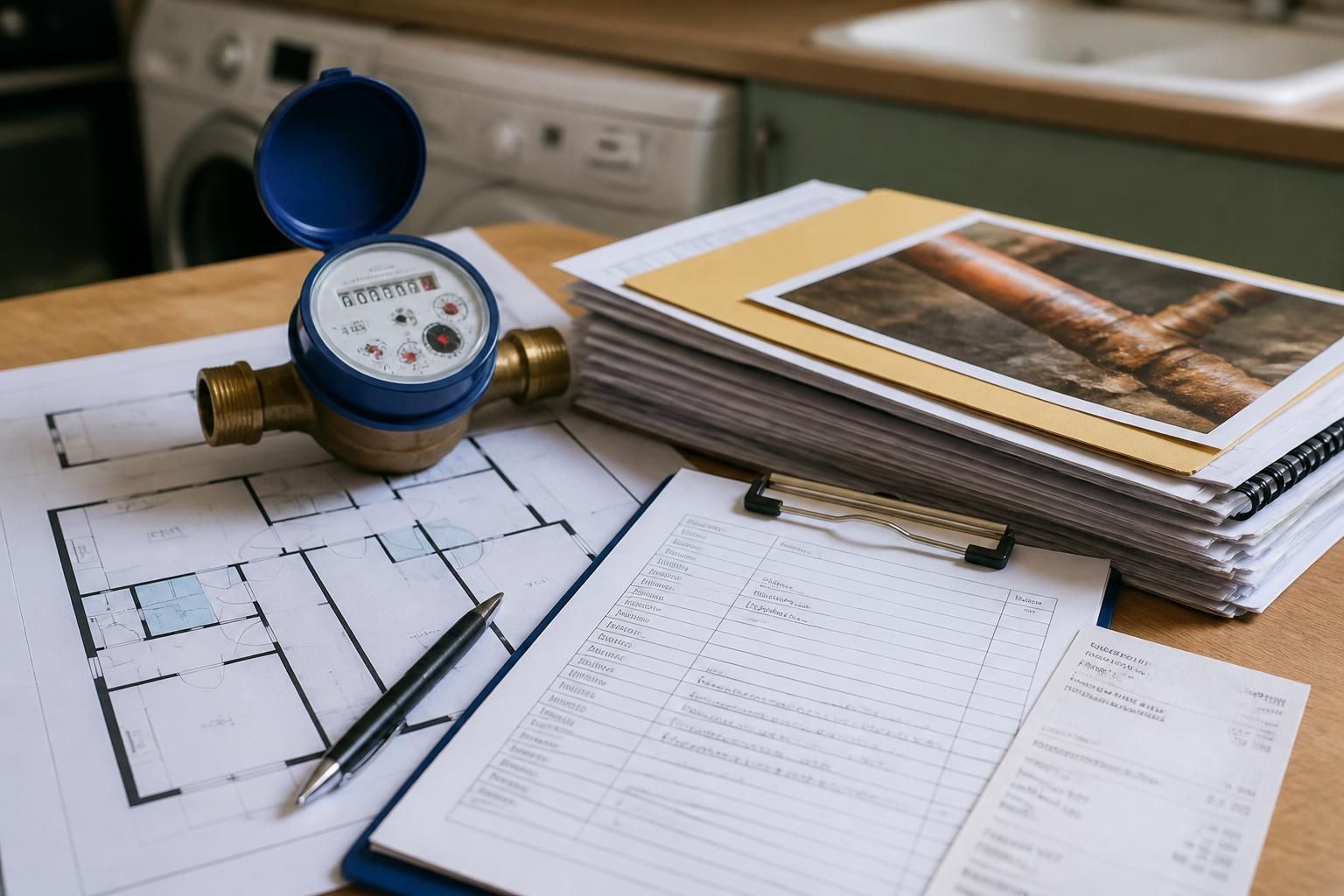
The most useful records for a leak detection visit are those that show the property’s layout, installed systems, maintenance history and any related insurance or utility information. Providing organised copies in advance can help the technician understand the building and identify which areas, pipe runs or appliances may need investigation.
Property and system information
- Floor plans, property drawings or records showing extensions, converted rooms, loft spaces, basements and outbuildings.
- Plans identifying service risers, plant rooms, voids, suspended floors and concealed pipework, where these are available.
- Boiler, cylinder, underfloor heating or other heating-system installation and commissioning records if the suspected leak may involve heating pipework.
- Plumbing, heating or appliance maintenance schedules, including dates of servicing and the systems or components inspected.
- Details of alterations, refurbishments or room changes that may have affected pipe routes or connections.
Utility and financial records
- Recent water bills or account statements, particularly where they show a change in consumption that may correspond with the suspected leak.
- The water account holder’s details and any information identifying separate supplies, sub-meters or shared services.
- Relevant insurance correspondence, claim references, loss-adjuster reports or survey documents.
- Invoices or reports from drying, restoration or building contractors if remedial work has already taken place.
Building management records
For rented, leasehold or managed premises, include the tenancy or property-management contact details, maintenance log and any incident reports made by occupants. In a commercial building, records should also identify the responsible facilities contact, affected unit or floor, and any restrictions on entering plant rooms, service cupboards or private areas. This helps separate a leak affecting one property from a problem involving shared pipework.
Where several contractors have worked on the building, provide their relevant inspection reports and details of components they installed or replaced. Product warranties, commissioning certificates and manufacturer service records can be useful when a leak appears to involve a boiler, cylinder, water-treatment unit, pump or other connected equipment.
Keep records factual and dated where possible. Avoid relying solely on a verbal description, particularly when the property has multiple occupants or the symptoms are intermittent. If documents contain unrelated personal or financial information, provide only the pages needed for the investigation, with sensitive details obscured where appropriate.
If no formal records exist, that should not prevent a leak detection visit. Tell the technician which documents are unavailable and provide a clear property layout, the names of relevant rooms or areas and any access information needed to inspect them. Records support the investigation, but they do not replace a physical assessment of the plumbing or heating system.