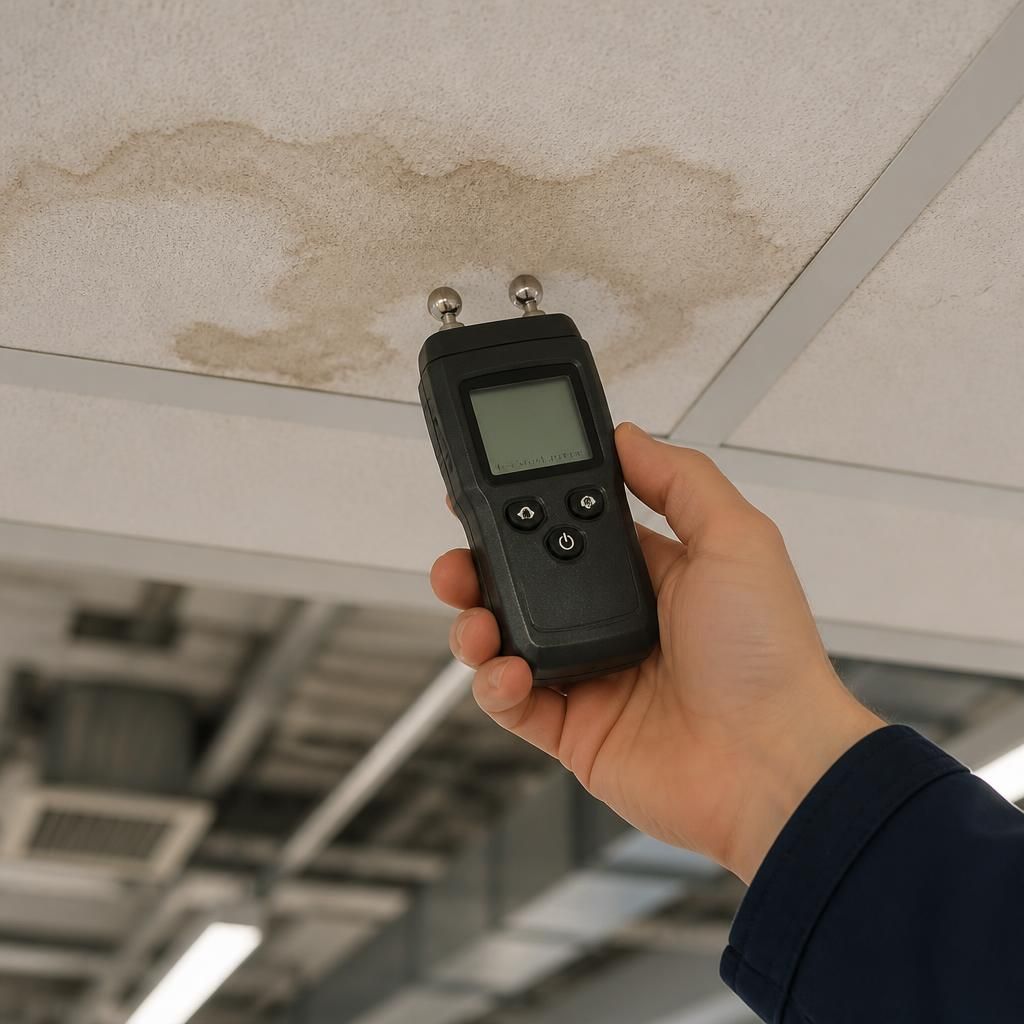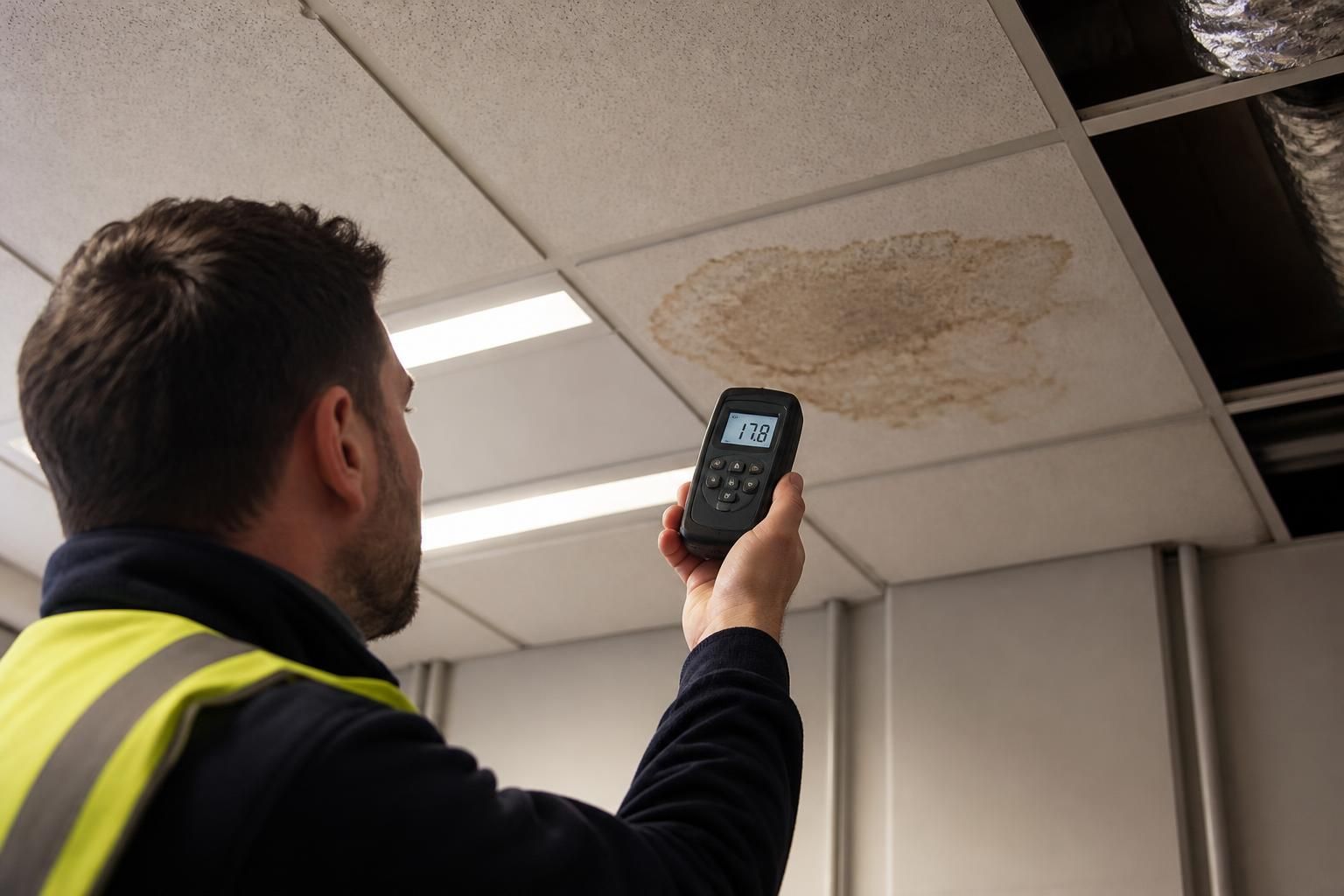
A commercial property needs leak detection when there is evidence of concealed or recurring water loss that cannot be explained by a visible fault. In practice, this includes repeated damage in the same area, unexplained deterioration of building materials, persistent plumbing problems and moisture affecting occupied, service or storage spaces. A professional investigation can help establish whether the source is a pressurised supply pipe, heating circuit, drainage system, tank, valve or another part of the building’s water installation.
Some warning signs are operational rather than immediately visible. Staff, tenants or visitors may report that a particular room feels damp, that fittings need repeated repairs, or that water appears after equipment has been used elsewhere in the building. A leak may also be suspected when damage returns after redecoration or when a repair appears to resolve the problem only temporarily. These patterns suggest that the visible defect may be an effect rather than the source.
- Recurring damage to finishes: blistering paint, lifting flooring, warped skirting, swollen joinery or crumbling plaster that returns after repair can indicate continuing moisture behind the finish.
- Problems in service areas: moisture around plantrooms, risers, boiler areas, kitchens, washrooms, storage rooms or suspended ceilings may point to a concealed fault in pipework or a connection.
- Repeated equipment or fitting failures: regularly replacing valves, seals, ceiling tiles or sections of flooring may indicate that water is reaching the area from a hidden source.
- Changes between occupied and unoccupied periods: a property may show signs of water loss or dampness even when no obvious fixture is being used, which can help distinguish a supply-side leak from normal consumption.
- Moisture spreading beyond the original area: water can travel along joists, slabs, insulation, service ducts and ceiling voids, so damage may appear some distance from the leaking pipe.
- Tenant or staff reports that do not match: separate reports of dampness, intermittent water, unusual noises or affected rooms may collectively indicate one hidden leak rather than unrelated faults.
A commercial property should also be assessed where a leak could disrupt business operations or damage sensitive contents. Water entering an electrical or communications area, stockroom, archive, office ceiling or customer-facing space warrants investigation even if the visible amount appears limited. Small leaks can continue within concealed spaces, allowing insulation, timber, plasterboard and other materials to deteriorate before the source becomes obvious.
Not every damp mark is caused by leaking pipework. Condensation, rainwater ingress, defective seals, blocked gutters, drainage defects and rising damp can produce similar symptoms. The location, timing and pattern of the moisture are therefore important. For example, damage that follows rainfall may require a different investigation from moisture that appears when a heating circuit operates. A leak detection visit can help separate these possible causes before disruptive repairs are planned.
Early investigation is particularly sensible where the affected area is inaccessible, where several rooms share concealed services, or where opening walls and floors without locating the source could create unnecessary reinstatement work. Specialist detection methods may be selected according to the suspected system and construction. These can include pressure testing, acoustic equipment, thermal imaging, tracer methods or moisture mapping. The appropriate method depends on the building, the pipework and the type of leak, so detection should be based on the evidence rather than a fixed procedure.
Before arranging an inspection, the responsible person should note when the problem was first observed, which rooms or systems are affected, whether the issue changes after rainfall or equipment use, and what repairs have already been attempted. Photographs, maintenance records, utility information and reports from occupants can help create a useful timeline. If there is active flooding or a risk to electrical equipment, the affected area should be made safe and the relevant isolation procedures followed while professional assistance is arranged.
Commercial leak detection is most appropriate when the evidence points to hidden water loss, repeated moisture damage or a fault that cannot be located confidently by visual inspection. Identifying the source before extensive removal of finishes allows the property owner, landlord or facilities manager to make a more informed decision about the repair required.