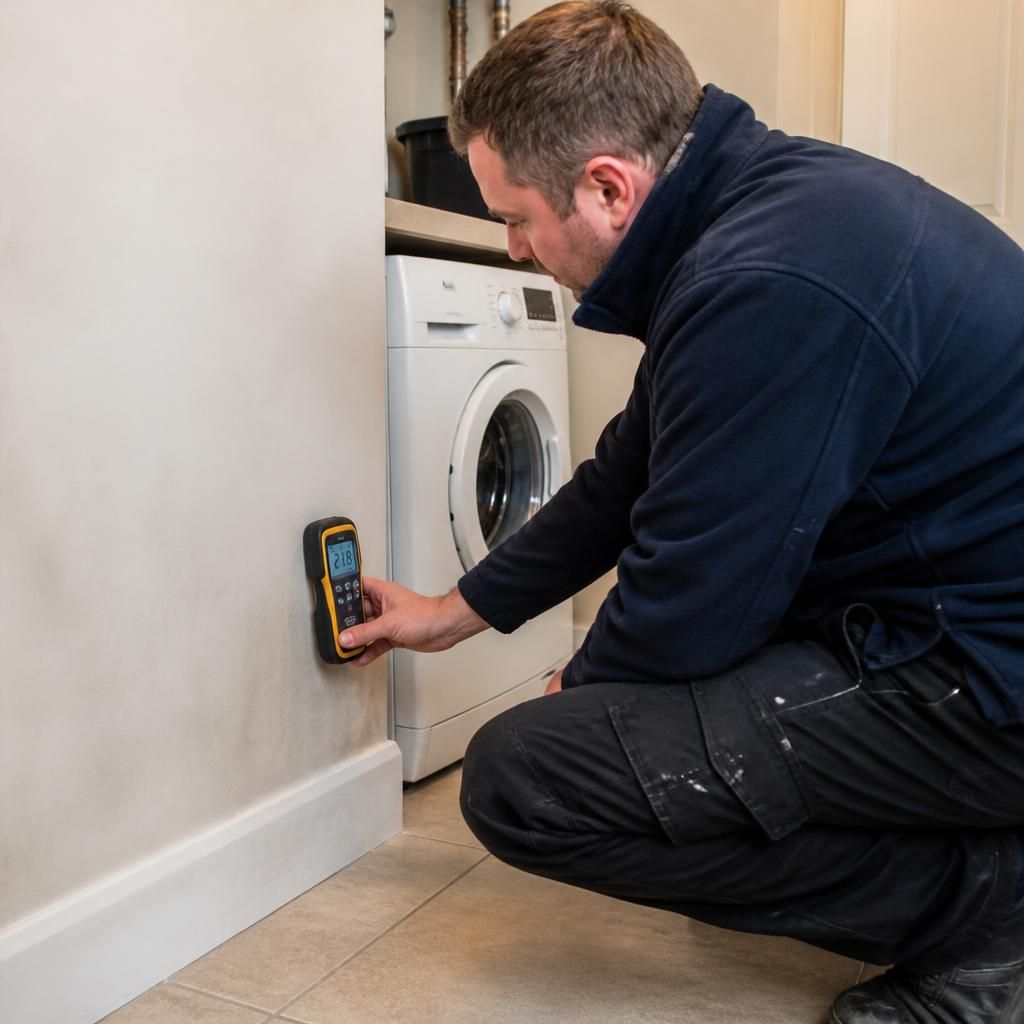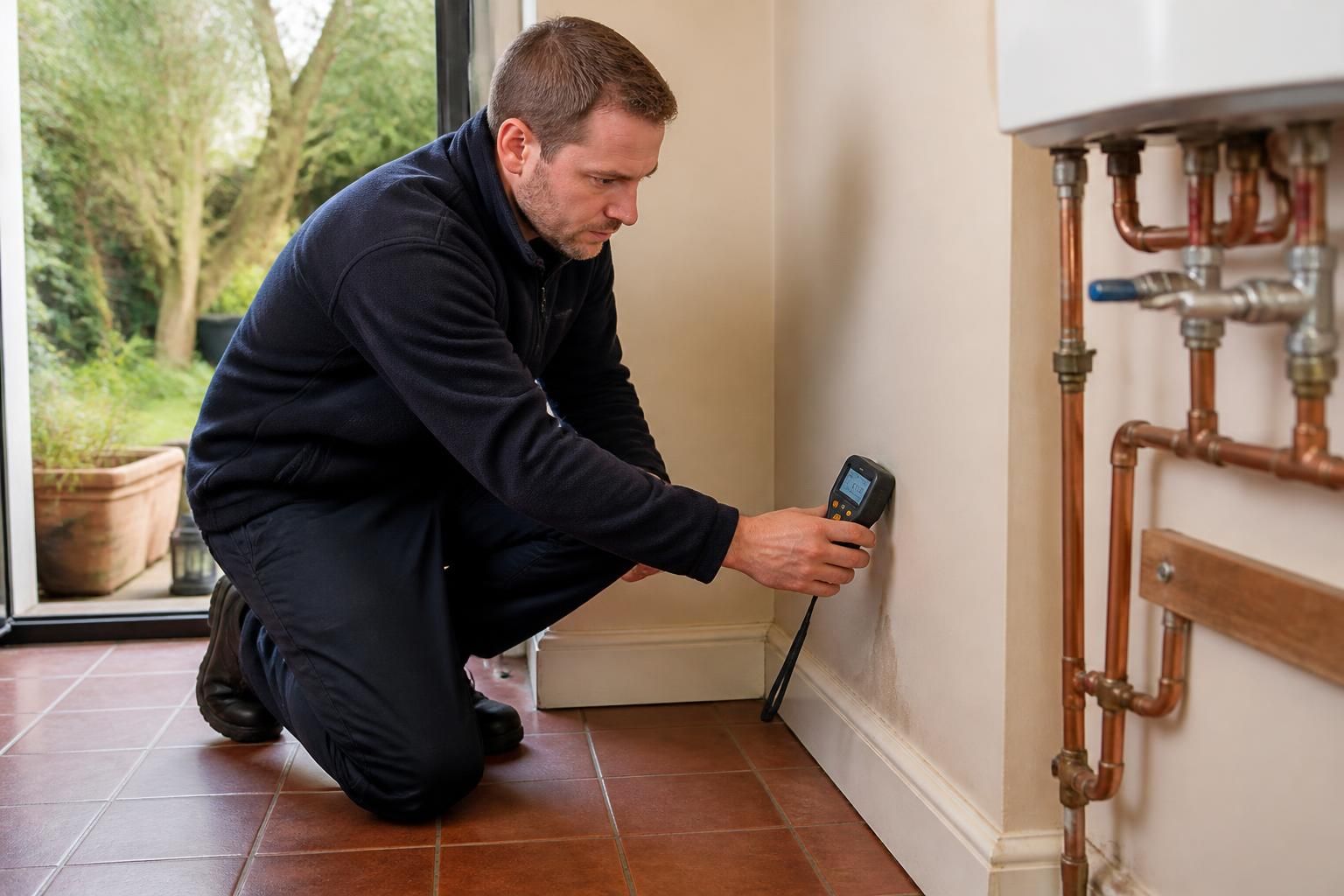
Access beyond the visibly affected area is not automatically required for leak detection. A technician will usually begin in the room where dampness, staining, pressure loss or unusual noise has been reported, then decide whether further inspection is necessary based on the pipe layout and the evidence collected.
Neighbouring rooms may need to be entered where they contain part of the same water system or provide a useful comparison. This can include:
- a room on the other side of a shared wall;
- the floor above or below the reported leak;
- service cupboards, plant rooms or risers containing isolation valves and pipework;
- kitchens, bathrooms or utility areas connected to the same supply or heating circuit; and
- areas where a pipe passes beneath flooring, behind a partition or through a ceiling void.
Water can travel away from the original failure point before it becomes visible. For example, a ceiling stain may be below a pipe joint on the floor above, while dampness beside a wall may relate to pipework concealed in an adjoining room. Checking nearby areas helps distinguish the point where water is appearing from the point where it is escaping.
Access to an adjoining property is more likely to be relevant in flats, terraced buildings and premises with shared walls or connected services. It may be useful where the suspected pipe runs across a boundary, where a shared riser or supply serves both properties, or where readings from both sides are needed to compare conditions. The adjoining property might be another home, a neighbouring commercial unit or a communal part of the building.
Permission should be obtained before entering a separate property. A tenant may need to involve the landlord or managing agent, while access to communal areas may need to be arranged through a building manager or facilities contact. If the suspected leak is connected with a shared supply, access arrangements should be clarified before the visit so that the relevant areas are available for inspection.
Not every inspection requires entry into every nearby room. Non-invasive methods can sometimes provide useful information from the affected area, including pressure testing, listening equipment, moisture measurement and thermal imaging. However, these methods still depend on the building structure and the type of leak. A concealed, low-volume or intermittent leak may be harder to trace accurately if the technician cannot inspect the most relevant section of the system.
If access is unavailable, the technician can often assess the accessible evidence and explain the remaining limitation. This may mean that the suspected route can be narrowed down without confirming the precise failure point. It is important to separate a probable location from a confirmed source before removing finishes or arranging a repair.
To make the visit more productive, provide details of any rooms or properties affected, when the symptoms were first noticed, whether the problem changes when taps or heating are used, and whether the water supply or heating system is shared. Clear access to inspection points, cupboards and visible pipework is also helpful. Do not remove flooring, open walls or disturb pipework before the source has been assessed, as this can conceal useful evidence and create unnecessary damage.
Where access to another room or property is genuinely required, the inspection should be limited to the areas relevant to the suspected leak. The purpose is to gather comparative readings, follow the likely pipe route and identify the source as accurately as the available access allows, rather than to inspect unrelated parts of the building.