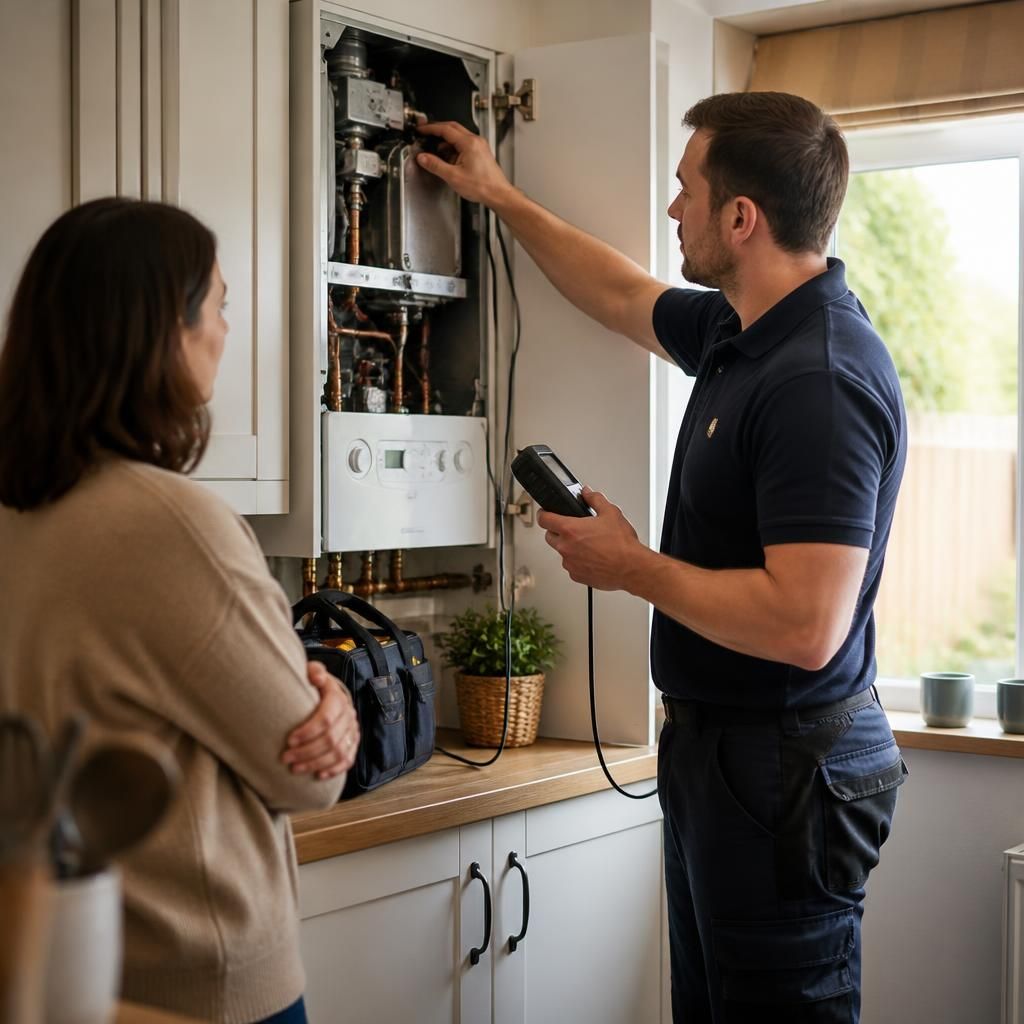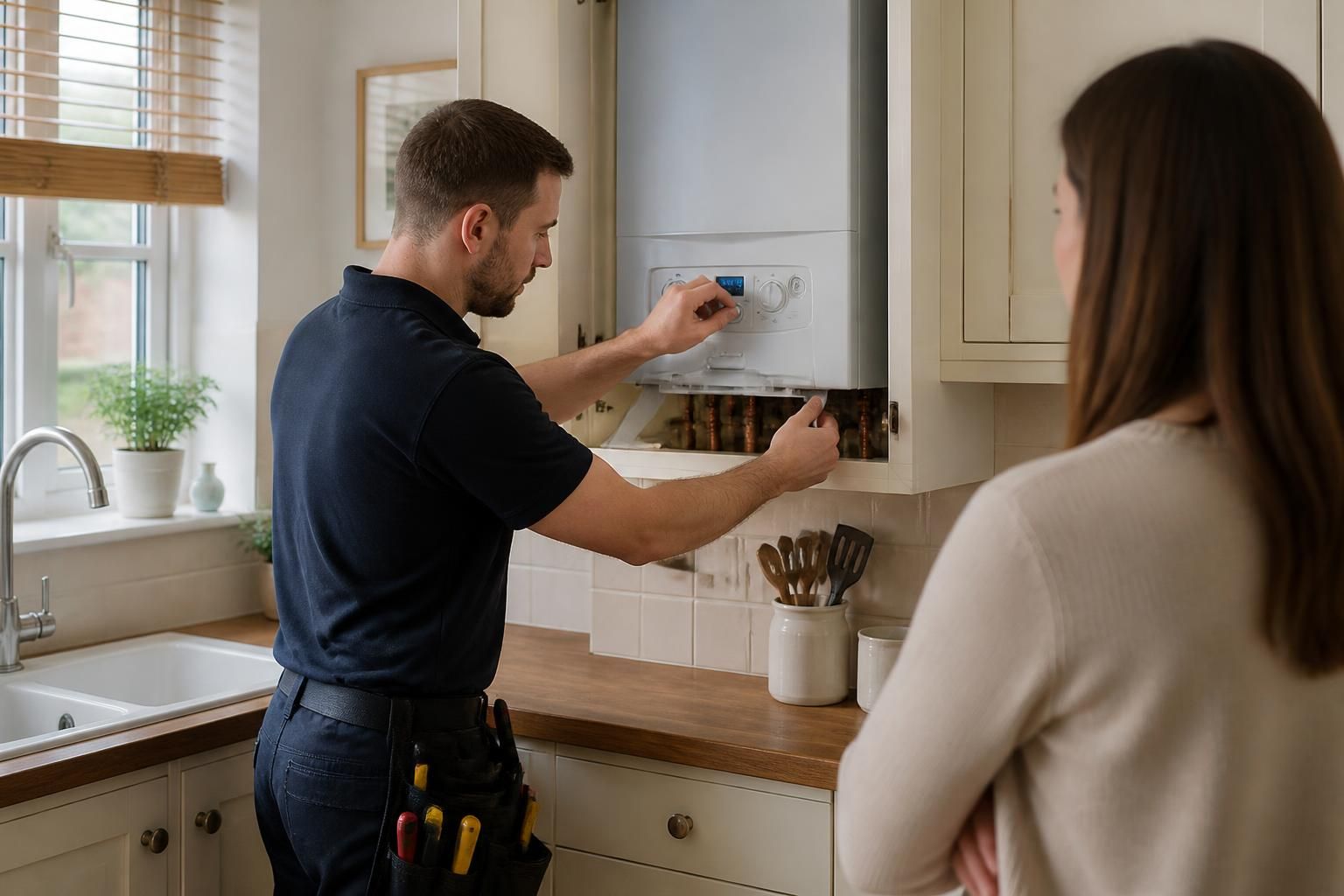
Yes. Domestic gas engineers can work safely in occupied homes when the work is carried out by a suitably qualified, Gas Safe registered professional and the job is managed around the people living in the property. Safe working involves more than repairing the appliance: it includes controlling access, checking the installation, managing combustion and flue risks, and confirming that the appliance can be used safely when the work is finished.
Before work begins
- The engineer should confirm which appliance or pipework requires attention and establish whether any symptoms have been reported, such as unusual smells, staining, repeated shutdowns or headaches associated with appliance use.
- They may need access to the gas meter, isolation valves, ventilation openings, flues and nearby controls. Keeping these areas accessible helps the inspection proceed without unnecessary disturbance.
- Occupants should be told which rooms or appliances must not be used during the work. Children and pets should be kept away from tools, exposed components and the engineer’s working area.
- Where an appliance is built into a cupboard or enclosed space, surrounding items may need to be removed so that connections, ventilation and flue components can be examined properly.
How risks are controlled in an occupied property
A professional engineer separates the work area from normal household activity as far as reasonably practicable. This can include keeping tools and removed components together, preventing unauthorised access to the appliance and avoiding work that could obstruct escape routes. Any coverings or protective measures used around the work area should not block required air vents or conceal signs of a problem.
Gas appliances also require adequate air for safe combustion. Furniture, stored items or temporary coverings must not obstruct purpose-built ventilation. The engineer should be alert to changes made since the appliance was installed, including new kitchen units, extensions, extractor fans or alterations to doors and windows. These changes can affect how air enters or leaves the room and may influence the safe operation of an appliance.
Checks that matter during the job
The exact checks depend on the appliance and the work being undertaken, but may include examining gas pipework and connections, checking the appliance installation, assessing the flue route and observing the appliance in operation. The engineer may also carry out tests for gas tightness, combustion performance and the correct operation of safety controls.
Where carbon monoxide could be produced by faulty combustion or inadequate flue performance, the engineer should treat this as a serious safety issue. A carbon monoxide alarm is useful as an additional warning device, but it does not replace proper installation, servicing, testing or maintenance. An alarm should never be used as evidence that an appliance is safe without professional checks.
When work should stop
An engineer should not continue with a repair or recommission an appliance if a dangerous defect is found. Depending on the circumstances, the appliance may need to be turned off, labelled or isolated until corrective work is completed. Occupants should follow the engineer’s instructions and avoid using equipment that has been identified as unsafe.
If anyone notices a gas smell, feels unwell when an appliance is operating, or suspects carbon monoxide, they should stop using the suspected appliance, avoid flames and electrical switches, and seek appropriate emergency gas safety advice. A professional may need to investigate before the appliance is used again.
After the work is complete
The engineer should reassemble the appliance correctly, remove tools and materials, and verify that the system operates as intended. Any controls, isolation points or restrictions that occupants need to understand should be explained clearly. Relevant records or safety documentation may also be provided, particularly where the work affects a landlord’s legal responsibilities or forms part of an appliance service.
Occupants can help maintain safety by keeping ventilation openings clear, avoiding unapproved alterations to gas appliances or flues, arranging servicing at appropriate intervals and reporting unusual noises, smells, soot marks or repeated faults. A qualified domestic gas engineer can work in a lived-in home without unnecessary disruption, but safe practice must take priority over completing the job when a defect or unsafe condition is present.