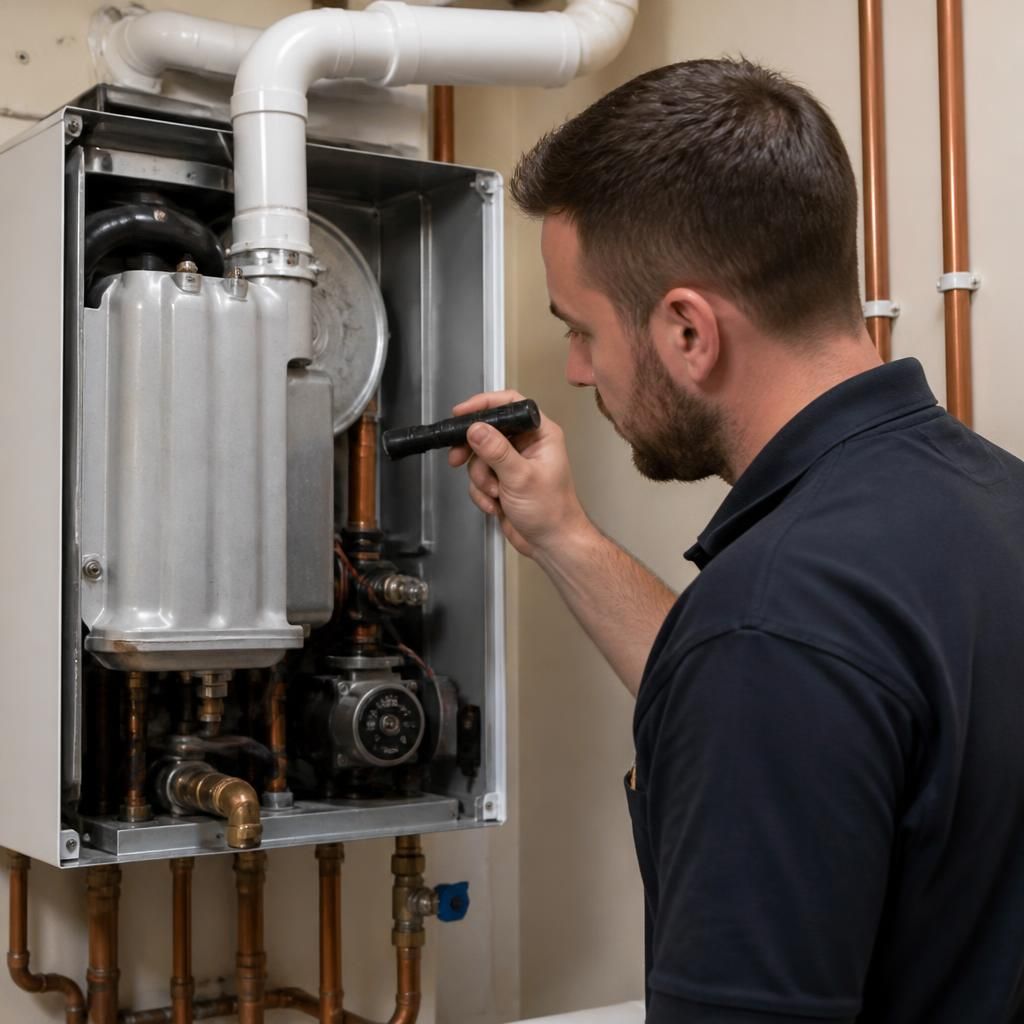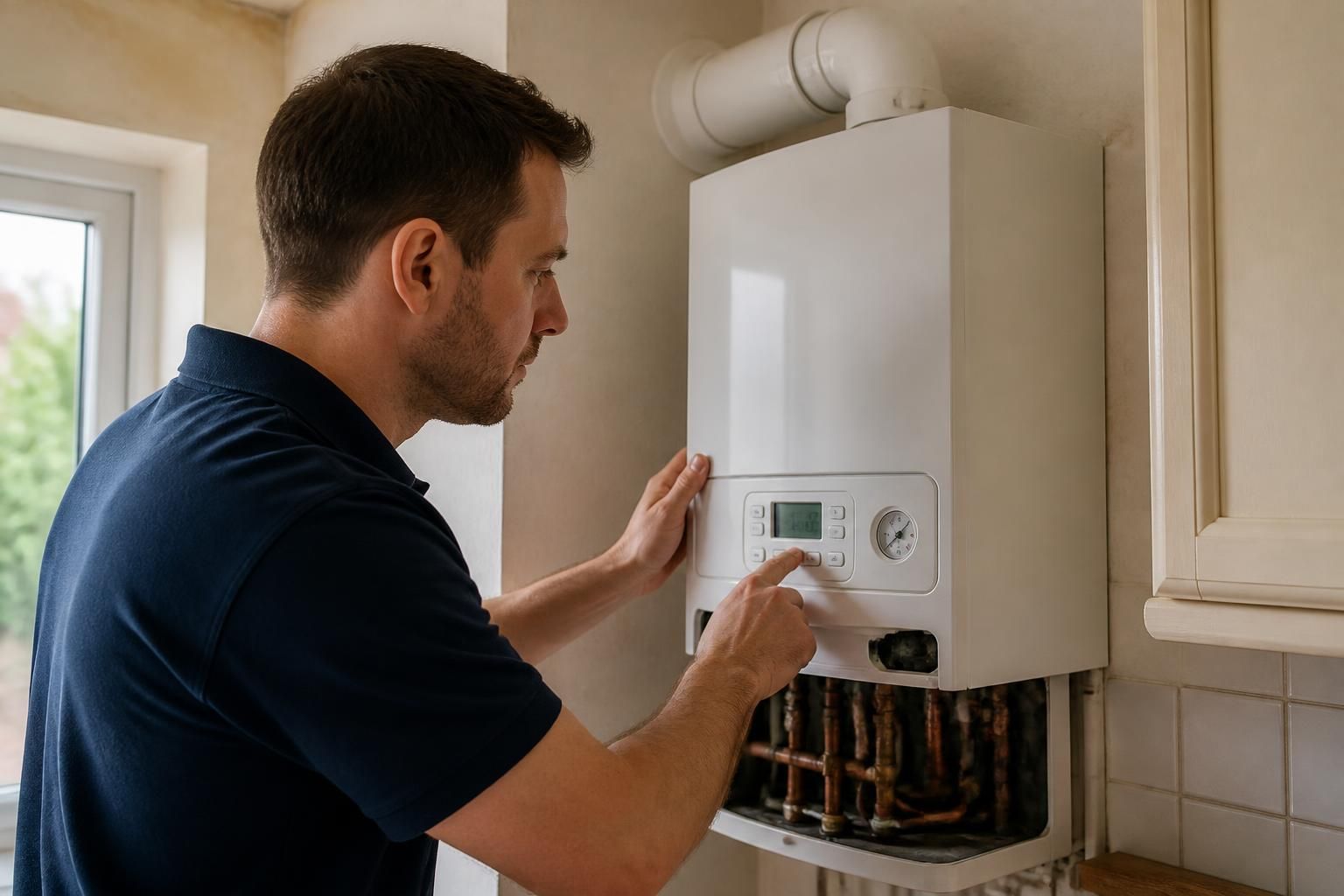
A domestic gas appliance needs professional attention whenever its operation, controls, casing, flue or surrounding area suggests unsafe combustion, poor ventilation, a gas-supply fault or a developing mechanical problem. Some faults are visible, while others require testing with specialist equipment; an appliance can appear to work normally and still need inspection.
Stop using the appliance and arrange an inspection if you notice:
- Damage to the appliance casing, burner area, pipework, isolation valve or electrical controls.
- A flue, terminal or ventilation grille that has become loose, obstructed, cracked or covered.
- Condensation, scorching, discolouration or heat damage around the appliance or flue route.
- Controls that stick, fail to respond correctly or do not switch the appliance off reliably.
- A boiler, cooker, fire or water heater that repeatedly shuts down, locks out or needs resetting.
- Water leaking from a gas boiler, particularly where it reaches electrical components or causes the appliance pressure to fall.
- Changes to the appliance's operation after building work, decorating, insulation work or alterations to doors, windows and ventilation.
These conditions should not be investigated by removing covers, adjusting burners or attempting to repair internal components. Gas appliances contain combustion and control parts that require correct testing after adjustment or repair. DIY work can create a safety risk and may also conceal the original fault.
Some symptoms require urgent safety action. If gas is suspected, avoid naked flames, do not operate electrical switches or use anything that could create an ignition source, and ventilate the area only if this can be done safely. Turn off the gas supply at the emergency control valve if you know where it is and can reach it without risk. Leave the property if necessary and contact the relevant gas emergency service. A qualified gas engineer should assess the appliance before it is used again.
Professional attention is also appropriate when an appliance has not received its recommended maintenance, has been altered by a previous installer or is connected to a flue whose condition cannot be confirmed. Servicing is not simply a visual check. An engineer may inspect the appliance and pipework, assess ventilation, examine the flue, test combustion and safety controls, and check that the appliance is operating within the manufacturer's requirements. The exact checks depend on the appliance type and the fault reported.
When booking an inspection, provide the appliance type, its location, the symptoms, any displayed fault code and whether the problem affects one appliance or several. Do not keep resetting an appliance to make it operate, as this can mask a recurring fault. Keep the manufacturer's instructions available if possible, but do not rely on them to diagnose a gas-safety problem.
Only a suitably qualified gas engineer should work on domestic gas appliances. For homes in Birmingham and the wider West Midlands, Ideal Plumbing Services provides domestic gas and plumbing support for homeowners, landlords and tenants, including fault assessment and repairs where appropriate. A professional assessment helps establish whether the appliance can be safely repaired, needs further testing or should be taken out of service.