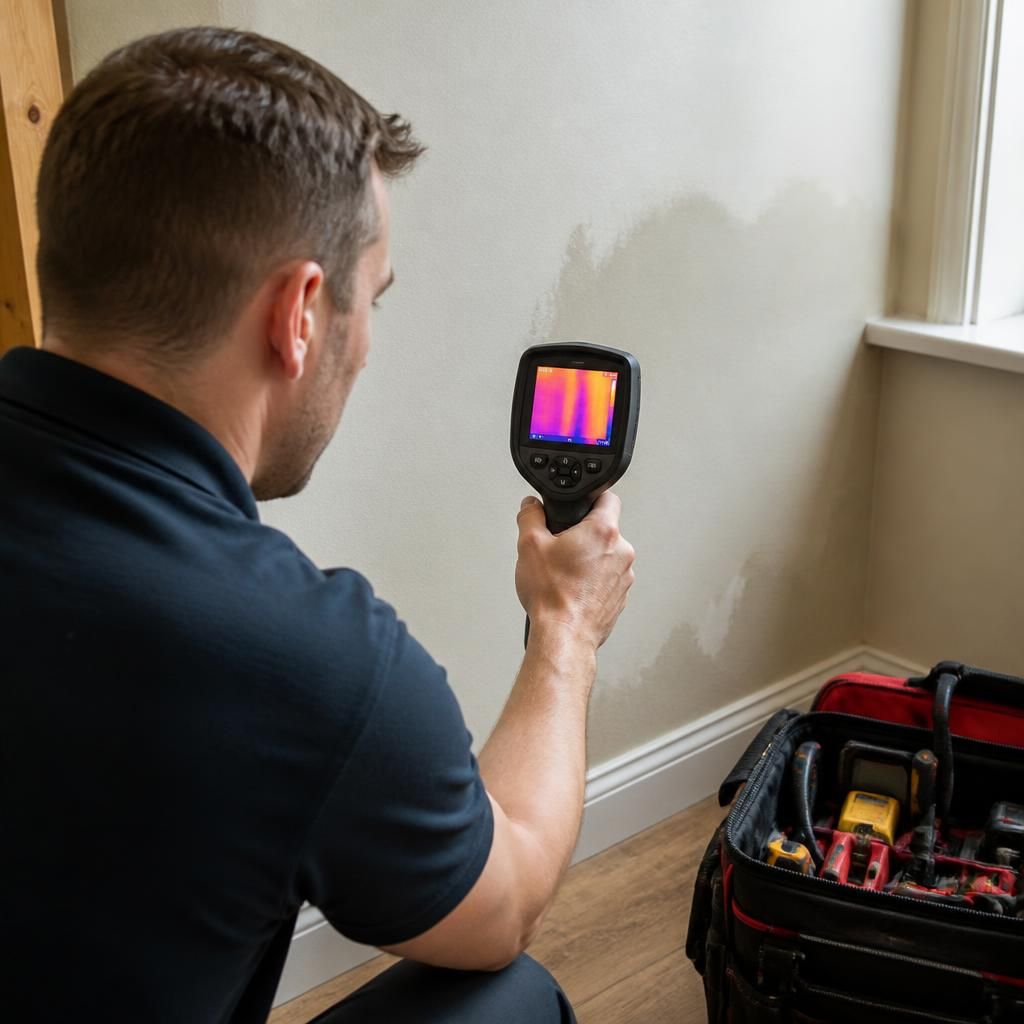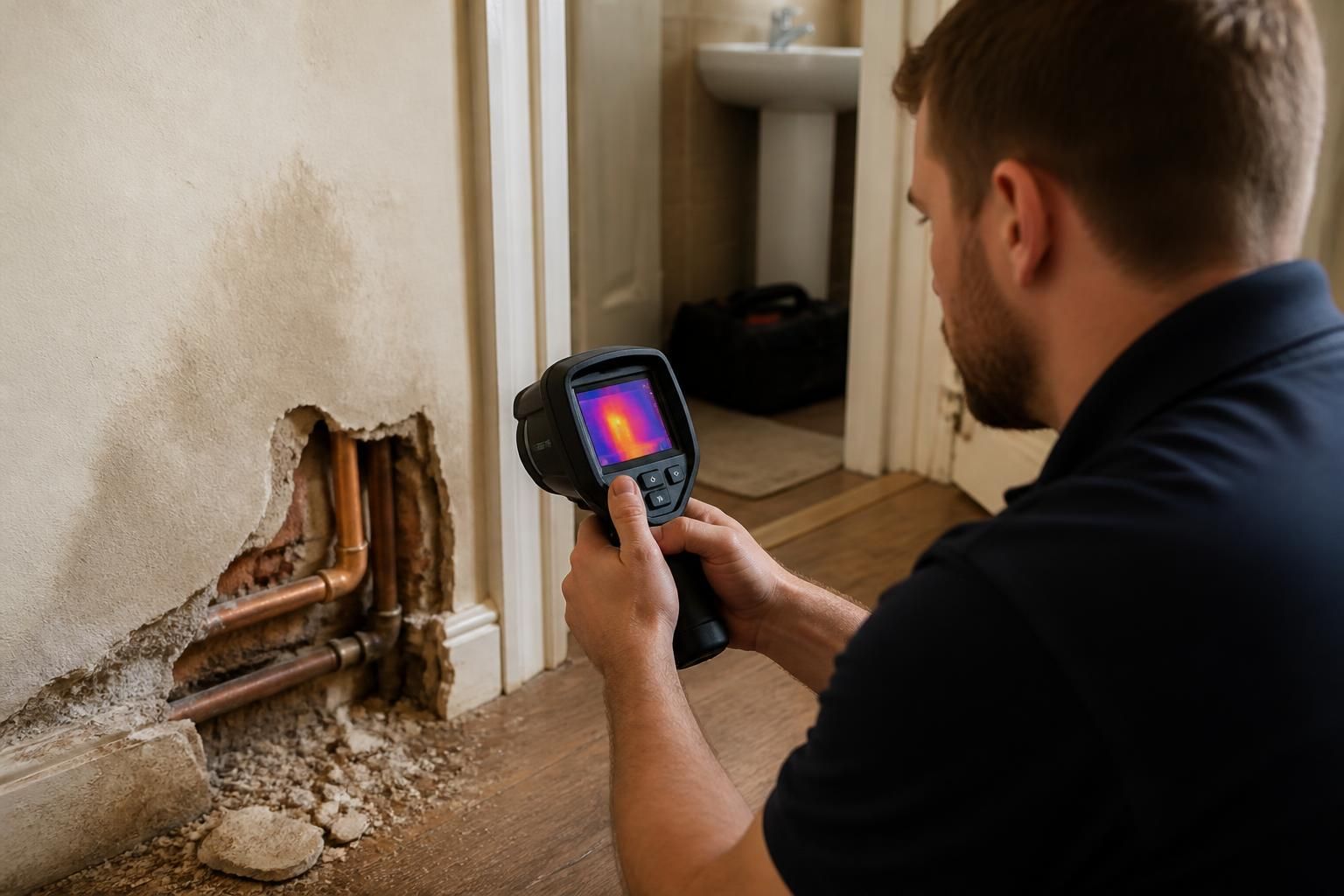
In most domestic cases, a leak can be investigated with little or no disturbance to the property. The aim is to identify the source and narrow down its location before any part of the building is opened, so unnecessary lifting, drilling or removal can be avoided.
A typical assessment begins with the reported symptoms. Signs such as a rising water meter reading, damp staining, a warm patch on a floor, reduced pressure, damaged decoration or the sound of running water help establish whether the leak is likely to involve a supply pipe, heating circuit, hot-water system, waste pipe or plumbing connection. This information helps the engineer select the least disruptive checks.
Further testing may include checking the system under controlled conditions, comparing pressure readings and tracing how moisture is spreading through the structure. The visible damp area is not always directly above the leak, because water can travel along pipework, joists, plasterboard, insulation or floor screed. Locating the actual source rather than treating the first visible mark can prevent unnecessary damage and reduce the risk of repairing the wrong section.
Where a pipe or fitting can be reached through an existing access point, the inspection may be completed without creating a new opening. If the evidence points to a concealed section, the engineer should explain the proposed access before work begins. Any opening should be targeted at the most likely location and kept as limited as practical. Detection and repair are separate stages, so finding a leak does not automatically mean that flooring, plaster or cabinetry must be removed during the initial investigation.
There are situations where some disturbance cannot be avoided. A failed pipe beneath a solid floor, a leak inside a sealed wall or materials that have become saturated may require local access to confirm the fault or complete the repair. This is different from opening large areas in search of the source. The condition of the affected material also matters: plasterboard, insulation, flooring and joinery may need attention after a prolonged leak even when the pipe itself has been accurately located.
To help keep the inspection focused, you can:
- Clear access to the stop tap, boiler, hot-water cylinder, visible pipework and affected rooms.
- Note when the symptoms first appeared and whether they change when taps, toilets, heating or appliances are used.
- Keep photographs of staining or changes in the affected area, particularly if the appearance varies.
- Avoid covering, painting over or otherwise disturbing damp areas before they have been assessed.
- Tell the engineer about previous plumbing alterations, flooring changes or repairs in the suspected area.
After the assessment, the findings should distinguish between the suspected source, the evidence supporting that conclusion and any uncertainty that remains. You should also be told what access is needed for the repair, whether materials may require drying or replacement, and which areas will need making good. Asking these questions before authorising further work helps you understand the likely impact on your property.
Ideal Plumbing Services provides domestic leak detection for homeowners, landlords and tenants, with investigations focused on accurate fault finding and limiting avoidable disruption. Where a leak is suspected, early assessment is generally preferable to allowing moisture to spread through hidden building materials.