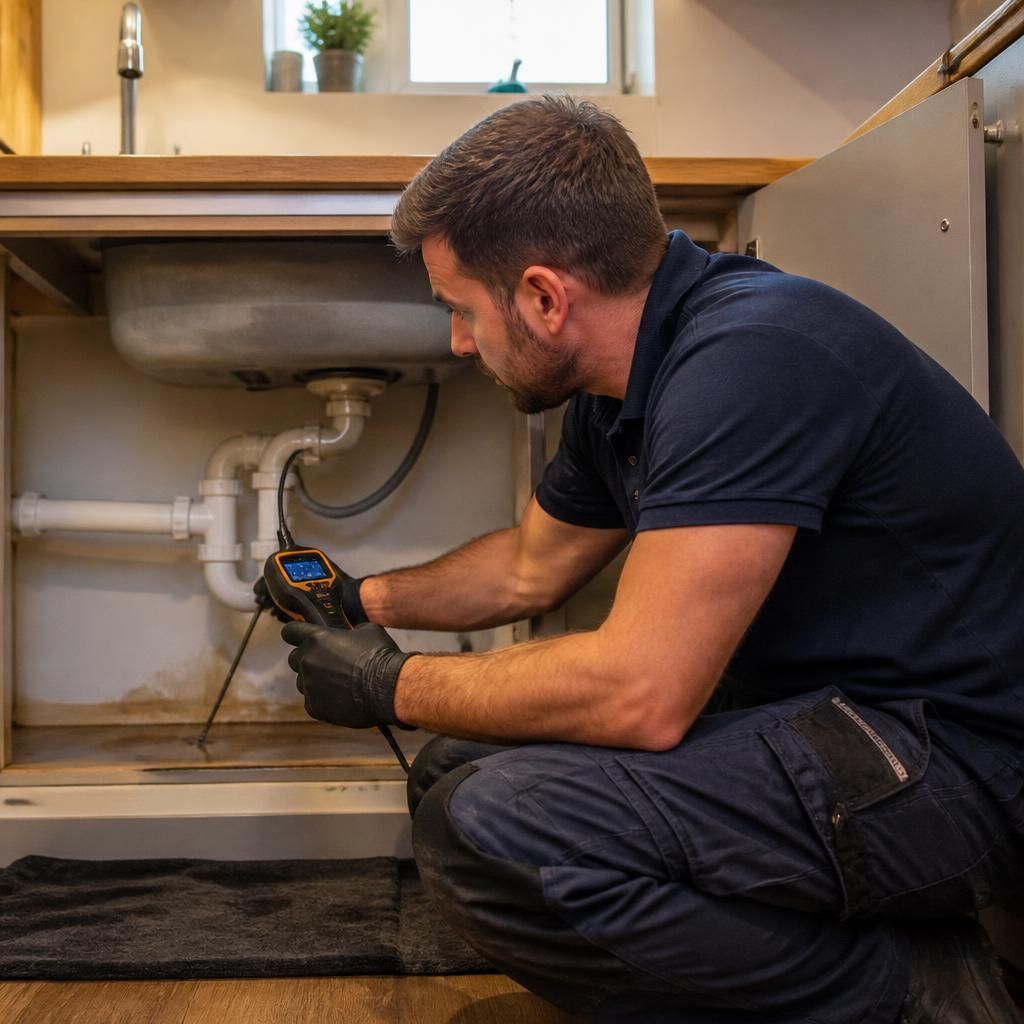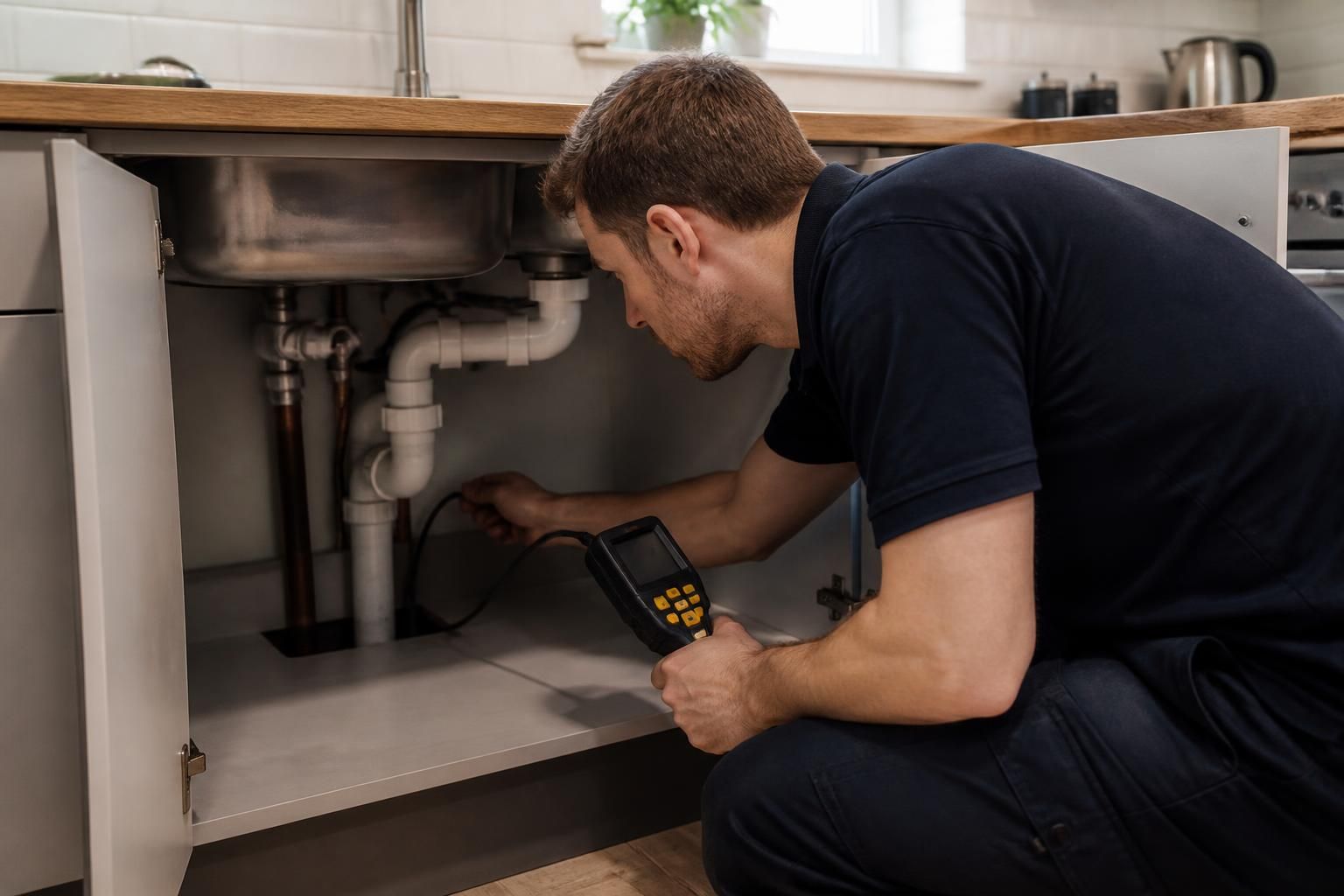
Domestic leak detection is generally suitable for residential properties with accessible plumbing, heating or water systems, regardless of the building’s age, construction or internal layout. The assessment is based mainly on the suspected leak, the pipework involved and the information available about the symptoms, rather than on the property type alone.
Suitable properties may include homes with:
- Visible leaks from taps, toilets, radiators, boilers, tanks, valves or other plumbing fittings.
- Unexplained damp patches, staining, mould, bubbling paint or damaged flooring.
- A drop in water pressure or a water meter that continues recording usage when outlets are not being used.
- Concealed pipework within walls, floors, ceilings or beneath fitted surfaces.
- Heating or hot-water systems suspected of losing water.
- Separate internal areas, extensions or converted spaces where the source of the leak is difficult to identify.
Properties can still be assessed when the leak is intermittent or there is no obvious visible water. Moisture may travel away from the original fault, meaning the location of damaged plaster, flooring or skirting is not always the location of the failed pipe or fitting. Information about when the symptoms appear, which fixtures are affected and whether the issue changes when the heating or water supply is used can help narrow the investigation.
Access is an important consideration. The person arranging the assessment should be able to provide entry to the relevant rooms and, where appropriate, areas containing the stop tap, boiler, cylinder, tank, meter or other parts of the system. If a suspected leak is beneath a floor, behind a wall or within another concealed area, the available access and the construction of the property will affect how the inspection is planned.
Domestic leak detection may also be appropriate after a repair when dampness, pressure loss or unexplained water use continues. In these cases, the inspection can help distinguish between an unresolved leak, a second fault and residual moisture from the original problem. The findings can then inform the next repair decision rather than relying only on the most visible sign of damage.
Some properties require additional consideration where they contain several water systems, have been extensively altered or share services with another dwelling. These circumstances do not automatically prevent an assessment, but details such as the building’s layout, access arrangements and the suspected source should be explained before the visit. Ideal Plumbing Services can use this information to determine the most appropriate domestic leak detection approach for the property.