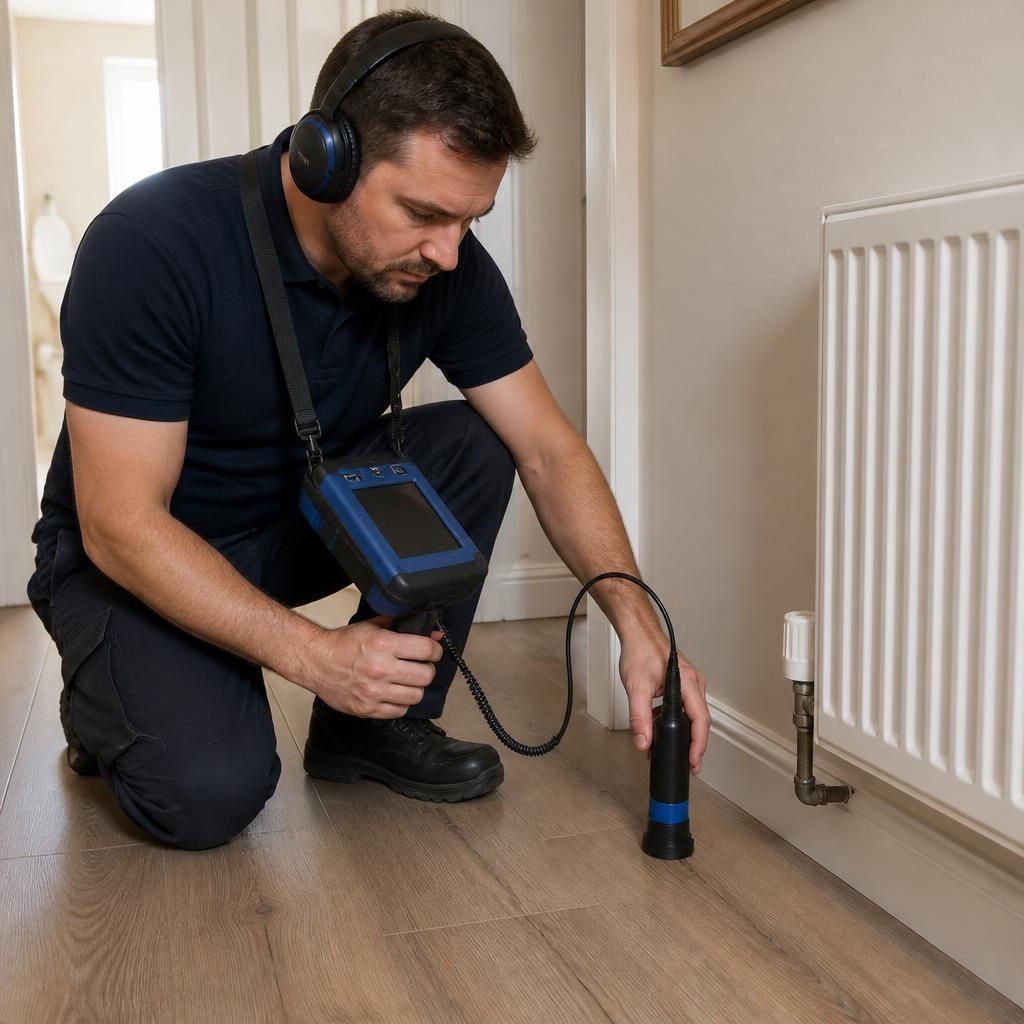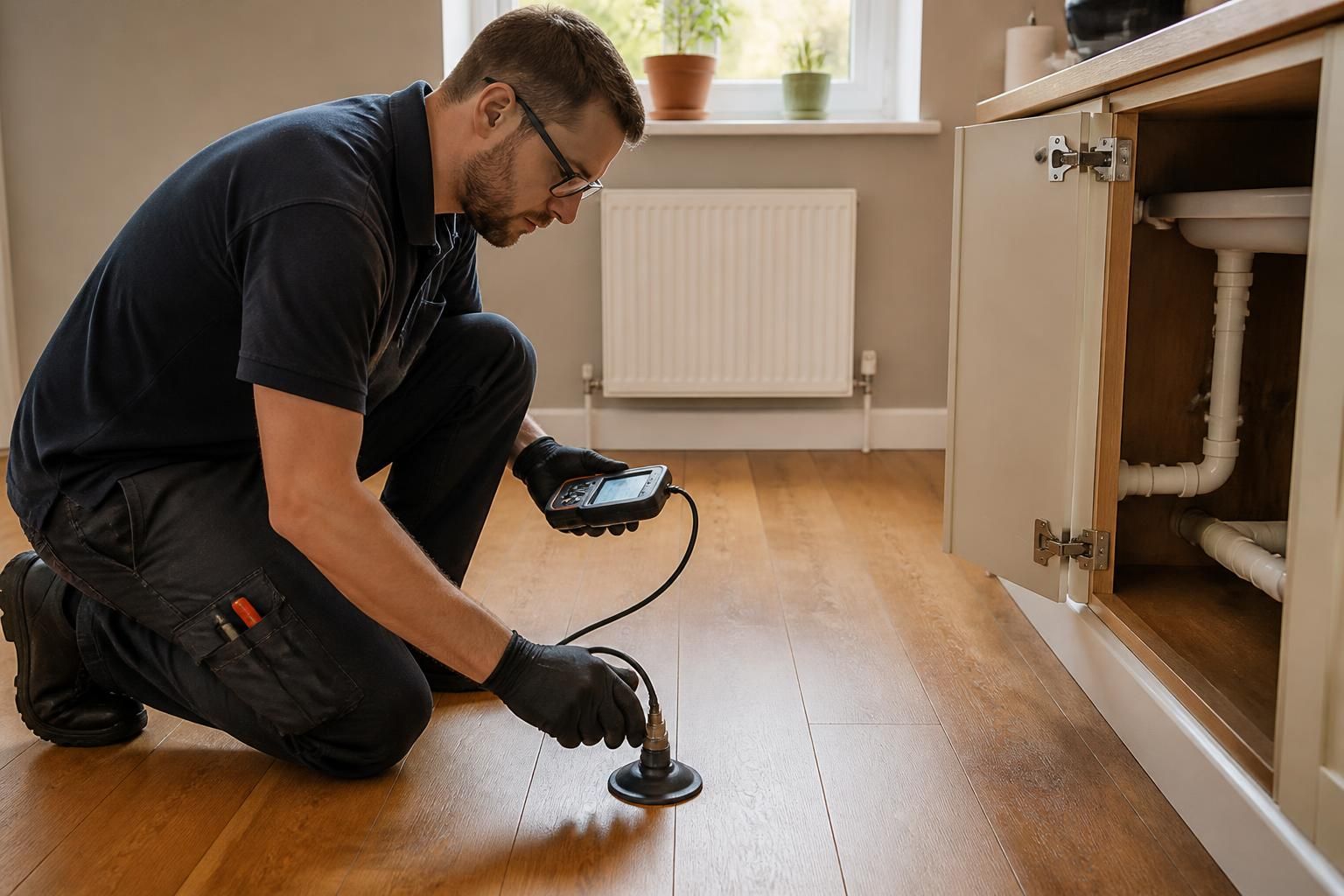
Domestic leak detection costs depend on the scope of the investigation and any work needed after the leak has been located. The detection charge may cover the initial assessment, specialist testing and the findings, while repairs, replacement parts, removing finishes and making good may be charged separately. A clear quotation should explain which elements are included before work begins.
What the detection charge may include
- Discussion of the symptoms, such as damp patches, reduced water pressure, unexplained water use or a boiler pressure problem.
- Visual inspection of accessible pipework, sanitaryware, radiators, appliances and visible joints.
- Targeted testing to identify whether the problem relates to a supply pipe, waste pipe, heating circuit or another part of the plumbing system.
- Use of appropriate non-invasive or minimally invasive equipment where the source cannot be identified by inspection alone.
- A clear explanation of the suspected leak location and the next recommended step.
The final cost can be affected by how much investigation is required, whether several possible sources need to be ruled out and whether the plumbing system can be tested safely without interrupting other services. A simple fault that can be confirmed during an inspection is generally less involved than an intermittent leak that only appears under particular conditions.
Detection is not the same as repair
Finding a leak and putting it right are separate stages. Once the source has been identified, the repair may involve tightening or replacing a joint, renewing a section of pipe, repairing a valve, dealing with a faulty fitting or addressing a problem within a heating system. The cost of labour and materials for this work should be distinguished from the detection charge.
There may also be additional work if access is restricted. For example, pipework beneath flooring, behind a wall covering or within a fitted unit may require careful access before the repair can be completed. Replacing flooring, plasterboard, decorating or other finishes is a separate consideration unless it has been specifically included in the quotation.
Questions to ask before booking
- Is the quoted price for investigation only, or does it include a written or verbal report?
- Will the plumber explain the likely repair cost after locating the leak?
- Are equipment, testing and any necessary follow-up visit included?
- Could access, materials, disposal or reinstatement create additional charges?
- Will the plumber ask for approval before carrying out repair work beyond the agreed inspection?
These questions are particularly useful for landlords, tenants and homeowners dealing with a suspected concealed leak. Tenants should normally inform the landlord or managing agent before authorising work that could affect the property, while landlords may need a record of the findings for maintenance or insurance purposes.
When leak detection becomes more urgent
Water entering electrical fittings, rapidly spreading damp, a ceiling that is bulging, significant water loss or a leak that cannot be isolated should be treated as a priority. Turn off the internal stop tap if it is safe to do so, switch off affected electrical equipment without touching anything wet and move belongings away from the water. These steps do not identify the source, but they can limit further damage while professional advice is arranged.
Insurance policies vary in what they cover. Some may consider escape-of-water damage but not the underlying gradual maintenance issue, and some may require an approved process or documentation. Check the policy wording and ask the insurer what evidence is needed before authorising substantial work.
Ideal Plumbing Services carries out domestic leak detection for homeowners, landlords and tenants in Birmingham and the wider West Midlands. Its approach is to establish the likely source, explain the required work and provide pricing information without hidden charges, so the customer can make an informed decision about investigation and repair.