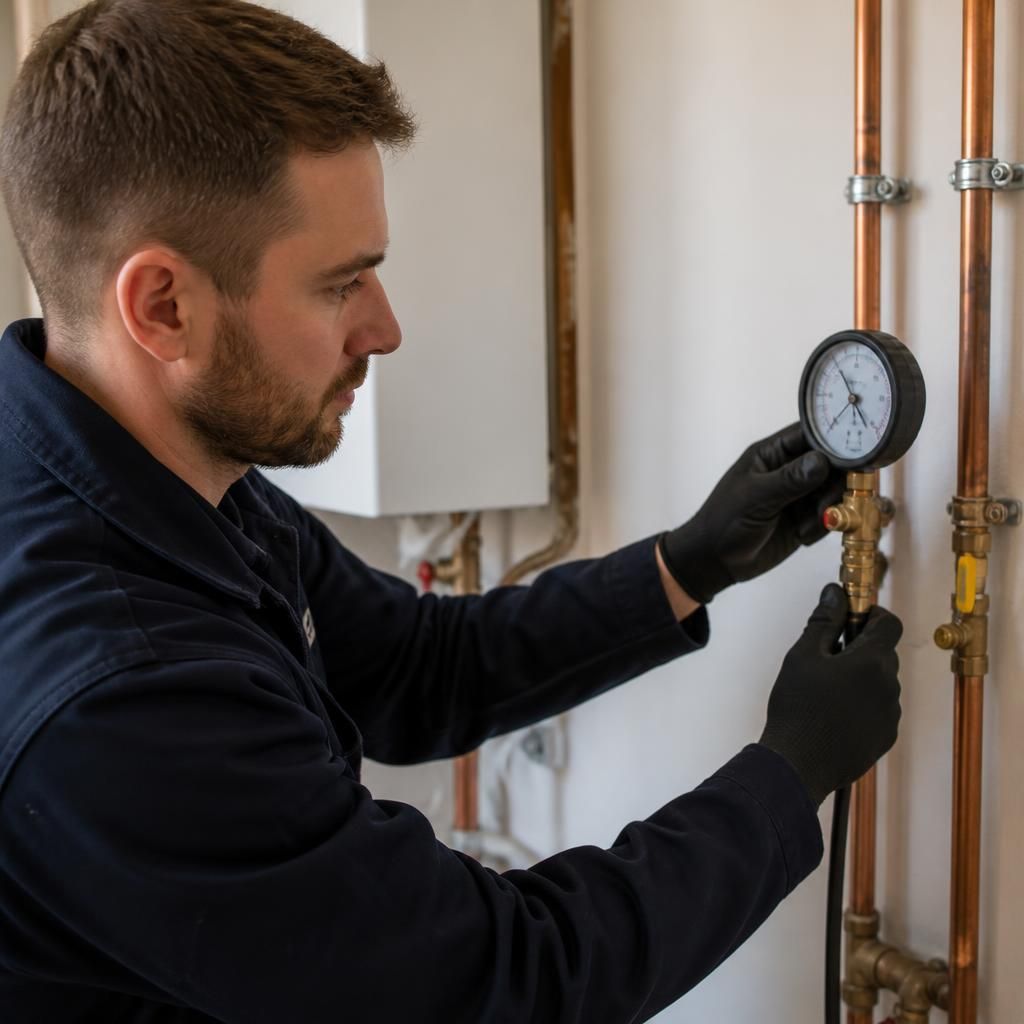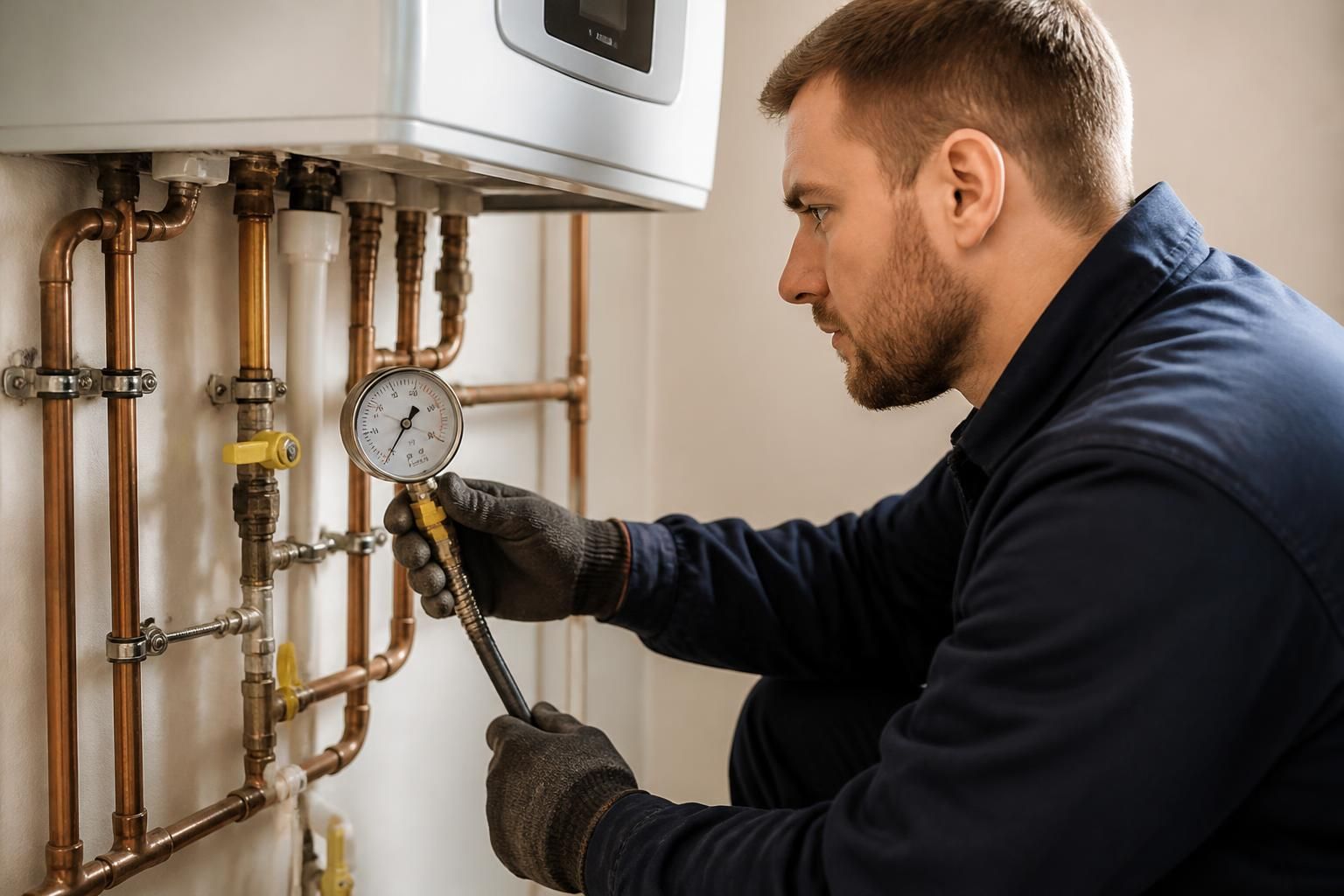
Post-installation gas safety checks are the formal commissioning and inspection steps used to confirm that the new pipework, isolation points and connected equipment have been installed in accordance with UK requirements and the manufacturer’s instructions. They should be completed by a suitably qualified Gas Safe registered engineer with the relevant competencies, rather than by the property owner or an unqualified contractor.
In addition to commissioning the installation, the engineer should check the physical condition and layout of the pipework. This includes confirming that:
- the pipe is correctly sized for the appliances it serves;
- the route is properly supported and protected against impact, corrosion and excessive movement;
- pipework passing through walls, floors or other structures has suitable protection where required;
- connections are accessible for inspection and maintenance where the regulations require this;
- the materials and fittings are suitable for gas use; and
- the installation has not been damaged by associated building or decorating work.
The gas emergency control valve should be easy to find and operate, with clear access maintained around it. Each appliance should also have an appropriate local isolation point so that it can be disconnected safely for servicing without necessarily isolating the entire property. A homeowner should know where these controls are located and avoid storing items in front of them.
The engineer should verify that the installation is compatible with the property and the appliances being supplied. This includes checking that the gas supply can meet the appliances’ requirements when they operate together, that controls are correctly connected, and that safety devices respond as intended. Any changes to the gas installation should also be considered alongside the property’s electrical bonding and other services, particularly where new metallic pipework has been introduced.
Carbon monoxide protection is another important part of the final safety review. Where a gas appliance is installed in a room or location requiring an alarm, the alarm should be correctly positioned, operational and suitable for carbon monoxide detection. Its test function should be demonstrated to the occupants. A carbon monoxide alarm is an additional safeguard, not a replacement for correct installation, appliance servicing or proper flue arrangements.
The engineer should explain the installation to the homeowner, landlord or tenant before leaving. This explanation should cover the location of the emergency control valve and appliance isolation valves, normal operating controls, warning signs that require attention, and the action to take if gas or carbon monoxide is suspected. Do not attempt to alter the pipework, remove safety devices or investigate a suspected gas fault yourself.
If you smell gas, hear an unusual hissing sound, see damage to a gas pipe or suspect carbon monoxide, do not use flames, electrical switches or other possible ignition sources. Turn off the gas at the emergency control valve if it is safe to do so, leave the property and contact the appropriate gas emergency service. A qualified engineer should then investigate before the installation is used again.
After installation, keep the commissioning information and arrange ongoing servicing and inspection in line with the appliance manufacturer’s instructions. Landlords have separate legal duties relating to gas safety in rented properties, while homeowners should arrange regular servicing by a suitably qualified engineer. A later alteration, extension or appliance replacement can also require the installation to be assessed again, even if the original gas line was installed correctly.