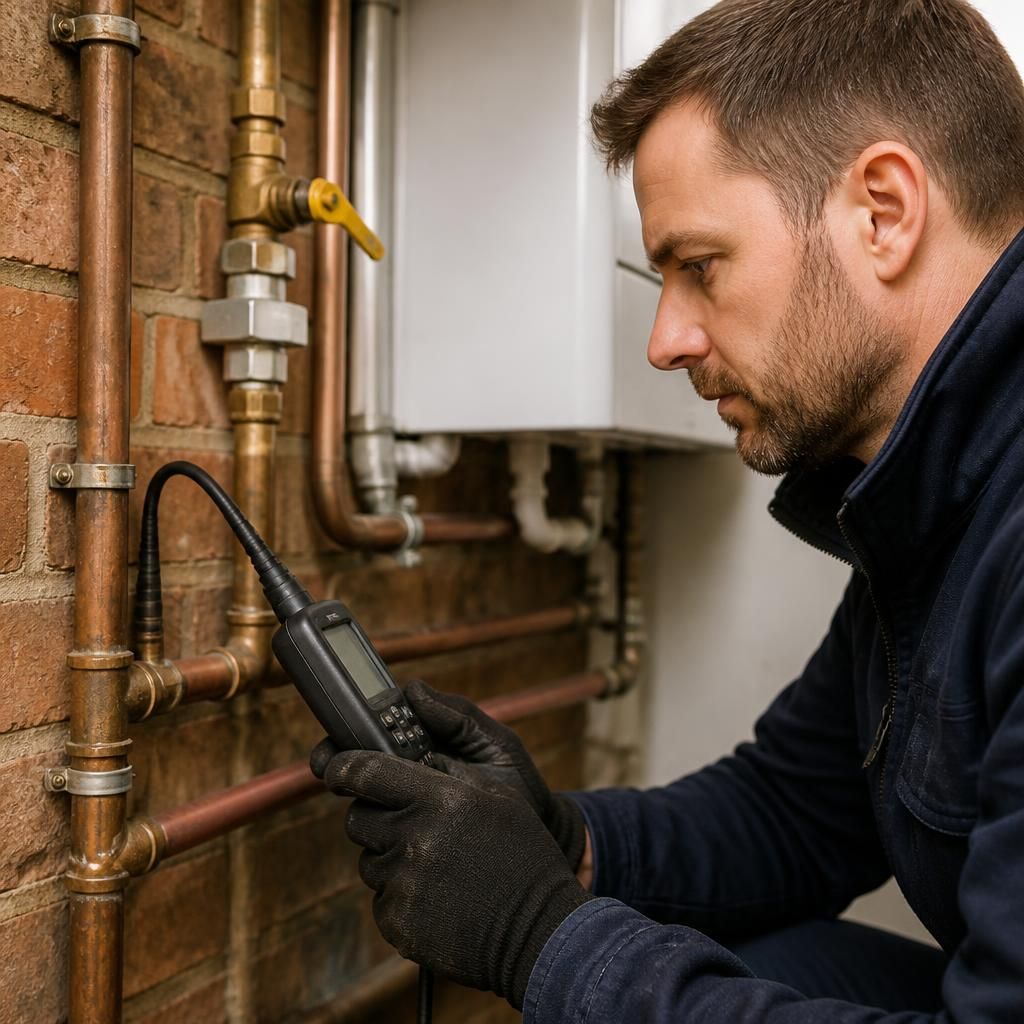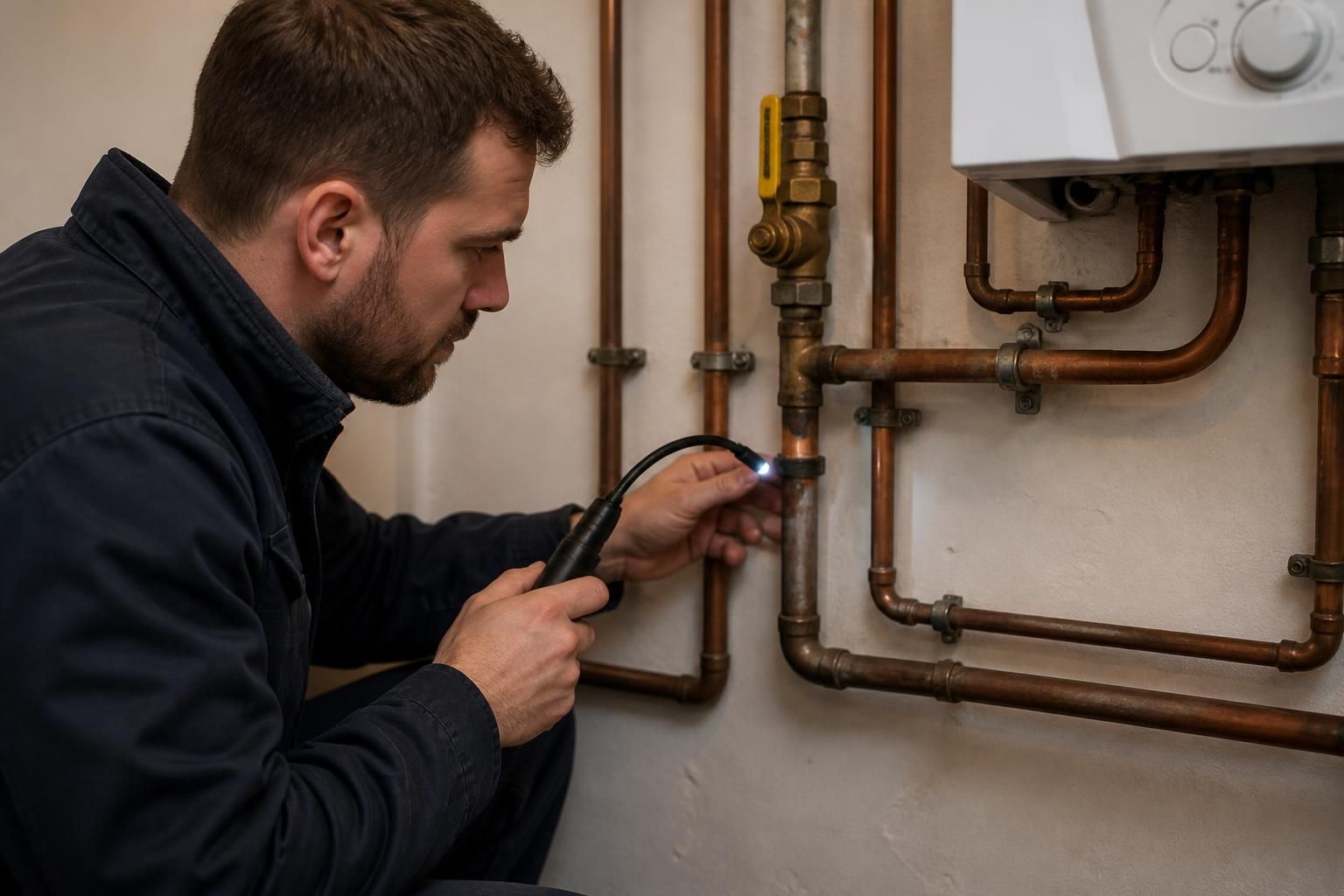
Professional inspection is warranted when the condition, history or surroundings of gas pipework create a reasonable possibility of leakage, damage, poor support or unsuitable installation, even when no obvious fault can be seen. Some warning signs relate to the pipework itself, while others arise from changes to the property or its gas system.
- Unexplained changes in gas usage: A noticeable increase in consumption without a corresponding change in household use can justify investigation. It may have several causes, so it should not be treated as proof of a leaking pipe, but a qualified engineer can carry out appropriate checks.
- A gas meter that continues to register when all appliances are switched off: This can indicate gas is passing through the system when it should not. Do not attempt to investigate the meter, joints or pipework yourself; arrange professional assessment and follow current gas safety guidance.
- Pipework affected by building movement or alteration: Extensions, flooring work, wall removal, replacement windows and other structural changes can disturb concealed routes, supports or connections. Inspection is sensible if work has taken place near a gas pipe, even if the pipe appears intact.
- Pipework that is inadequately supported: Sagging sections, movement when lightly touched by an engineer, strained connections or pipes rubbing against other materials may place stress on joints. These conditions need assessing rather than being secured with improvised materials.
- Changes to the building around concealed pipework: New boxing-in, cabinets, insulation or restricted ventilation can make inspection and maintenance more difficult. An engineer may need to confirm that the route remains accessible, protected and suitable for the installation.
- Unclear installation history: An inspection is appropriate where a property has changed hands, previous gas work is undocumented, or the route and age of the pipework are unknown. This is particularly relevant before renovating, extending the system or connecting additional appliances.
- Recurring concerns after previous remedial work: If a system has needed repeated adjustments, has been isolated previously, or has not been formally checked after alteration, a broader inspection may identify whether the underlying pipework remains suitable.
These indicators do not all confirm a gas leak. For example, increased usage or a meter reading can result from an appliance fault, while movement may affect only a support or fitting. A professional inspection separates those possibilities through visual examination and appropriate gas-tightness or pressure testing. The engineer should assess accessible pipework, joints, valves, supports, protective measures and the relationship between the pipe size and connected appliances.
Do not remove covers, tighten gas fittings, drill near a concealed route or carry out a repair based on an online guide. If you suspect an immediate gas safety risk, stop using the affected installation if it is safe to do so, avoid creating ignition sources and follow the relevant emergency gas safety procedure. A qualified gas engineer can then determine whether the issue is a leak, damage, an installation defect or an appliance-related problem.
Ideal Plumbing Services provides gas pipework inspection and repair support for homeowners, landlords and tenants in Birmingham and the West Midlands. An assessment can establish the condition of existing pipework and identify whether repair, replacement or further testing is appropriate.