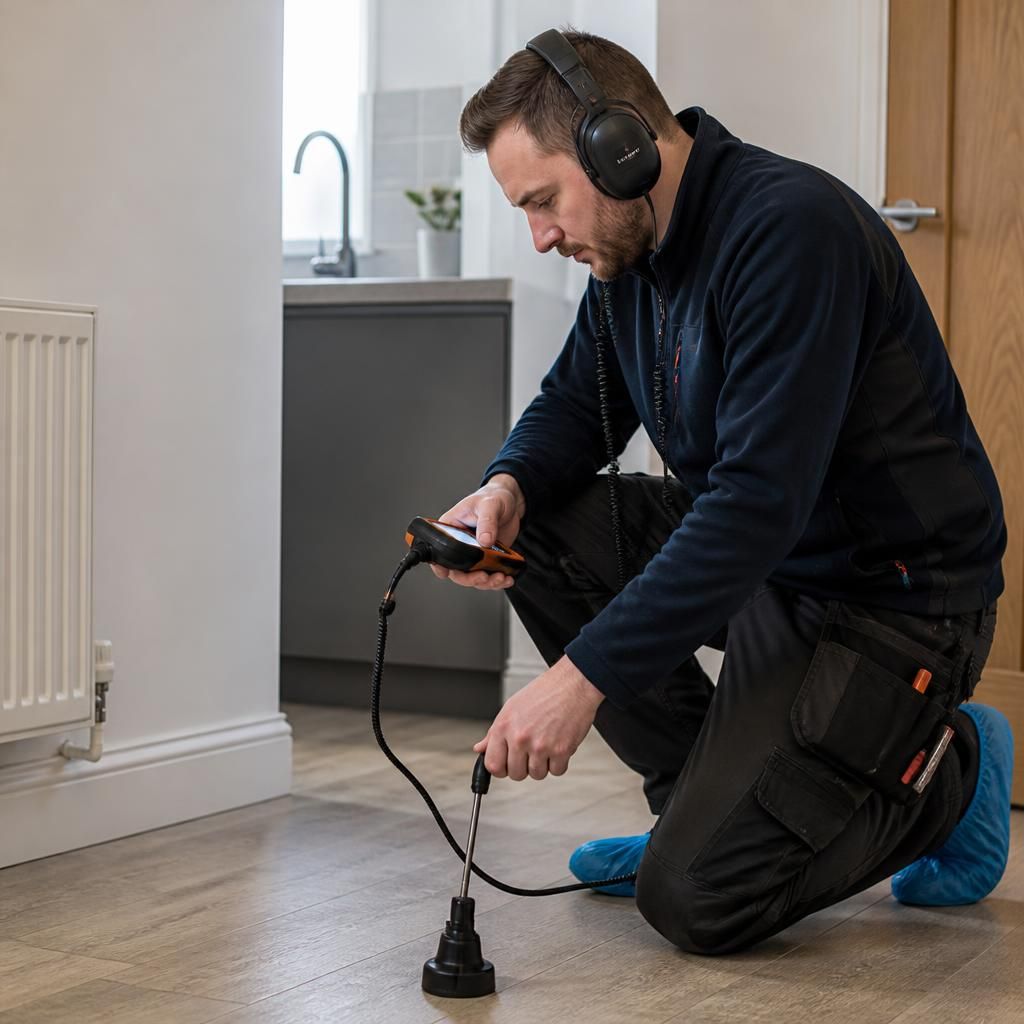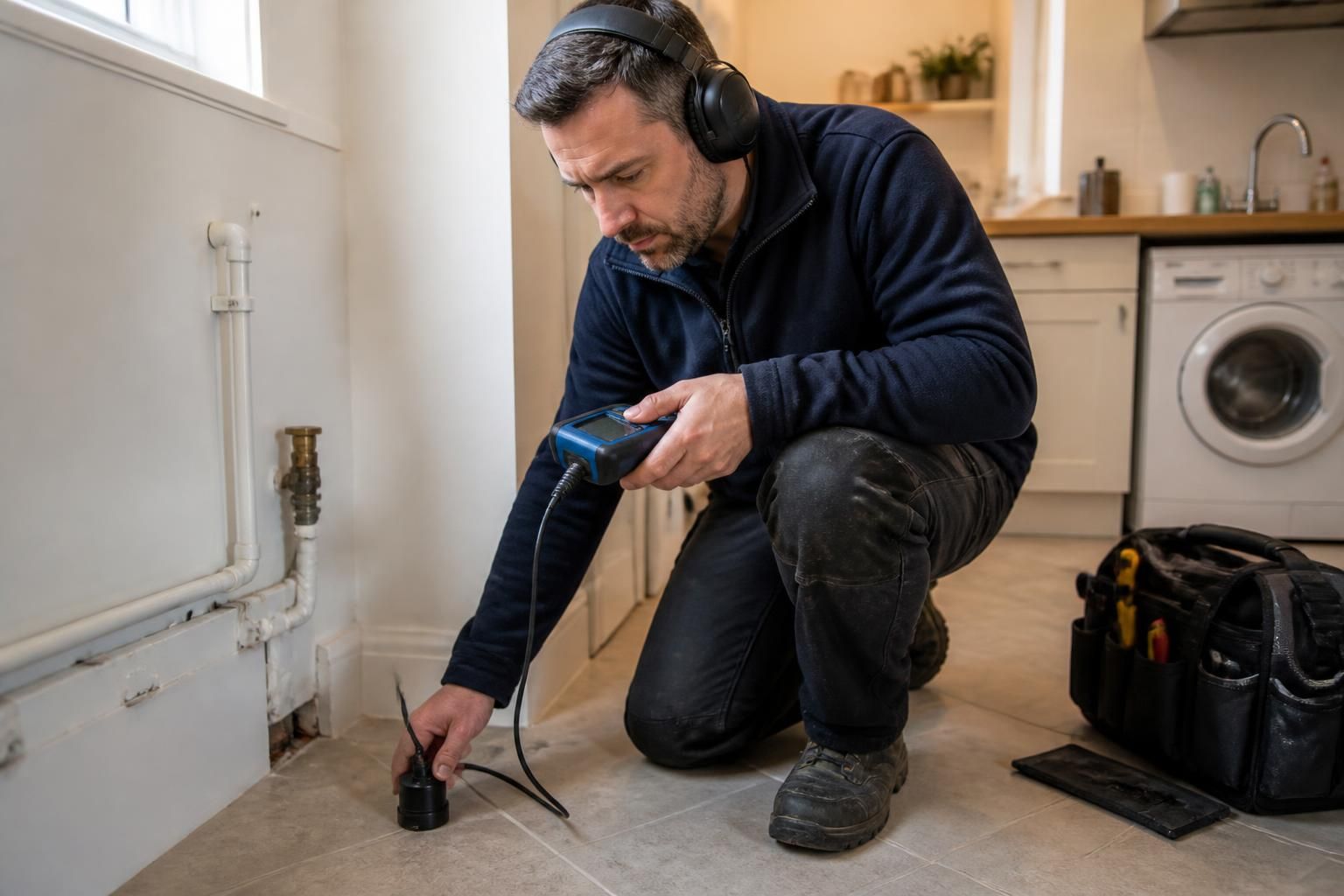
Arrange professional leak detection when there is credible evidence of a water or gas leak, but the cause cannot be safely confirmed through normal visual checks. Early assessment is particularly important where the suspected leak may be inside a wall, below a floor, beneath external paving or within buried pipework, because opening up surfaces without locating the source can create unnecessary damage and still leave the fault unresolved.
Professional detection is also appropriate in the following situations:
- The problem keeps returning: repeated repairs, recurring moisture or an intermittent fault may indicate that the visible issue is only a symptom of a concealed leak.
- There is no clear point of failure: pipework can leak at joints, valves, service connections or within older sections that are not accessible for a straightforward inspection.
- You are planning building or plumbing work: detection before lifting floors, removing units or disturbing walls can help establish whether existing pipework is sound and reduce the risk of damaging an unknown supply.
- A property is being bought, sold or let: a targeted inspection can be useful where there is a history of damp, unexplained remedial work or concern about concealed plumbing. It should supplement, rather than replace, a full property survey.
- A water meter or pressure test suggests a problem: continued flow when outlets are closed, or an unexplained change during testing, can justify further investigation by a suitably qualified professional.
- Pipework has recently been altered: a new installation, conversion or repair should be checked if there are concerns about workmanship, joint integrity or a fault that appeared after the work was completed.
Detection should be arranged before carrying out destructive investigation wherever possible. A specialist may use moisture measurements, acoustic equipment, thermal imaging, tracer methods, pressure testing or drainage camera inspection, depending on the pipe system and the location being assessed. These methods help narrow down the source so that only the necessary area needs to be accessed. The appropriate technique depends on whether the suspected leak is from a supply pipe, heating circuit, central-heating component, drainage system or underground service.
The timing also depends on the type of leak. A small, contained water leak still needs attention if it is affecting flooring, plaster, insulation, electrical installations or structural materials. A leak from a heating system may require checks of the boiler, radiators, valves and connecting pipework rather than a search of the general water supply. Drainage problems need a different investigation because the source may be a cracked, displaced or obstructed drain rather than a pressurised pipe.
Suspected gas leaks require a separate safety response. Do not try to locate a gas leak with a flame, operate electrical switches near the suspected area or carry out your own pressure testing. Turn off the gas supply if it is safe to do so, leave the property and contact the relevant emergency gas service. A qualified gas professional should inspect and test gas pipework before it is returned to use. Signs such as a gas odour, damaged pipework or a gas appliance that is not operating safely should not be treated as an ordinary water-leak investigation.
Before arranging an inspection, record when the issue occurs, which fixtures or appliances were operating, and any changes noticed after plumbing or building work. Avoid covering the affected area, applying sealant over a suspected joint or repeatedly resetting equipment, as these actions can obscure useful evidence. Where water is reaching electrical fittings or causing rapid damage, isolate the water supply if this can be done safely and seek appropriate professional assistance.
A leak detection visit should establish the likely source, the type of pipe or system involved and whether further access or repair is required. Detection is not always the same as repair: the investigation may identify the location while a separate repair plan is needed to replace pipework, renew a joint, repair a fitting or restore the affected surface. Asking what was tested, what was ruled out and what access is recommended will help you understand the findings before authorising remedial work.