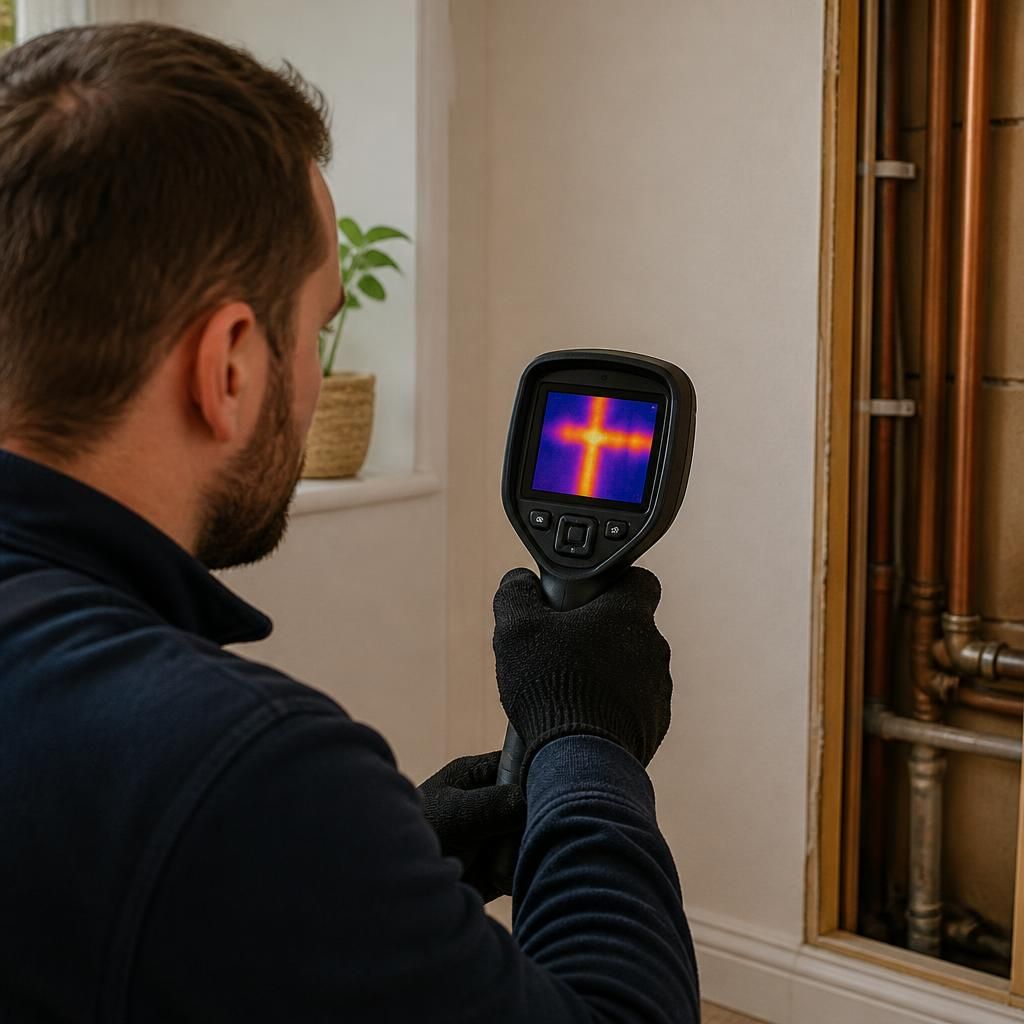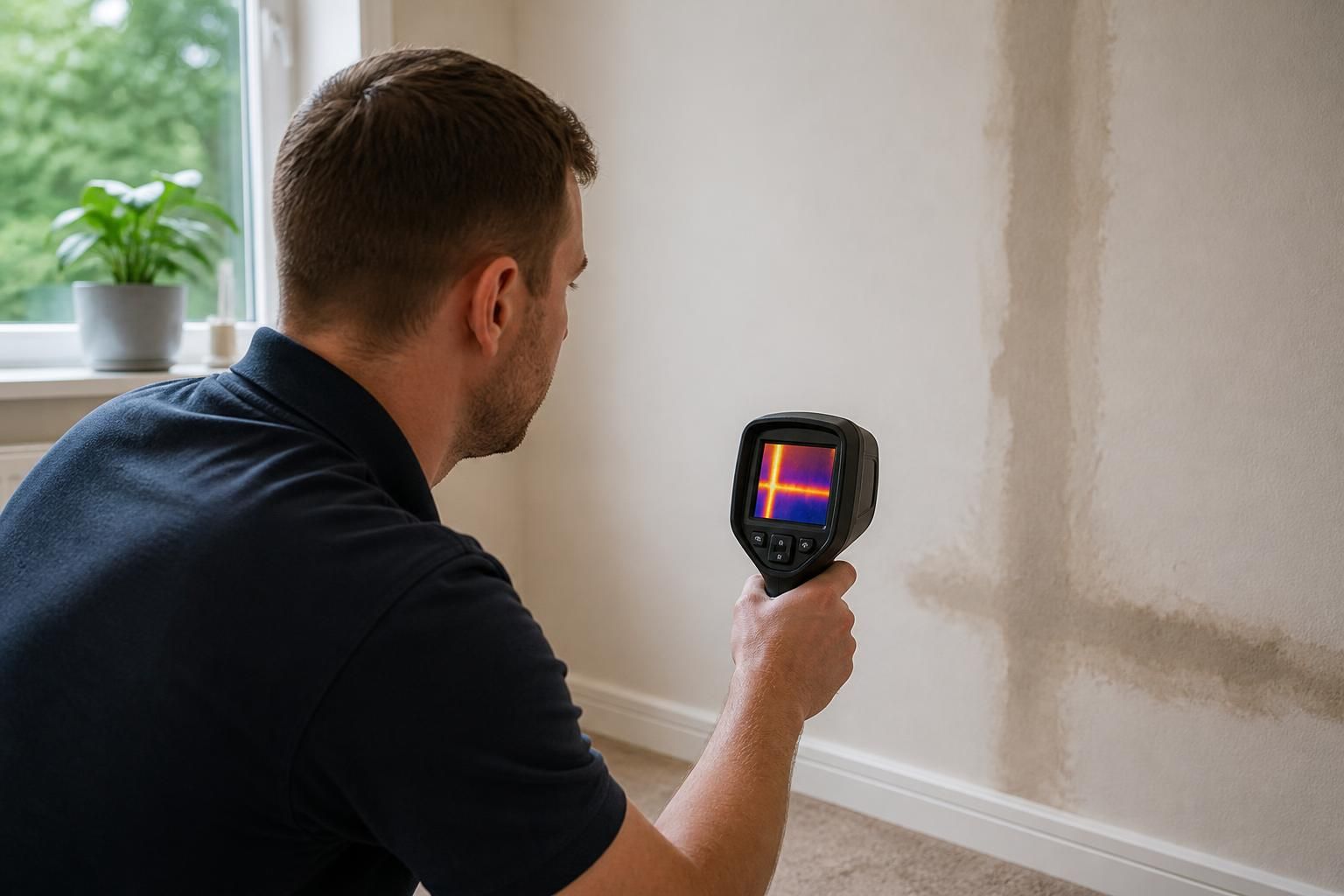
Yes. Leak detection can often identify the position and likely source of a concealed leak without removing walls. The investigation usually begins from accessible areas, using readings and observations to narrow down the fault before any decision is made about opening a surface.
The main objective is to distinguish the point where water is becoming visible from the point where it is escaping. Water can travel along pipework, flooring, insulation or plasterboard before appearing as a stain, damp patch or dripping ceiling. Removing the wall at the visible mark could therefore expose the wrong section. A targeted investigation helps reduce unnecessary damage and makes any later repair more precise.
A plumber will normally consider the building layout, the position of supply and heating pipes, the condition of nearby fittings, and when the symptoms occur. For example, dampness that increases when a tap or toilet is used may indicate a water or waste pipe issue, while moisture that appears only when a heating system operates may point towards a heating circuit. These clues help interpret the equipment readings rather than relying on a single sign.
Non-invasive detection is most useful where the leak is concealed behind plasterboard, beneath flooring, under fitted units or within a ceiling void. It can also help investigate a gradual loss of water, unexplained damp, mould growth, damaged decoration or a suspected leak where there is no obvious drip. The results may identify a specific area, a likely pipe route or a section that requires closer inspection.
There are limits to what detection equipment can establish. Building materials, insulation, surface finishes and standing water can affect readings. A damp mark may also result from condensation, penetrating damp or a defective seal rather than a pressurised pipe leak. For that reason, a responsible inspection compares several findings and does not treat every damp reading as proof of a failed pipe.
If the evidence indicates a concealed plumbing fault, the next step is usually to expose only the most relevant access point, where necessary. This may involve lifting a small section of flooring, removing a panel or making a controlled opening. Detection cannot physically repair the pipe, remove contaminated materials or restore damaged finishes, but it can help define where those works should take place.
A useful leak detection report should record the suspected source, the area investigated, the evidence supporting the conclusion and any recommended repair or monitoring. This information can help a homeowner, landlord or tenant understand the fault and decide what action is appropriate. Where the cause remains uncertain, further observation or a follow-up inspection may be recommended instead of immediate disruptive work.
Ideal Plumbing Services provides leak investigation and plumbing repairs for residential properties in Birmingham and across the West Midlands. The appropriate approach depends on the construction of the property, the symptoms and the type of pipework involved, so the inspection should be tailored to the individual leak rather than assuming that a wall must be opened first.