Emergency leak detection cost depends on the work needed to identify the source, rather than simply on the presence of a leak. The final charge is influenced by the leak’s accessibility, the type of property, the equipment required and whether further investigation is needed before the source can be confirmed.
What the detection charge may include
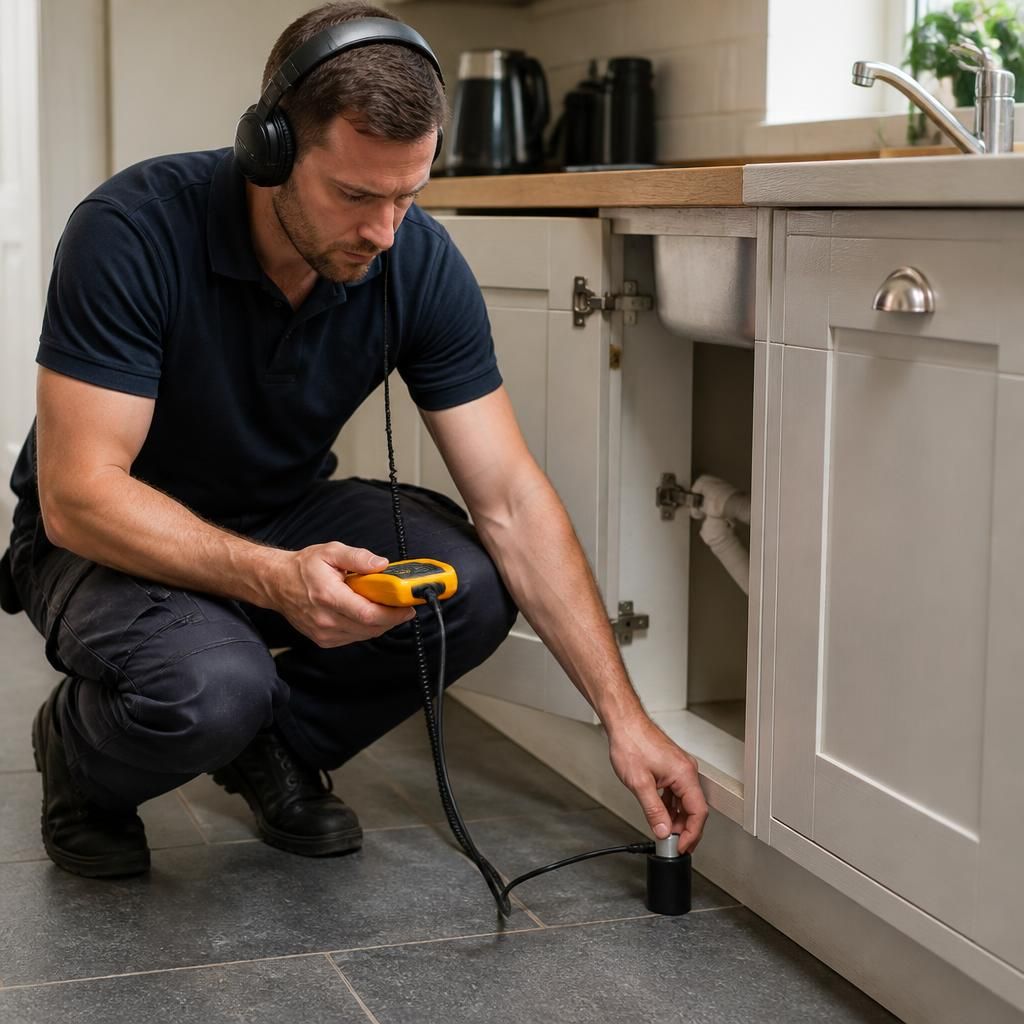
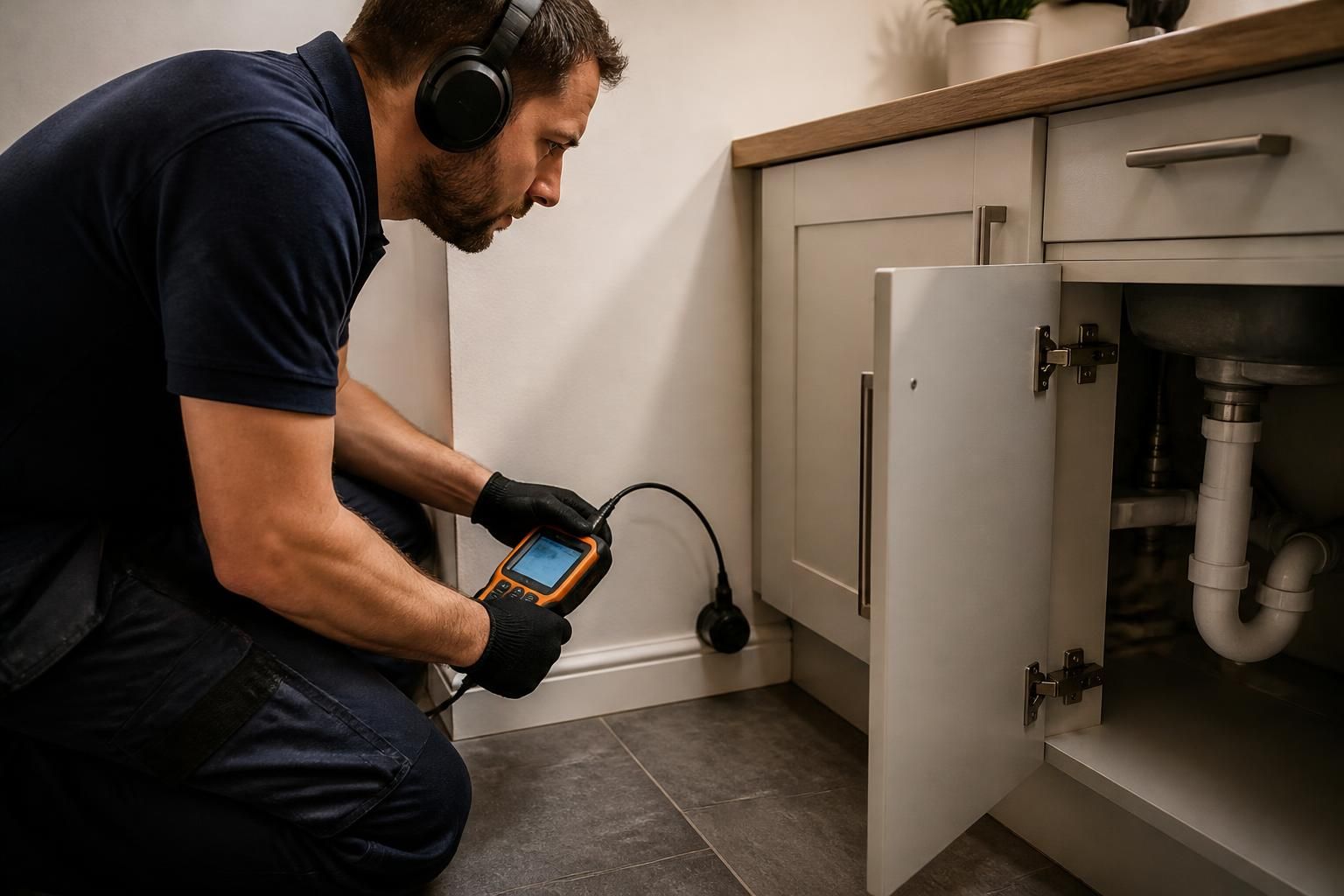
A leak detection visit commonly involves an initial assessment, checks of visible plumbing and fixtures, and targeted investigation of concealed pipework or fittings. Depending on the circumstances, the plumber may use specialist methods to trace water movement, assess moisture or identify the likely source without immediately removing flooring, plaster or other finishes.
The price may therefore reflect:
- the time required to inspect and narrow down the source;
- how difficult the affected pipework is to access;
- whether the leak is beneath floors, behind walls or within a ceiling;
- the specialist detection equipment needed;
- the size and layout of the property; and
- whether more than one possible source needs to be investigated.
A visible dripping tap or exposed pipe is generally simpler to assess than unexplained dampness, a falling pressure reading or staining that has travelled from another location. Water can move through building materials, so the point where damage appears is not always the point where the leak began.
Detection and repair are usually separate parts of the work
Leak detection identifies or narrows down the source. Repair work may then involve replacing a fitting, repairing pipework or opening a small area to reach the affected section. Materials, labour and making good surfaces can form separate parts of the overall cost, particularly where the leak is concealed. Ask for the inspection charge and any proposed repair costs to be explained separately so you can see what each part covers.
If the source cannot be confirmed during the first inspection, further investigation may be recommended. A clear explanation should set out why it is needed, what method will be used and whether it creates an additional charge. This is particularly important where the leak is intermittent or signs of water damage are present without an obvious escape point.
Questions to ask before authorising the visit
- Does the quoted price cover the initial assessment and diagnostic work?
- Is any call-out or attendance charge separate from the detection cost?
- Will specialist equipment be included where it is needed?
- Will the plumber explain any additional work before carrying it out?
- Are repairs, replacement parts and making good excluded from the detection price?
- Can a written report or findings be provided if the leak relates to property damage or an insurance claim?
For homeowners, landlords and tenants, recording when the problem was first noticed, taking photographs and keeping details of any visible damage can help establish what needs investigating. If water is actively escaping, isolate the internal water supply where it is safe to do so and avoid using nearby electrical equipment until the area has been assessed.
Ideal Plumbing Services can explain the likely scope of an emergency leak detection inspection and provide clear information about the charges before proceeding. Where a repair is recommended, the detection findings can be used to determine the most appropriate next step rather than replacing or opening up parts of the property without first establishing the source.