Before a leak detection visit, prioritise safety, preserve the evidence and prepare the property so testing can be carried out without unnecessary disturbance. Do not remove flooring, plasterboard, panels or boxing-in before the inspection, as this can conceal useful signs and create avoidable repair work.
Put safety first. If water is close to sockets, light fittings, appliances or electrical equipment, keep away from the area and do not operate switches or plugs nearby. If you can do so without entering an unsafe area, move vulnerable belongings away from the water. Do not use ladders, enter confined spaces or lift heavy fixtures to investigate a suspected leak.
Preserve useful evidence. Take dated photographs or short videos of visible damage, water marks, bubbling paint, warped flooring or water movement. Keep damaged materials in place where possible, and avoid wiping away marks that may help establish the route or extent of the leak. If the problem is intermittent, make a brief note of when it occurs and whether it appears after using a bath, shower, toilet, tap, washing machine or heating system.
Prepare the property for testing. Remove fragile items and valuables from areas that may need inspection, particularly beneath sinks, around sanitaryware and near appliances. Secure pets and make sure the technician can work safely without trip hazards. If cupboards, fitted units or access panels may need to be opened, identify which items can be moved and which must remain in place.
Arrange the necessary permissions. Tenants should inform the landlord or managing agent where required by their tenancy agreement. Landlords and property managers should confirm access arrangements with occupants and, where relevant, neighbouring properties or communal areas. Leaks can travel through floors, ceilings and adjoining walls, so investigating only the room where damage is visible may not identify the source.
Have relevant information ready. Note any recent plumbing work, appliance installation, renovation, boiler or heating work, blocked drains, frozen pipes or previous repairs. Details of the property layout, concealed pipework and any known shut-off points can help establish likely routes. If an insurance claim may be involved, retain photographs, receipts and correspondence, but do not delay urgent safety measures while gathering paperwork.
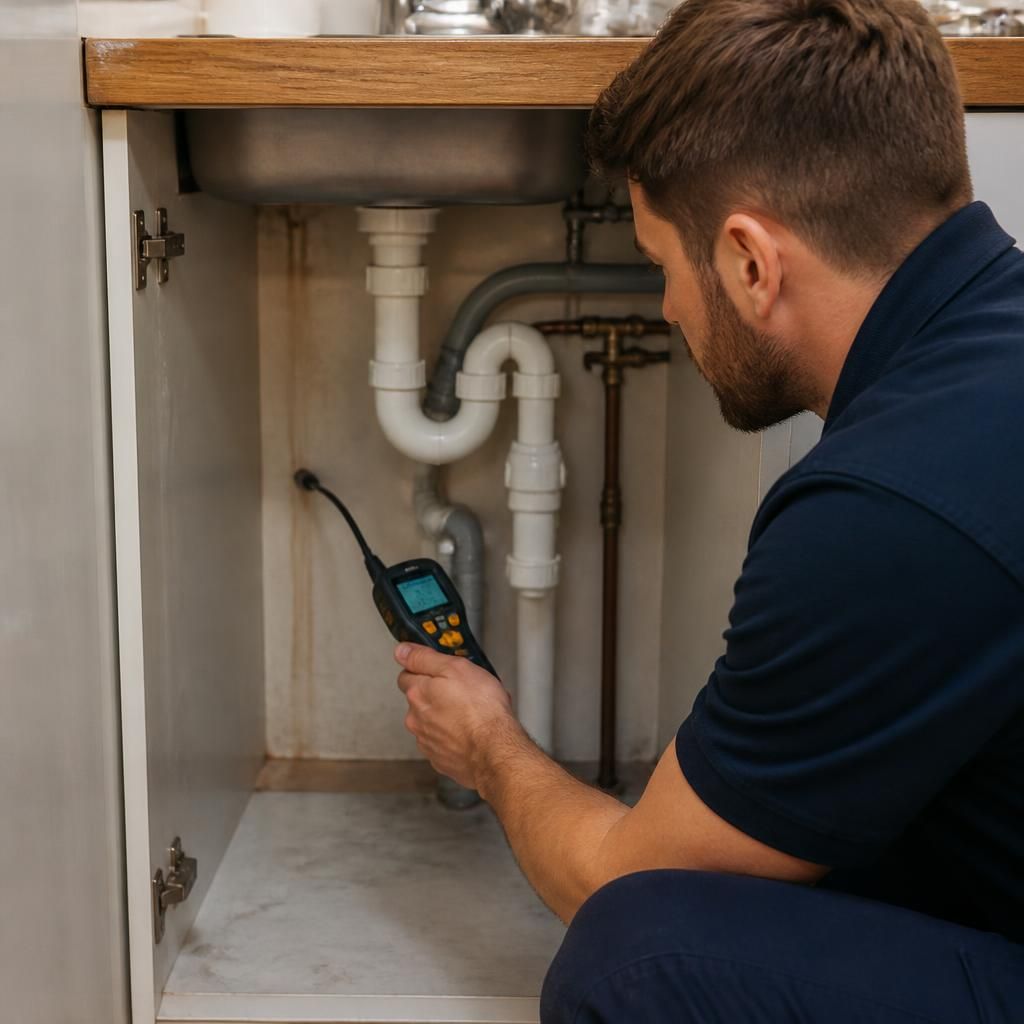
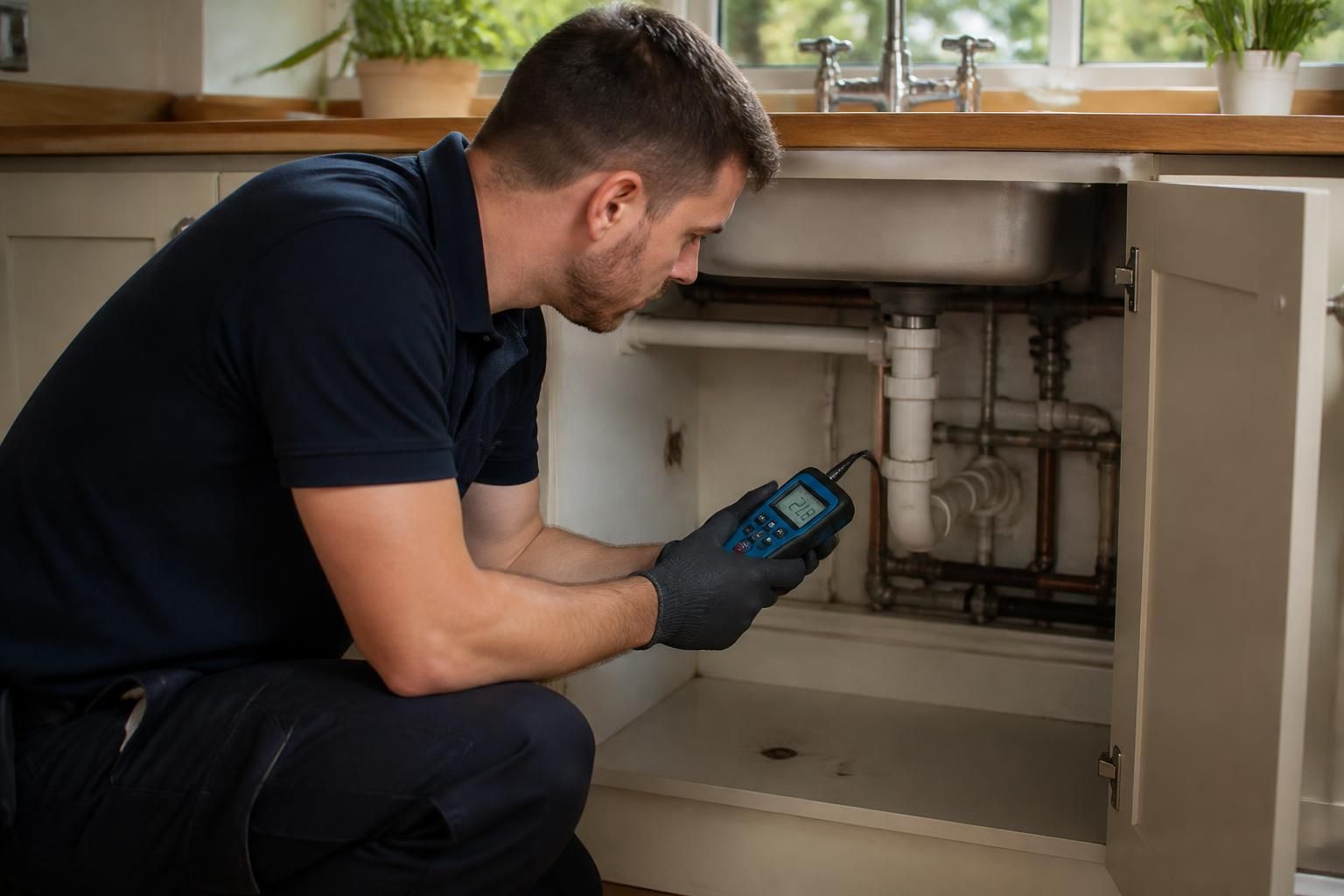
Ask what the inspection will involve. Leak detection may use visual checks, moisture measurement, acoustic equipment, thermal imaging or pressure testing, depending on the suspected source and the pipework. Confirm which areas will be tested, whether the inspection is non-invasive, what access may be needed and whether any follow-on opening-up or repair work would require separate approval. This helps distinguish locating the leak from repairing the resulting damage.
Once the visit is complete, request a clear explanation of the suspected source, the evidence supporting the findings and the recommended next step. A written report, photographs and readings may also be useful for maintenance records or discussions with a landlord, managing agent or insurer.