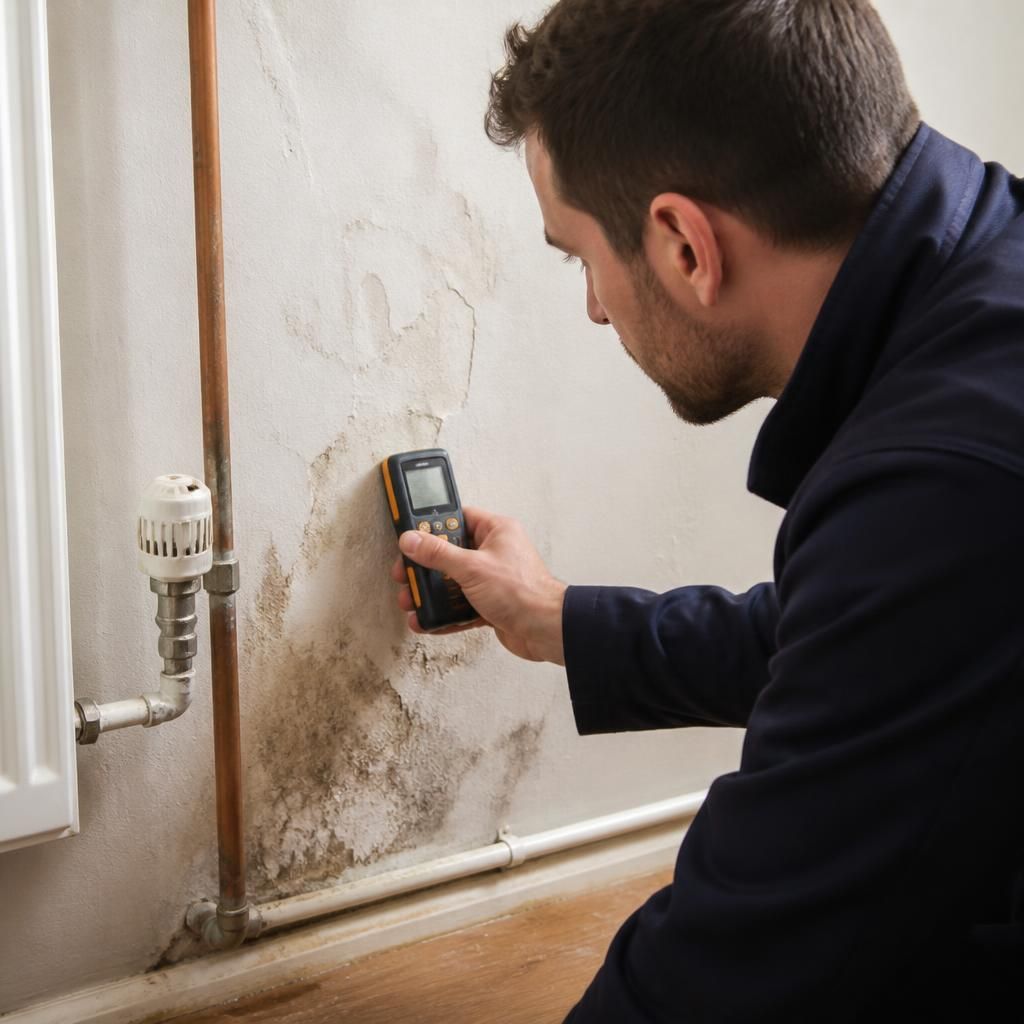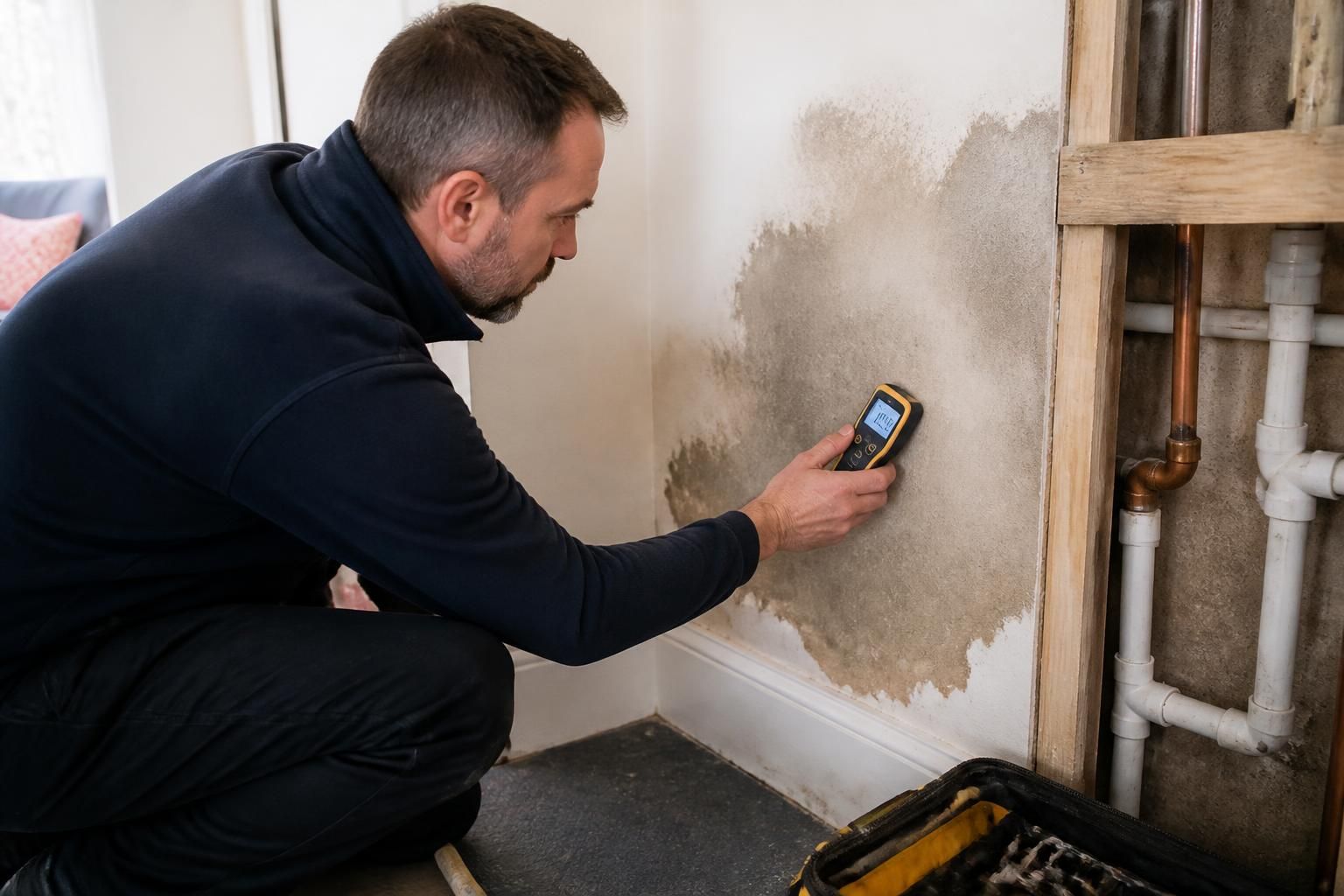
An emergency leak detection inspection is a structured diagnostic assessment used to establish whether water is escaping, identify its point of origin and determine how far it may have travelled. The inspection separates the actual source from the visible effects, such as staining, dampness or a drop in pressure, so that the next action is based on evidence rather than guesswork.
The inspection usually follows several stages:
- Review of the circumstances: The plumber asks when the problem was first noticed, which fixtures or appliances were in use, whether the issue is continuous or intermittent, and whether previous repairs or alterations have taken place. This information helps narrow down the relevant water supply, heating, waste or drainage system.
- Safety and isolation checks: Where appropriate, the affected water supply or individual appliance is isolated to limit further escape while the investigation takes place. Electrical risks, slippery surfaces and damage to ceilings, floors or fitted units are also considered before testing continues.
- Moisture assessment: Moisture readings may be taken in affected and nearby areas to establish the pattern of dampness. Comparing readings helps distinguish a currently active leak from residual moisture left after an earlier incident. It can also indicate whether water has travelled behind finishes or into adjoining areas.
- System testing: The relevant installation is assessed separately where possible. This might involve checking water pressure, monitoring pressure loss, observing the water meter or testing sections of pipework, depending on the type of system and the symptoms. Heating circuits, cold-water supplies, hot-water pipework, appliances and waste connections require different diagnostic approaches.
- Targeted tracing: The equipment and method are selected according to the building construction and the suspected source. Depending on the circumstances, an inspection may use acoustic listening equipment, thermal imaging, tracer gas, pressure testing or other specialist techniques. These methods can help follow a hidden route beneath floors, behind walls or within ceilings without treating every damp area as the source.
- Confirmation: A suspected location is checked against the test results and the pattern of moisture. This is important because water can run along joists, pipe channels and other surfaces before becoming visible, meaning the most obvious mark is not necessarily where the pipe or fitting has failed.
The plumber should then explain whether the evidence points to a supply pipe, heating circuit, appliance connection, waste pipe, drainage defect or another cause. The inspection may also identify a non-leak explanation, such as condensation or water entering from outside. Establishing this distinction prevents unnecessary work on sound plumbing.
Findings are normally discussed in practical terms, including the suspected location, the evidence collected, any areas that could not be fully tested and the possible repair requirements. Photographs, moisture readings or test results may be recorded where useful. If opening a wall, floor or ceiling is likely to be necessary, this should be explained as a separate access or repair decision rather than assumed to be part of the detection inspection.
An inspection does not automatically include permanent repair, drying, redecoration or replacement of damaged finishes. Once the source has been identified, the appropriate follow-up may be to repair a fitting, replace a section of pipe, renew a seal, address a drainage connection or arrange further investigation if access is restricted. The condition of surrounding materials should also be considered, particularly where water has entered insulation, timber or plasterboard.
Some leaks are difficult to reproduce because they occur only when a particular appliance runs, a heating system reaches operating temperature or rainwater enters the building. In these cases, the inspection may establish the most likely source while recording any limitations and recommending controlled additional testing. Clear information about these limitations is part of a sound professional assessment.