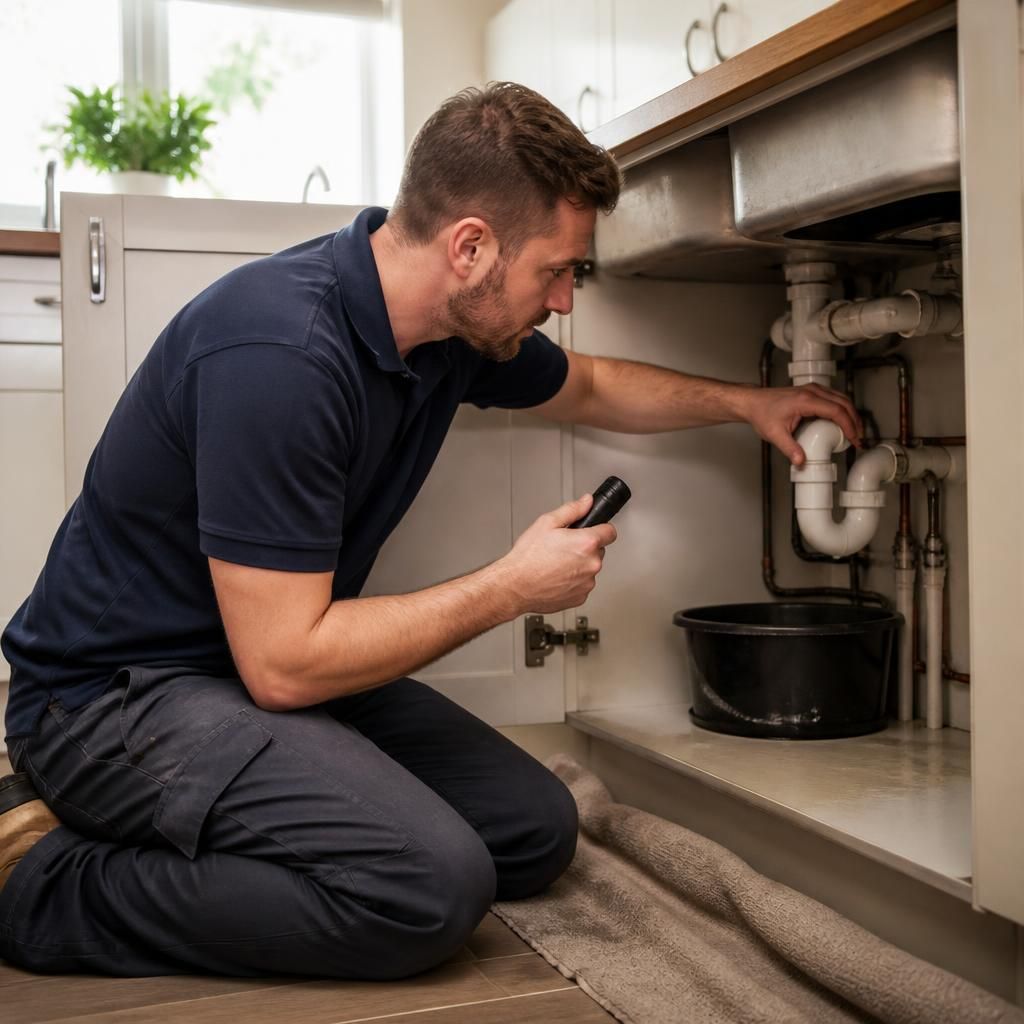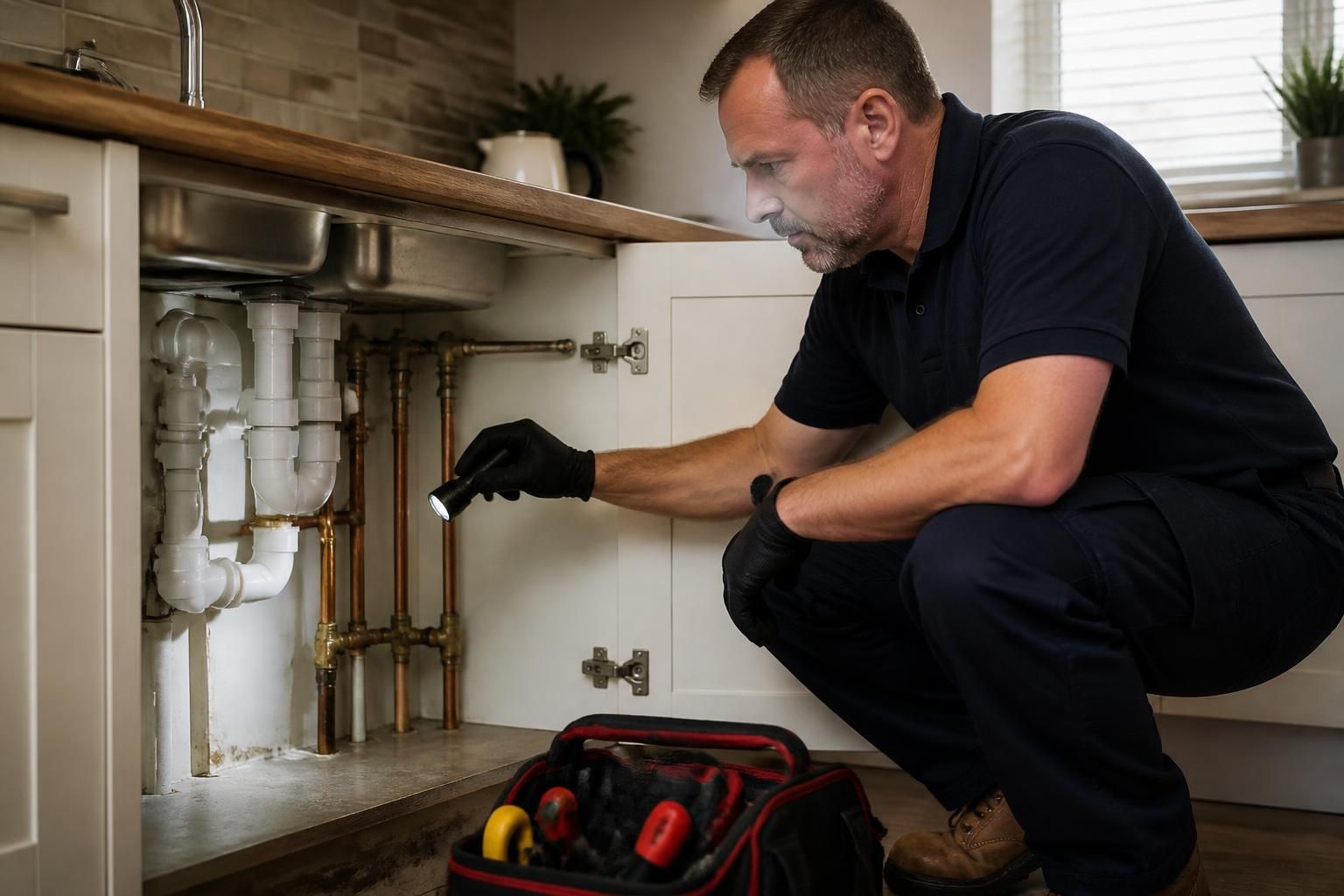
Access requirements depend on where the fault is situated, how the plumbing is routed and whether the affected pipework can be reached without removing fixtures or finishes. A repair may be completed from one room, but inspection and safe isolation can require entry to adjoining areas of the property.
For example, a leak beneath a kitchen sink may appear to be confined to the cupboard, while the relevant isolation valve is positioned under the stairs or in a utility area. Similarly, a bathroom leak can involve pipework beneath a bedroom floor, within a ceiling void or behind an access panel. Water staining may also spread away from the original fault, so the visible mark is not always the point that needs repairing.
Before starting work, a plumber will generally need to:
- Identify the source of the water rather than relying only on the most obvious damp patch.
- Trace the connected pipework and locate suitable valves or the main stopcock.
- Check nearby rooms, cupboards, ceilings or flooring for signs of concealed water damage.
- Establish whether access panels, removable plinths or other existing openings can be used.
- Protect accessible surfaces and agree which fixtures or finishes, if any, may need to be moved.
In some cases, the affected room is enough. This is more likely when the pipe, valve and damaged fitting are all exposed and there is sufficient working space. A repair may require wider access when pipework runs through a wall or floor, when the nearest isolation point is elsewhere, or when water has travelled into another part of the building.
Access does not automatically mean that walls, floors or ceilings will be opened. A professional will normally look for the least disruptive route first, such as an existing hatch, removable panel, kitchen unit plinth or exposed connection. If opening a surface is unavoidable, the plumber should explain why it is needed and identify the area involved before proceeding. Plumbing repairs may resolve the active leak, but drying and repairing secondary damage can be a separate task.
Occupiers can help by clearing the space around sinks, toilets, boilers, radiators, washing machines and visible pipework. Where the suspected leak is below a floor or ceiling, moving fragile items from the area can reduce the risk of further damage. Do not remove fixed panels or enter unsafe areas yourself, particularly where water is near electrical fittings.
For rented properties, access arrangements should be coordinated with the tenant and landlord or managing agent. The person arranging the repair should provide details of rooms that may be affected and make sure the plumber can reach relevant communal or service areas. If access to another room is refused or unavailable, the inspection may be limited and the full cause of the problem may not be confirmed.
Ideal Plumbing Services carries out emergency plumbing repairs for homes across Birmingham and the wider West Midlands. The assessment will establish the access needed for the particular fault, with the work explained before repair options are considered.