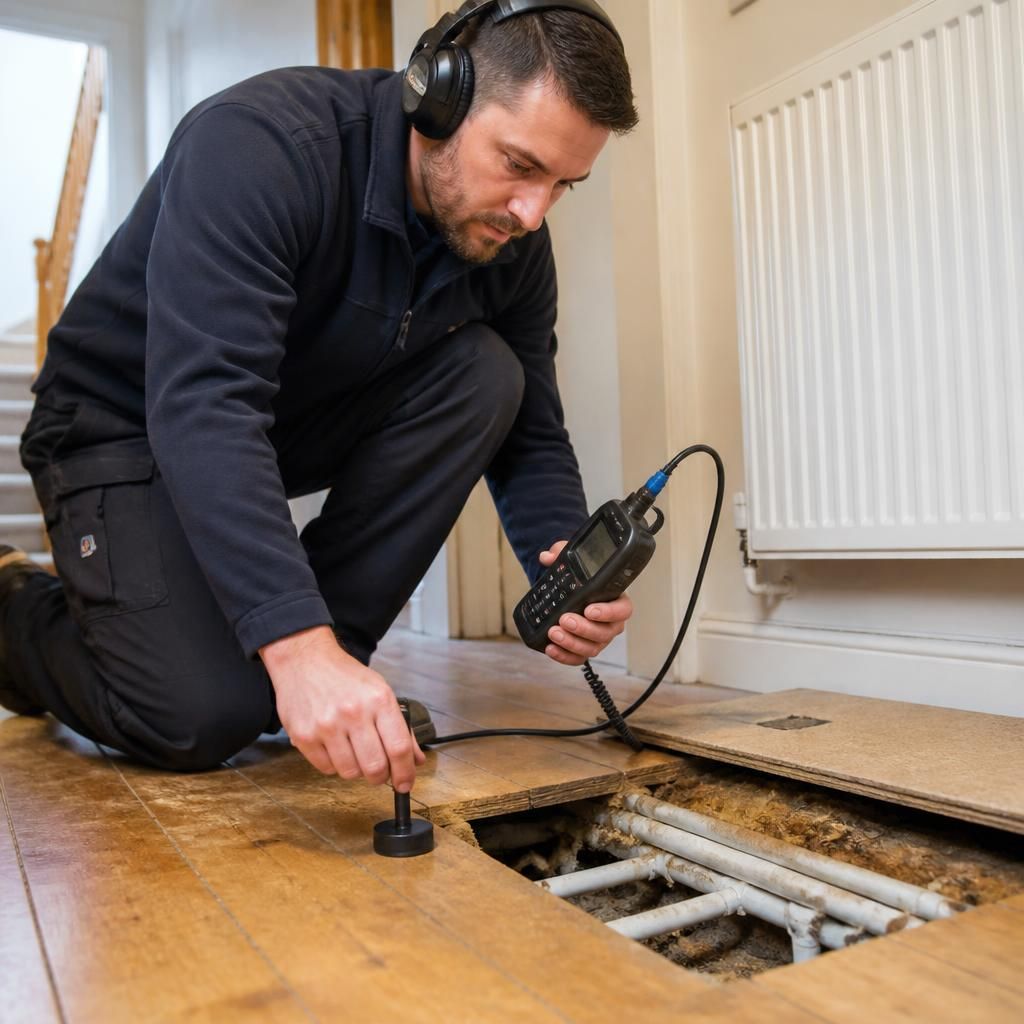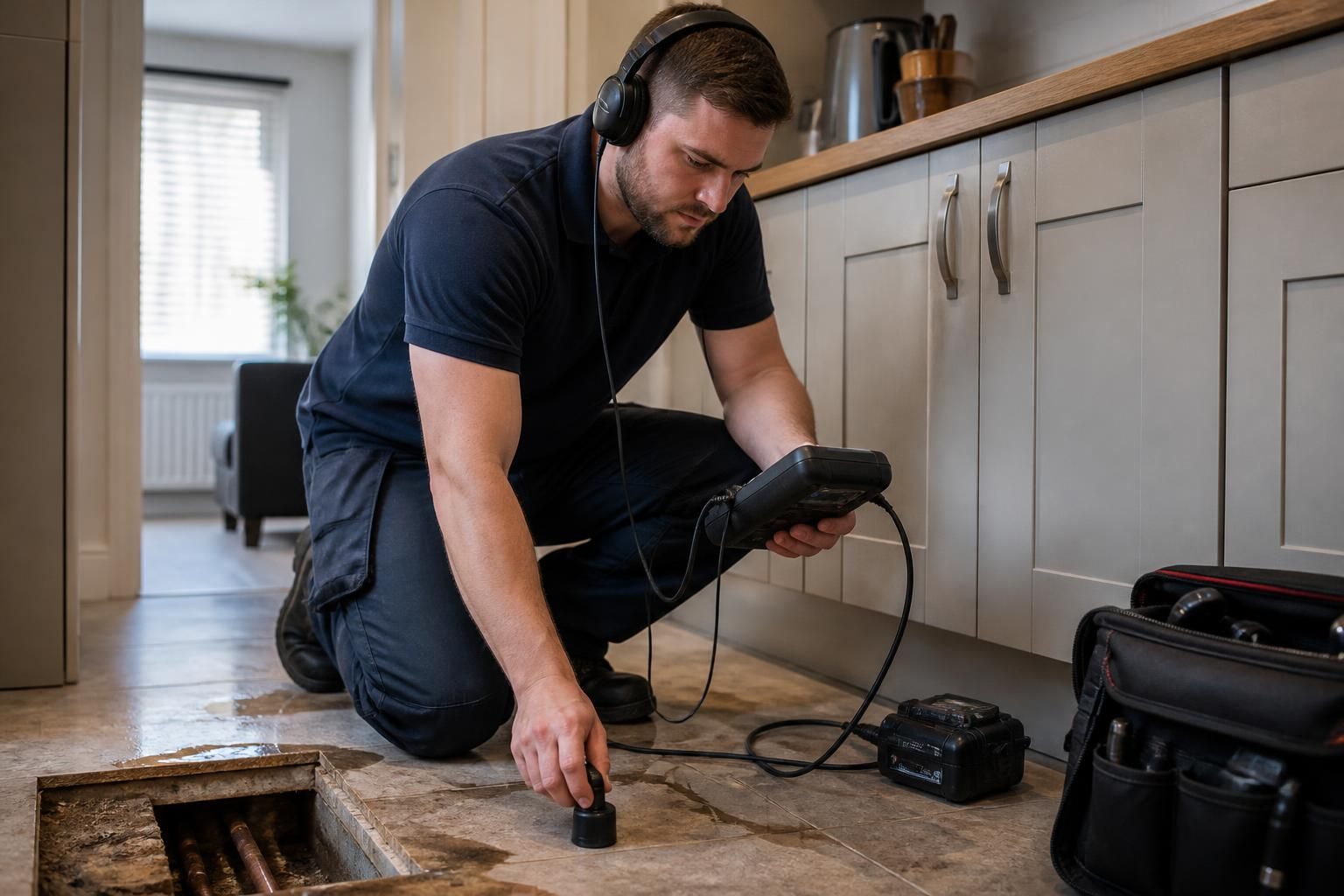
There is no single fixed price for emergency plumbing leak detection. The total usually consists of the diagnostic work needed to identify the source, the plumber’s time and any follow-on repair, with the final cost affected by the property, the leak’s behaviour and the work required to reach it.
What the initial charge may include
- Attendance and assessment: This covers inspecting the visible symptoms, checking relevant pipework and establishing whether the issue is linked to the water supply, heating system, bathroom fittings or drainage.
- Diagnostic work: Specialist detection methods may be used where the leak is hidden behind flooring, walls, ceilings or fixed units. The more investigation required, the more time and equipment may be involved.
- Labour: Charges can reflect the time spent carrying out tests, tracing the route of the water, isolating the affected section and discussing the findings with you.
- Materials and repairs: Replacement pipework, valves, connectors, seals or fittings are separate potential costs where a fault is confirmed and repair work is authorised.
A detection visit does not always include permanent repair. Finding the source and putting the defect right are distinct stages, particularly where the leak is concealed or access needs to be created. Ask whether the quoted diagnostic charge is separate from repair labour, and whether materials, removal of damaged fittings and making good surfaces are included.
Why two leak investigations can cost different amounts
A straightforward leak may be identified through visible inspection and basic testing. A concealed leak can require more extensive tracing, especially where water has travelled away from the failed joint before becoming visible. The age and layout of the plumbing, the condition of access panels and the need to protect furnishings or flooring can also affect the work involved.
Water damage can create a separate issue from the plumbing fault itself. Drying, replacing damaged plasterboard, redecorating, lifting flooring or treating mould is not normally the same as leak detection or plumbing repair. Confirm which parts the plumber will undertake and which may need another contractor.
How to compare quotations
- Check whether the figure is for detection only or includes a repair allowance.
- Ask whether labour, equipment use, materials and VAT are included where applicable.
- Find out how additional work will be approved before it begins.
- Request an explanation if access, removal or reinstatement work may add to the total.
- Keep written details of the diagnosis, recommended repair and any exclusions.
For a rented property, the tenant should normally report the leak to the landlord or managing agent and confirm who has authority to instruct a plumber. Homeowners should check their buildings or home-emergency insurance policy before authorising work, as the policy may require a particular claims process or provide its own excess and cover limits.
Ideal Plumbing Services can assess leaks for homeowners, landlords and tenants in Birmingham and the wider West Midlands, explaining the recommended work and associated charges before repair work proceeds. The clearest estimate will be based on the actual fault rather than a generic leak-detection price.