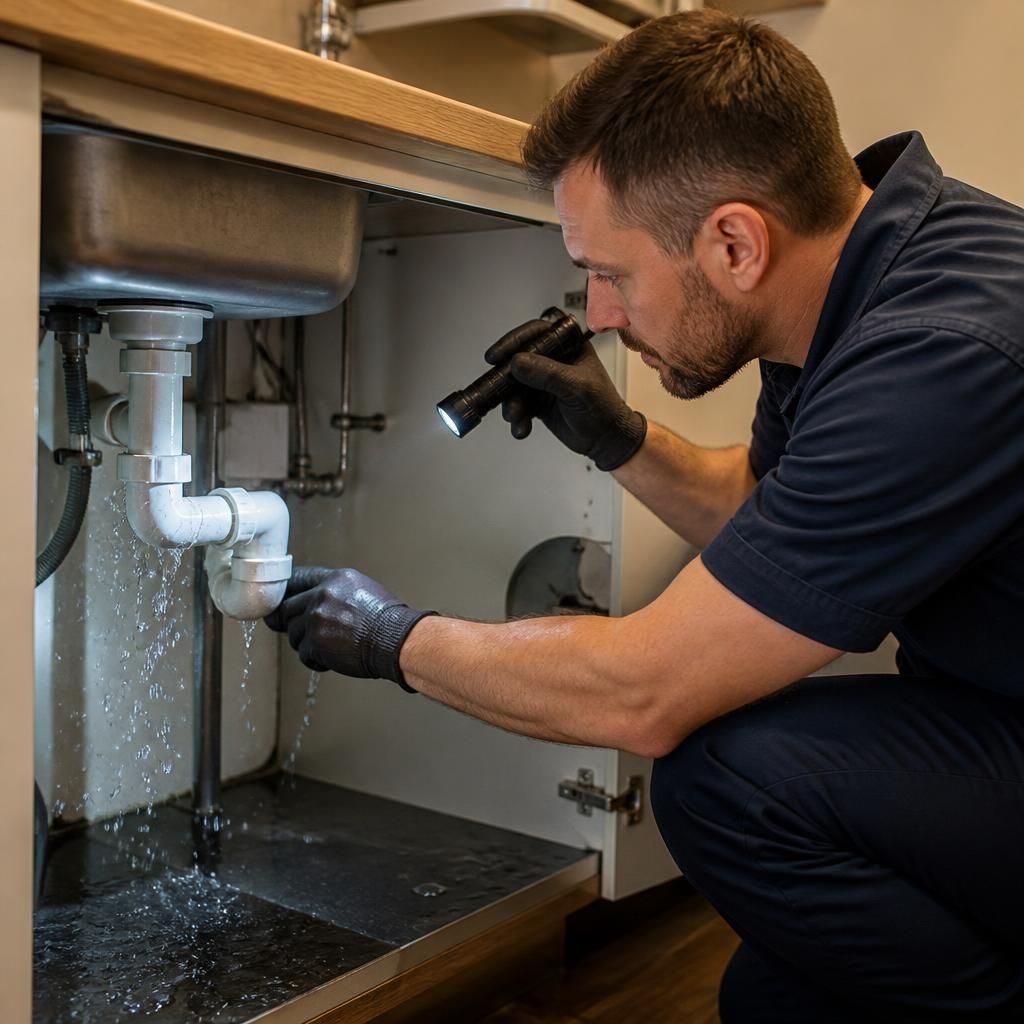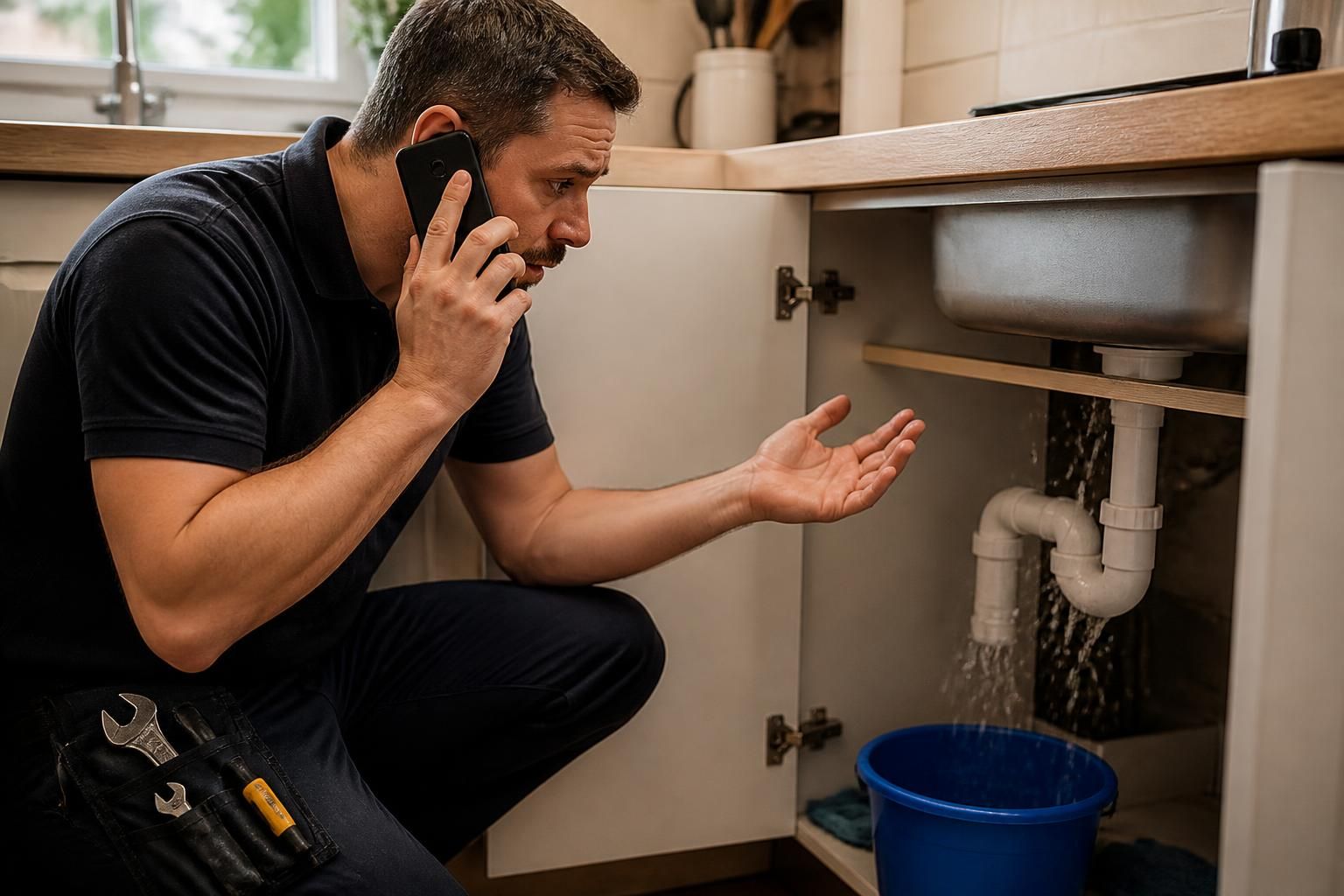
Emergency plumbing repairs are appropriate when a fault presents an immediate risk to people, the building, hygiene or an essential water service, and cannot be safely contained until a routine appointment. The urgency depends on the amount of water involved, where it is escaping, whether the supply can be isolated and the consequences of leaving the fault unresolved.
Faults that commonly require urgent attention include:
- Leaks close to electrical installations: Water around sockets, appliances, consumer units or wiring creates a potential electrical hazard. Do not touch wet electrical equipment; if it is safe to do so, isolate the water and seek appropriate professional help.
- Water escaping through ceilings, walls or floors: A concealed pipe failure can damage plasterwork, insulation, flooring and structural materials. Staining, bulging ceilings, damp patches or water coming through light fittings should be treated as serious warning signs.
- A failed isolation valve: If a leak cannot be stopped because the stop tap or appliance valve is seized, damaged or inaccessible, the continuing flow can increase property damage while the underlying repair is pending.
- Loss of the only usable toilet or washing facilities: A toilet that cannot flush, a supply that has become contaminated or a drainage fault affecting the only bathroom may create an immediate hygiene problem, particularly in a busy household or shared property.
- Backflow or contaminated water: Water returning through sinks, baths or toilets may contain waste and should not be handled unnecessarily. Keep children and pets away from the affected area and avoid using connected fixtures until the cause has been assessed.
- Frozen or damaged pipework: A frozen pipe may split as the water expands or as pressure changes during thawing. Signs include reduced flow, dampness, unusual noises and visible cracking. Heating the pipe with a naked flame can make the situation more dangerous.
- A failed hot-water cylinder or connected pipework: Persistent discharge, water around the cylinder, unusual pressure symptoms or a tank that is visibly damaged can lead to flooding and scalding risks. Keep clear of hot water and do not interfere with safety controls.
- Serious drain or soil-pipe failure: If waste water is entering the property, pooling around access points or affecting several fixtures, the issue may involve more than a local blockage and needs professional assessment.
When a fault may not be an emergency
A dripping tap, a slow drain that still works, a minor seal failure or a single radiator that is not heating will often be suitable for planned repair, provided there is no spreading water, contamination or safety risk. However, a small fault can become urgent if the leak worsens, the affected fixture is the only available facility or water reaches electrical equipment.
What to do before the repair
- Turn off the internal stop tap or the nearest appliance isolation valve if you can reach it safely.
- Stop using affected taps, toilets, appliances and drains.
- Move furniture and portable electrical items away from the water, but do not enter standing water where electrics may be live.
- Place containers or towels beneath a safe, accessible leak point without dismantling pipework.
- Record where the water first appeared and whether it changes when a particular fixture is used. This information can help identify a concealed supply or waste-pipe fault.
Do not remove wall panels, drill into wet areas or attempt to tighten a pressurised connection without knowing the source of the problem. If the smell is of gas rather than water or wastewater, avoid switches and naked flames, leave the area if it is unsafe and contact the appropriate gas emergency service; this is not a plumbing repair.
A professional assessment should establish whether the fault is on the supply pipe, waste system, hot-water installation, sanitaryware or a concealed section of pipework. The repair may involve isolating a damaged section, replacing a failed valve or fitting, clearing the affected drainage route, repairing pipework or making the installation safe before permanent work is completed. For rented properties, tenants should also notify the landlord or managing agent while taking reasonable steps to limit damage.