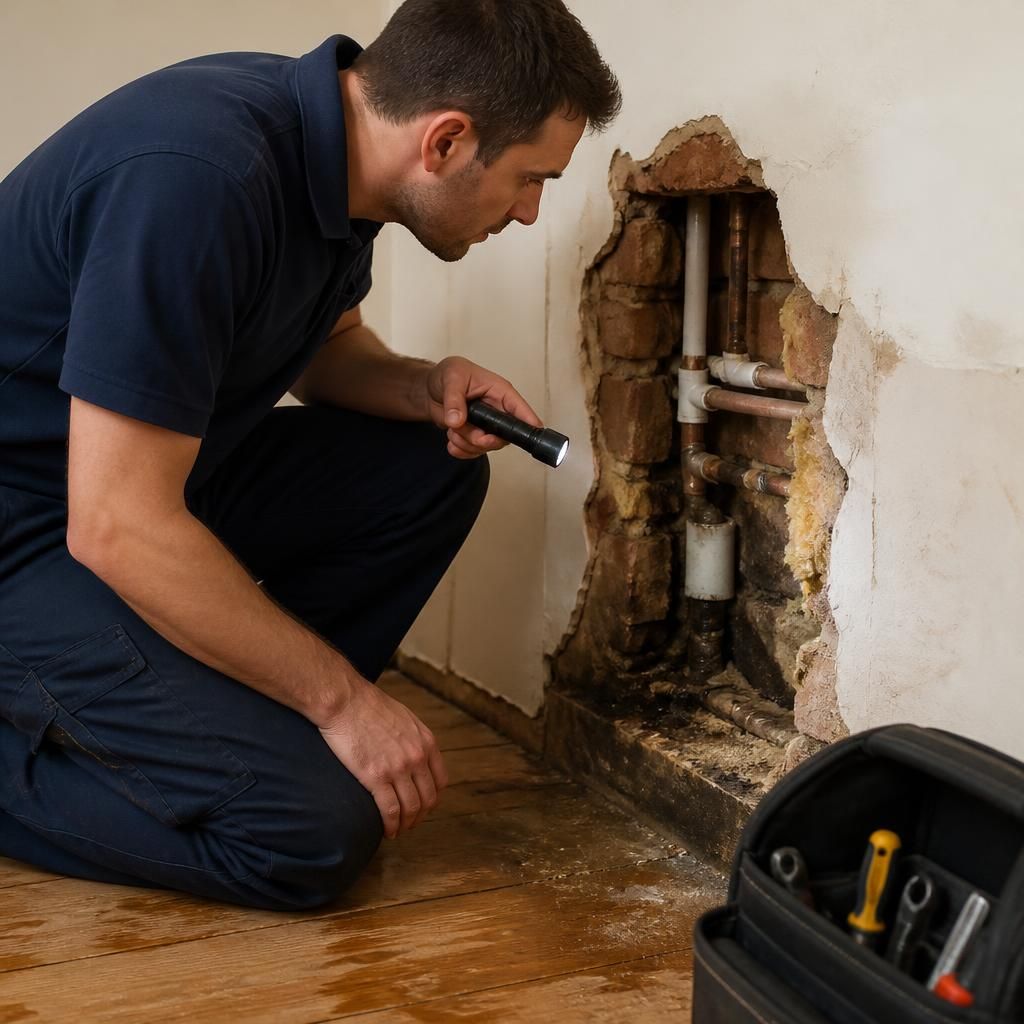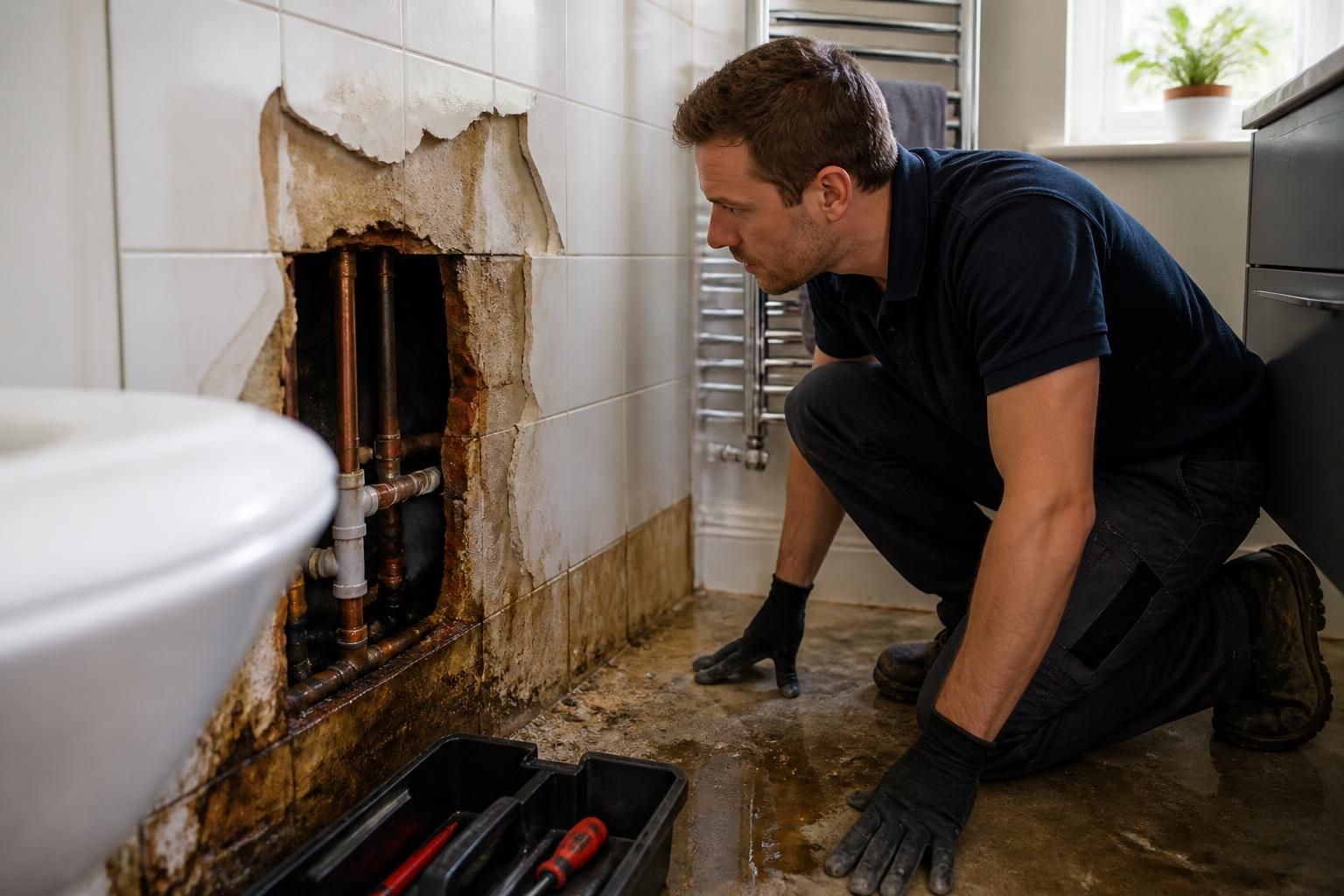
Emergency plumbing repairs are usually as disruptive as the access needed to reach the fault, rather than the repair itself. A visible issue beneath a sink, beside a toilet or on an exposed pipe may involve limited interruption, while a concealed leak behind a wall, floor or fitted unit can require more careful removal and reinstatement.
The work normally begins with a practical assessment of the affected area. The plumber may need to inspect pipework, fittings, flooring, ceilings, cupboards and nearby rooms to establish where water has travelled. This can involve moving personal belongings, lifting access panels or removing a small section of a finish. The aim is to expose enough of the plumbing to identify the defective component without creating unnecessary disturbance.
The type of fault also affects the disruption involved. Replacing a tap connector, isolation valve, trap or exposed section of pipe is generally a contained task. A damaged supply pipe, failed joint within a wall or leak beneath a floor is more involved because the surrounding structure may restrict access. Water damage can add further work, particularly where plaster, flooring, cabinetry or insulation has become wet.
During the repair, use of the affected fixture or part of the plumbing system may not be possible. In some cases, the water supply to one fitting can be isolated; in others, a larger section of the property may need to remain unused until the repair has been tested. This is particularly relevant in homes with a single bathroom, a vulnerable ceiling below the leak or plumbing that supplies several rooms.
Most of the disruption comes from access, protection and follow-on work rather than fitting the replacement part. A plumber may protect nearby surfaces, clear the working area, remove damaged materials and check for further leakage after the repair. If a wall, floor or ceiling has been opened, the plumbing repair and the final decorative making-good may be separate stages. Drying, plastering, tiling, joinery or repainting may therefore extend the overall inconvenience beyond the time spent working on the pipework.
There is no reliable standard duration for every emergency repair. A straightforward exposed repair may be completed during one visit, whereas concealed pipework, extensive water damage, restricted access or a difficult-to-replace fitting can require additional investigation or specialist follow-on work. A clear assessment should explain which areas need to be accessed, what may need to be removed and whether reinstatement is included in the plumbing work.
Homeowners, landlords and tenants can reduce avoidable disruption by:
- clearing cupboards and floor space around the suspected leak;
- removing valuables, electrical items and absorbent belongings from the affected area;
- identifying stop taps, service valves and access panels where possible;
- keeping details of recent plumbing alterations or recurring faults available;
- not covering a leak or sealing an access point before the source has been inspected; and
- checking whether a landlord, managing agent or insurer must approve access or follow-on repairs.
Where the property is rented, access should be arranged with the tenant and the landlord or agent as appropriate. The person responsible for the repair may need to authorise removal of fitted units or any work beyond stopping the leak. Clear agreement at the start helps avoid a plumbing repair being delayed by uncertainty over access or reinstatement.
A professional repair should leave the affected plumbing tested and the work area as safe and orderly as practicable. Ask what has been repaired, whether any parts of the property remain affected and whether drying or building repairs are still needed. For Birmingham and West Midlands properties, Ideal Plumbing Services provides residential emergency plumbing repairs with an emphasis on accurate diagnosis and high-quality workmanship, helping customers understand the likely scope of disruption before further work is undertaken.