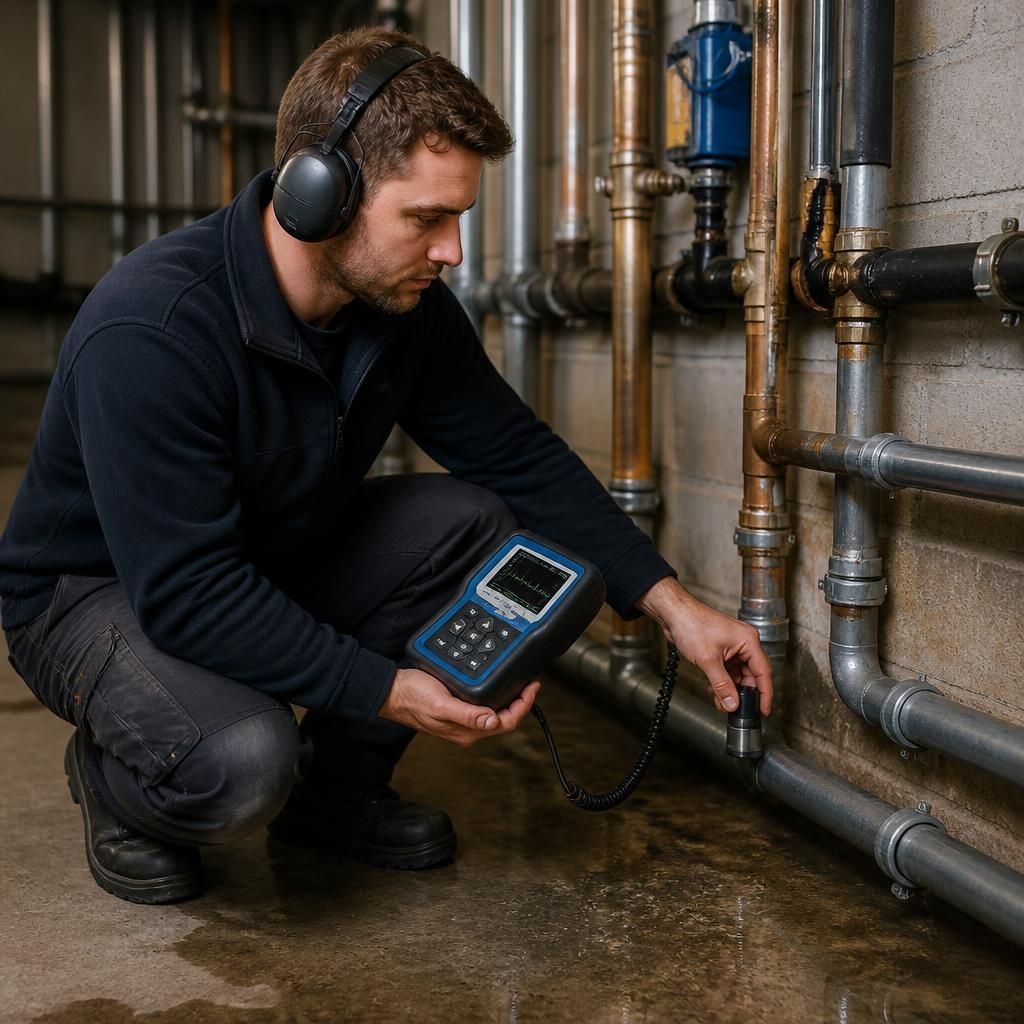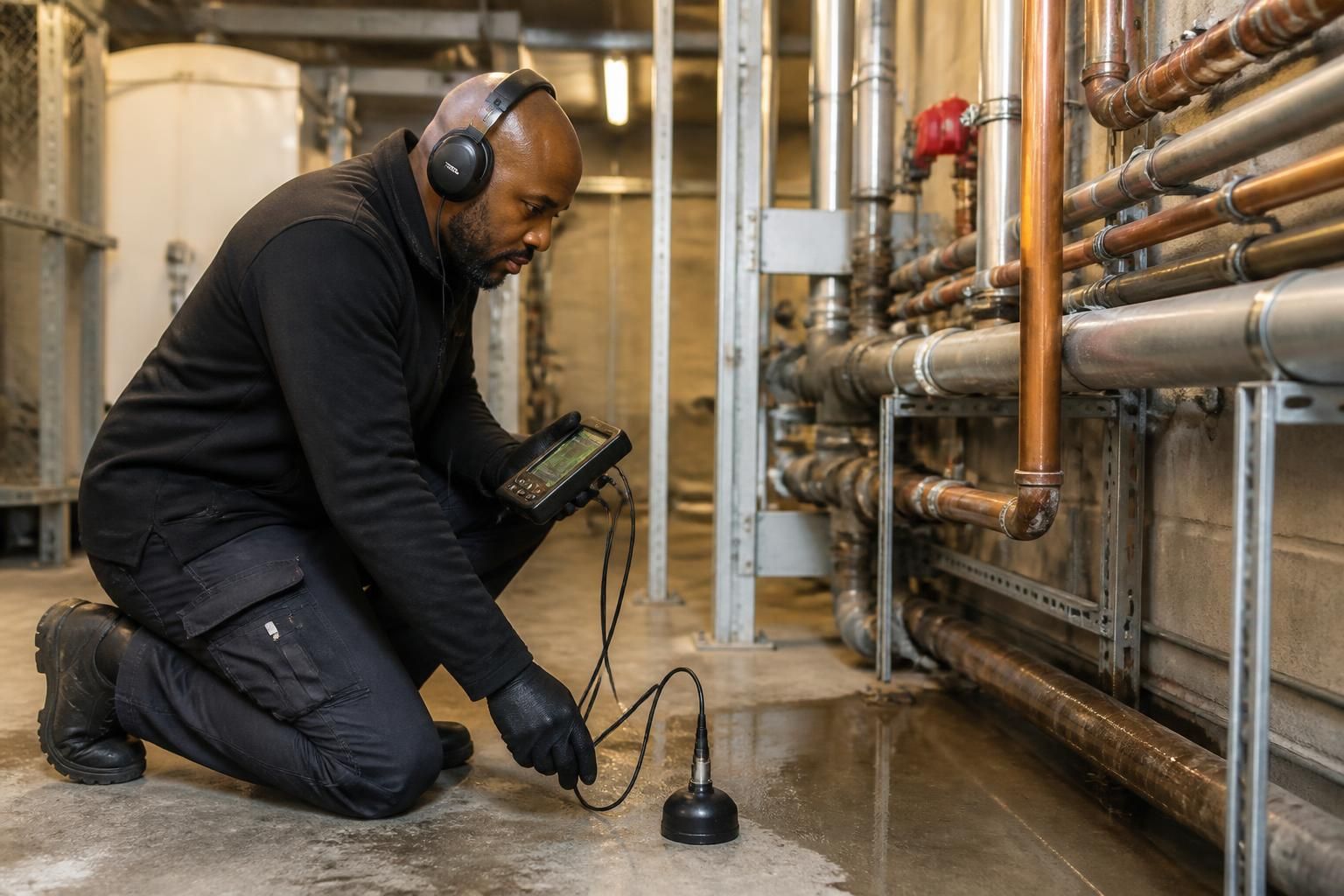
Commercial leak detection is normally priced as a diagnostic service, with the charge based on the work needed to identify and confirm the source of water loss. The final price may include the engineer’s assessment, the testing process, specialist detection equipment, findings and a written report. Any remedial plumbing work is generally assessed separately so that the cost of locating the leak is not confused with the cost of putting it right.
Several factors influence the quotation:
- Premises layout: A compact unit with accessible pipework usually requires less investigative work than a large building with several floors, concealed services or multiple occupied areas.
- Type of plumbing system: Pricing can vary according to whether the suspected issue involves water supplies, heating pipework, tanks, sanitary installations, drainage or another connected system. Different systems require different tests and levels of isolation.
- Location and visibility of the fault: A leak beneath flooring, behind finishes, within a ceiling or below ground may require more careful tracing than a visible leak around an exposed fitting. The inspection should aim to narrow down the location before intrusive access is considered.
- Required investigation: A straightforward pressure or visual assessment may have a different charge from an investigation involving acoustic equipment, thermal imaging, tracer gas, moisture measurement or other specialist techniques. Equipment should be selected because it is relevant to the suspected fault, not added without explanation.
- Access and site arrangements: Security procedures, restricted plant areas, stored goods, fixed furnishings and the need to coordinate with staff can affect the time needed to complete the investigation. A quotation should make clear whether any preparation by the customer is expected.
- Documentation: Some businesses need photographs, marked-up plans, moisture readings or a formal report for a landlord, insurer, facilities manager or property owner. These requirements can affect the scope of the service.
Commercial providers may charge a fixed fee for a defined inspection, an hourly or time-based rate, or a combination of an initial diagnostic charge and additional work if the investigation needs to be extended. A fixed price is easier to compare when the service requirements are clearly defined. A time-based arrangement can be appropriate where the extent of the problem cannot reasonably be established before inspection, but the quotation should explain how further work is authorised.
It is also important to distinguish the detection charge from related costs. Opening a wall or floor, removing finishes, supplying replacement parts, repairing pipework, drying affected areas and reinstating surfaces may not form part of the initial investigation. If a repair is recommended, the findings should identify the suspected cause, the proposed corrective work and which elements are included in the separate estimate.
Before accepting a quotation, a business should check whether it includes travel, testing, equipment, follow-up readings, a written report and any applicable charges. Ask whether the price changes if the suspected source cannot be confirmed, whether additional testing requires approval and whether the quotation covers one area or the whole property. These points reduce the risk of comparing a limited visual inspection with a more detailed diagnostic survey.
Useful information to provide when requesting a price includes the type of premises, the affected area, visible symptoms, recent changes to the plumbing system, access restrictions and whether water use or pressure has already been checked. Photographs, floor plans and details of previous repairs can also help the plumber define the investigation more accurately. For Birmingham businesses and commercial premises across the West Midlands, Ideal Plumbing Services can assess the circumstances and explain the proposed leak detection work before any wider repair is agreed.